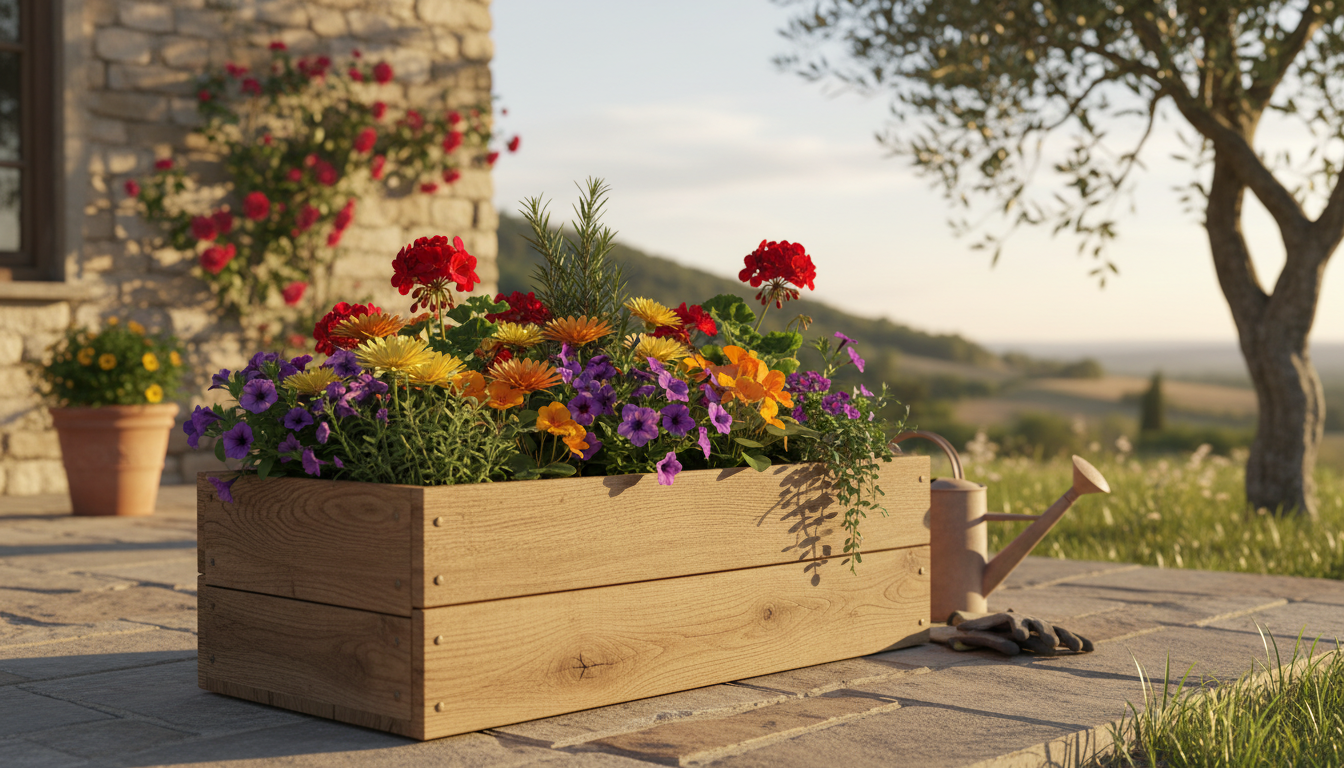
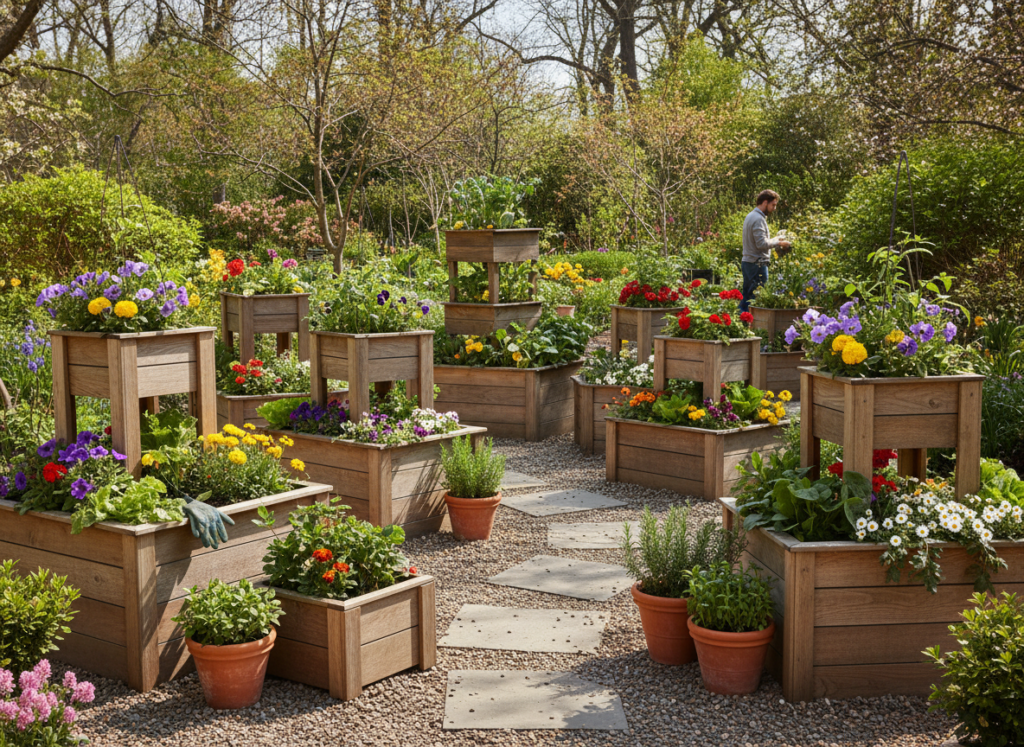
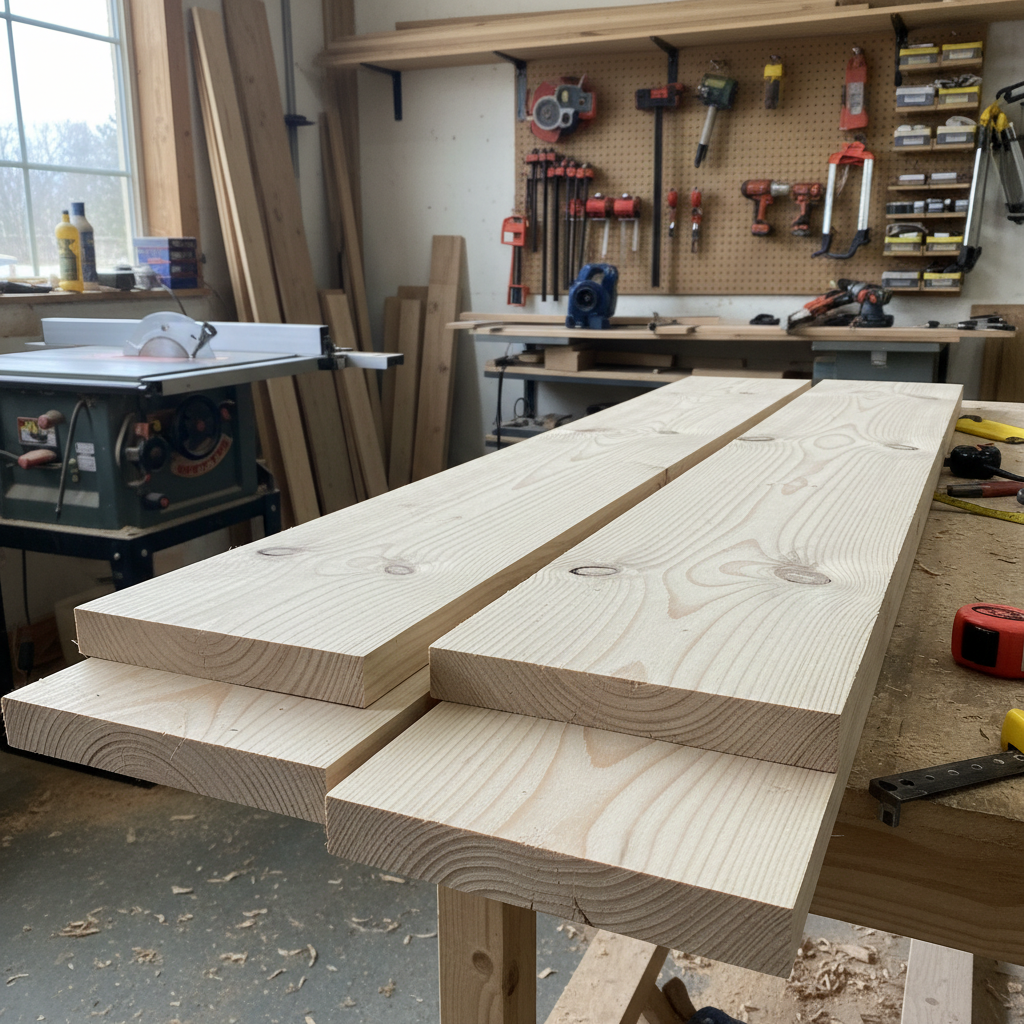
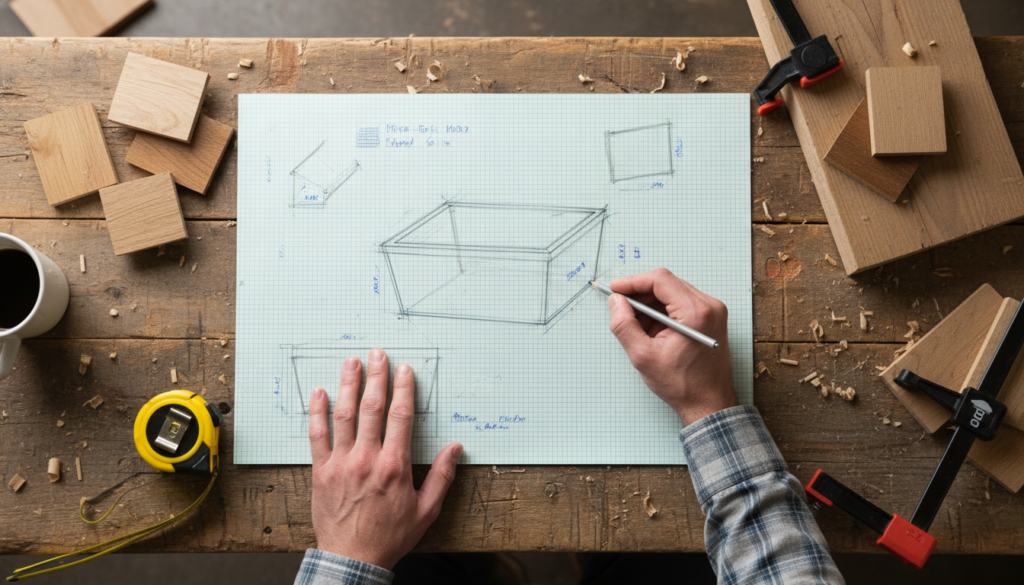
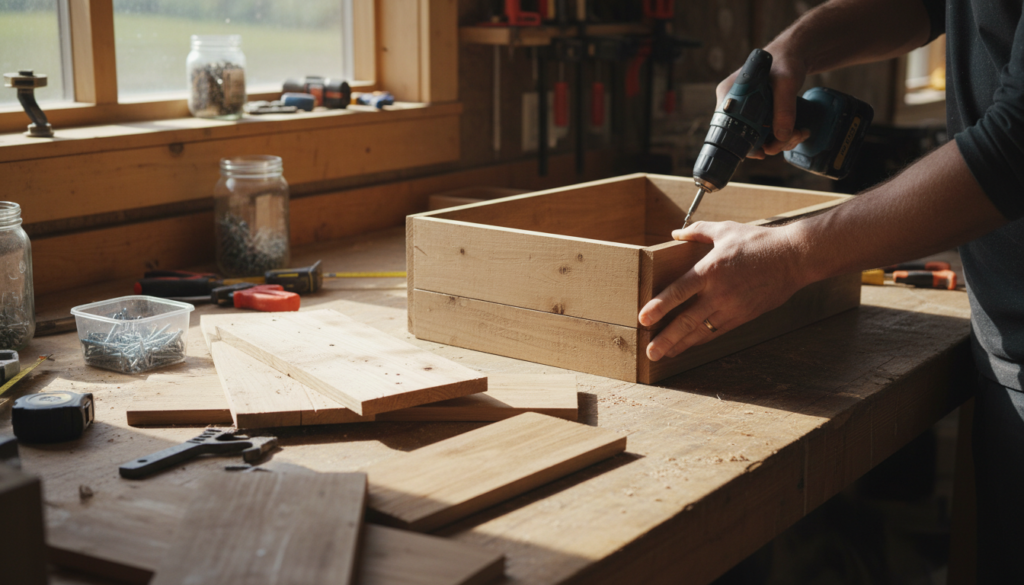
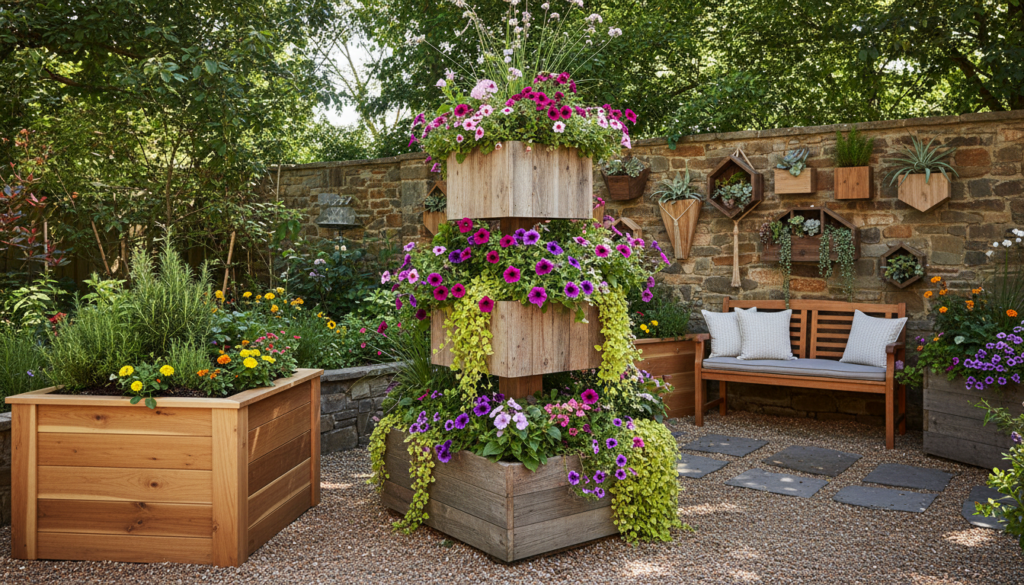
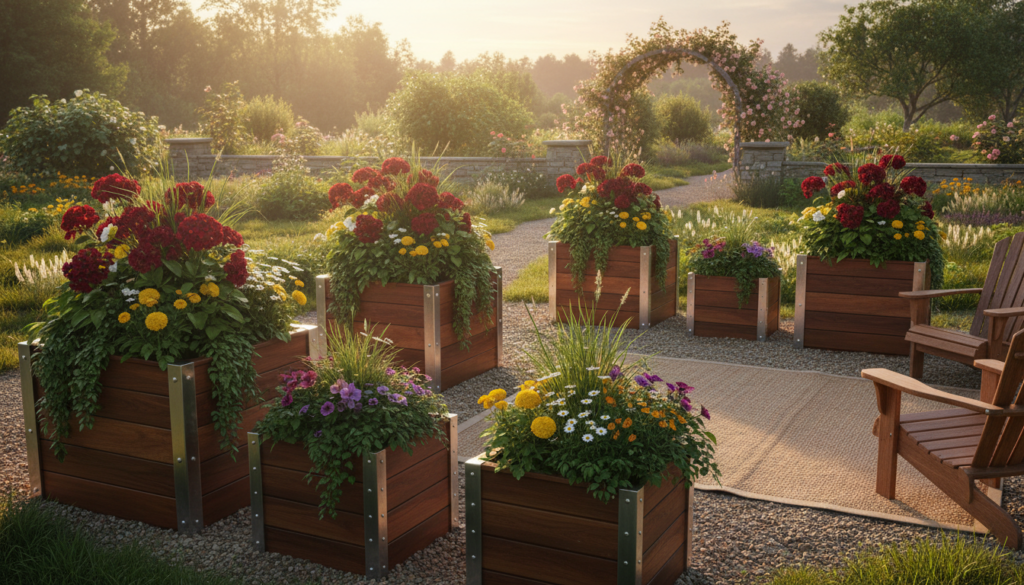
Building your own wooden planter box opens up endless possibilities for your garden space. Whether you want to grow fresh herbs on your patio or create stunning flower displays, custom planters let you design exactly what fits your vision and space.
This Website contains affiliate links. That means I may earn a small commission if you purchase through my links, at no extra cost to you.
Wood offers natural beauty that complements any garden style. From rustic charm to modern elegance, your handmade creation adds character that store-bought options simply cannot match.
This guide walks you through everything you need to know about creating beautiful wooden planters. You will discover design options, learn about materials, and understand how to build boxes that last for years in outdoor conditions.
Why Wooden Planters Elevate Your Garden Design
Wooden planter boxes bring warmth and natural texture to any outdoor area. They create focal points that draw the eye and organize your garden layout in appealing ways.
Versatility in Design
Wood adapts to any style preference you have for your space. You can create boxes in countless shapes and sizes.
Square boxes for symmetrical arrangements
Long rectangular planters for borders
Tiered designs for vertical gardens
Custom dimensions for specific spaces
Natural Plant Environment
Plants thrive in wood planters because the material breathes naturally. This creates healthy growing conditions.
Better drainage than plastic containers
Natural insulation for root protection
Breathable material prevents root rot
Temperature regulation in all seasons
Cost-Effective Solution
Building your own planter saves money compared to buying premium garden containers. You control your budget entirely.
Choose affordable wood options
Build multiple boxes from one lumber purchase
Avoid expensive retail markups
Reuse and recycle materials
Personal Satisfaction
Creating something with your own hands brings genuine pride to your garden. Each planter tells your unique story.
Develop new woodworking skills
Customize every detail to your taste
Create lasting outdoor features
Share your creations with others
Ready to Build Professional-Quality Planters?
Access complete woodworking plans with detailed measurements, cutting lists, and step-by-step instructions. Transform your garden vision into reality with expert guidance.
Selecting the Perfect Wood for Your Planter Box Project
The wood you choose determines how long your planter lasts and how it looks over time. Different species offer unique benefits for outdoor use.
Best Wood Types for Outdoor Planters
Cedar Wood
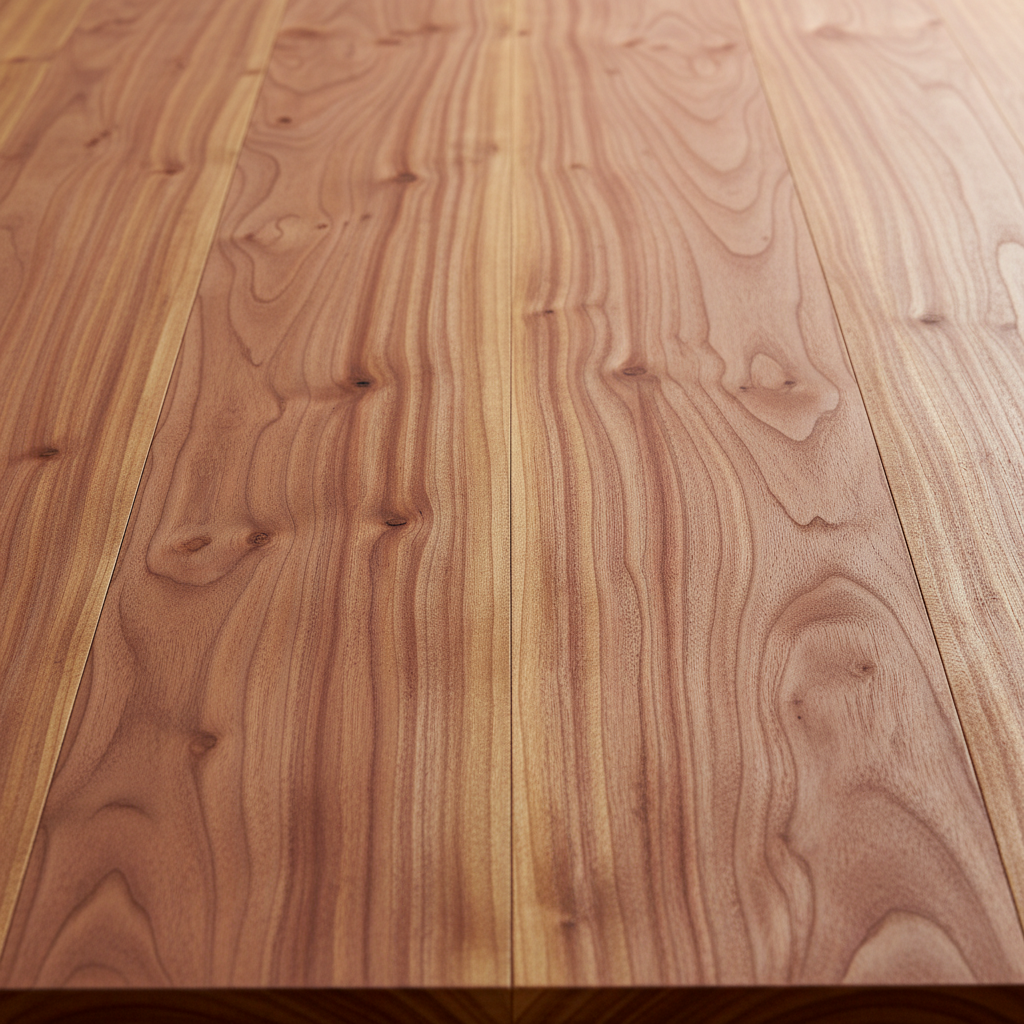
Cedar stands as the top choice for outdoor planters. Its natural oils resist rot and insects without any treatment needed.
Naturally rot-resistant properties
Beautiful reddish-brown color
Lightweight and easy to work
Lasts 15-20 years outdoors
Redwood
Redwood offers exceptional durability and gorgeous color. This premium wood creates stunning planters that age beautifully.
Outstanding weather resistance
Rich natural red tones
Minimal maintenance required
Can last 20-25 years
Pine Wood
Pine provides an affordable option for budget-conscious builders. With proper treatment, it serves well for several years.
Very budget-friendly material
Easy to find at any hardware store
Simple to cut and assemble
Requires sealing for protection
Protecting Your Wood Investment
All wood benefits from protection against moisture and sun exposure. Simple steps extend the life of your planter box significantly.
Essential Protection Methods
Apply the right finish to protect wood from the elements. This creates a barrier against moisture damage and UV rays.
Sand all surfaces smooth before treatment
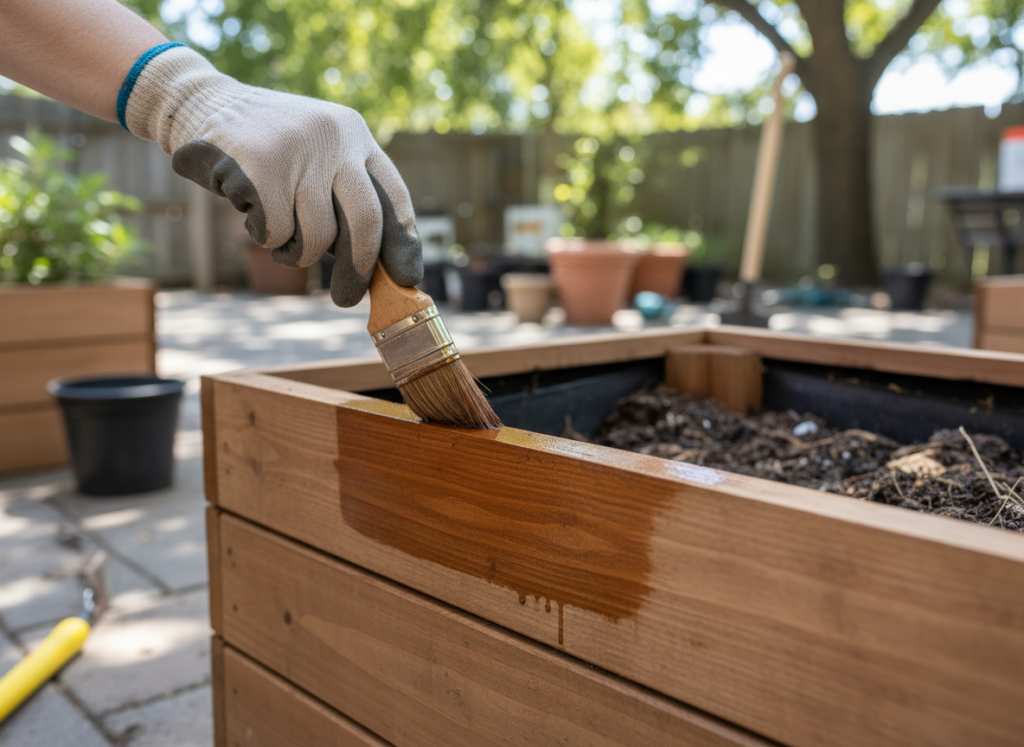
Apply exterior wood stain or sealer
Let each coat dry completely
Add second coat for maximum protection
Reapply treatment every few years
Pro Tip: Layer Protection
Use a layer of landscape fabric inside your planter. This prevents direct soil contact with wood while allowing drainage. Add a layer of gravel at the bottom for even better water management and longer wood life.
Planning Your DIY Wooden Planter Box Build
Careful planning saves time and materials. Think through your design before you make the first cut.
Determining the Right Size
Size matters for both plant health and visual appeal. Consider where the planter will sit and what you will grow inside.
Planter Size
Best Plants
Space Required
Skill Level
Small (12″ x 12″)
Herbs, small flowers
Tabletop, windowsill
Beginner
Medium (24″ x 12″)
Vegetables, annuals
Patio, balcony
Beginner
Large (36″ x 18″)
Shrubs, perennials
Garden bed, deck
Intermediate
Extra Large (48″ x 24″)
Trees, large plants
Yard, large patio
Advanced
Gathering Your Materials and Tools
Having everything ready before you start makes the build process smooth. Check this complete list before beginning your project.
Required Materials
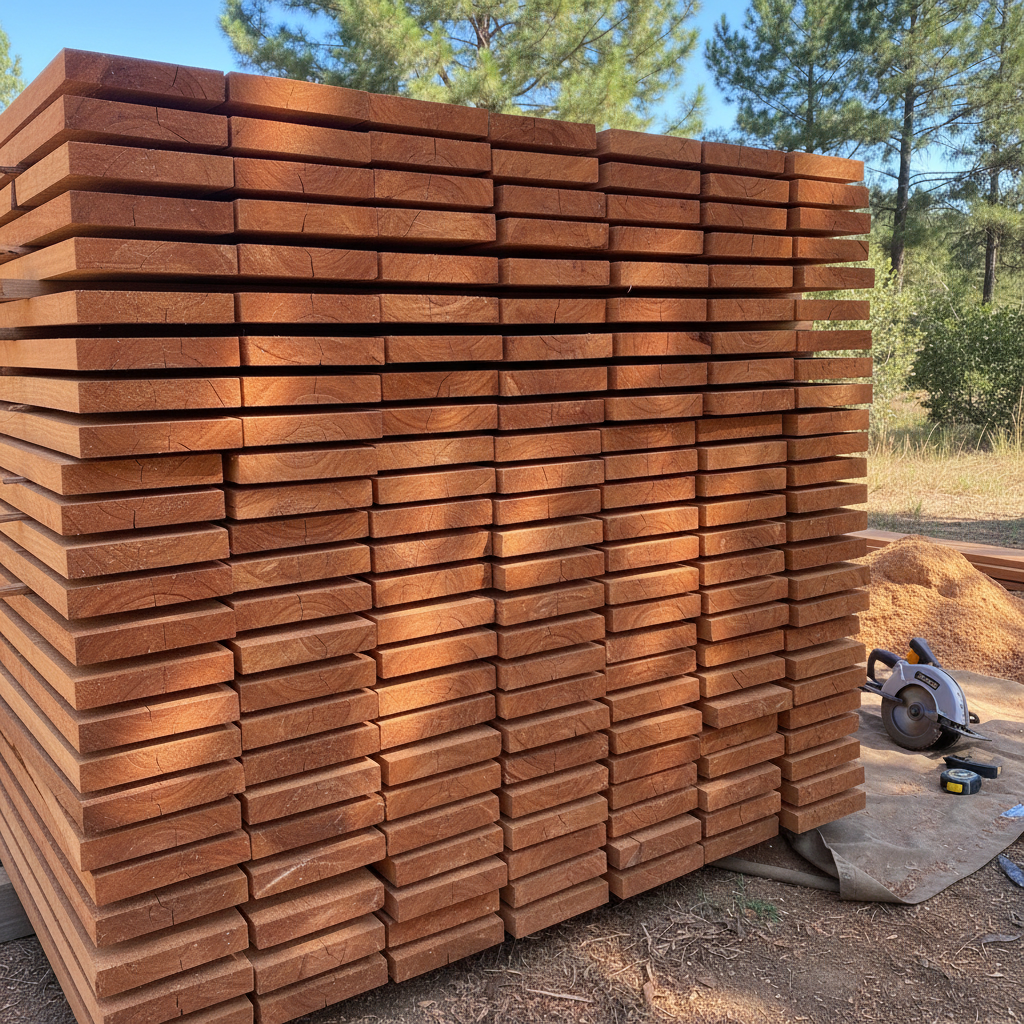
Wood boards for sides and bottom
Exterior screws for assembly
Wood stain or exterior paint
Landscape fabric for lining
Gravel for drainage layer
Sandpaper for smooth finish
Essential Tools
Circular saw or miter saw
Power drill with bits
Measuring tape and square
Pencil for marking cuts
Clamps to hold pieces
Paintbrush or roller
Optional Upgrades
Router for decorative edges
Wood glue for extra strength
Corner brackets for support
Wheels for mobility
Trellis attachment hardware
Self-watering system kit
Basic Steps to Build Your Planter Box
The construction process follows simple steps that anyone can master. Each step builds on the previous one to create a sturdy box.
The Construction Process
Measure and cut all boards to the proper length for your chosen size
Sand each piece smooth to remove rough spots and splinters
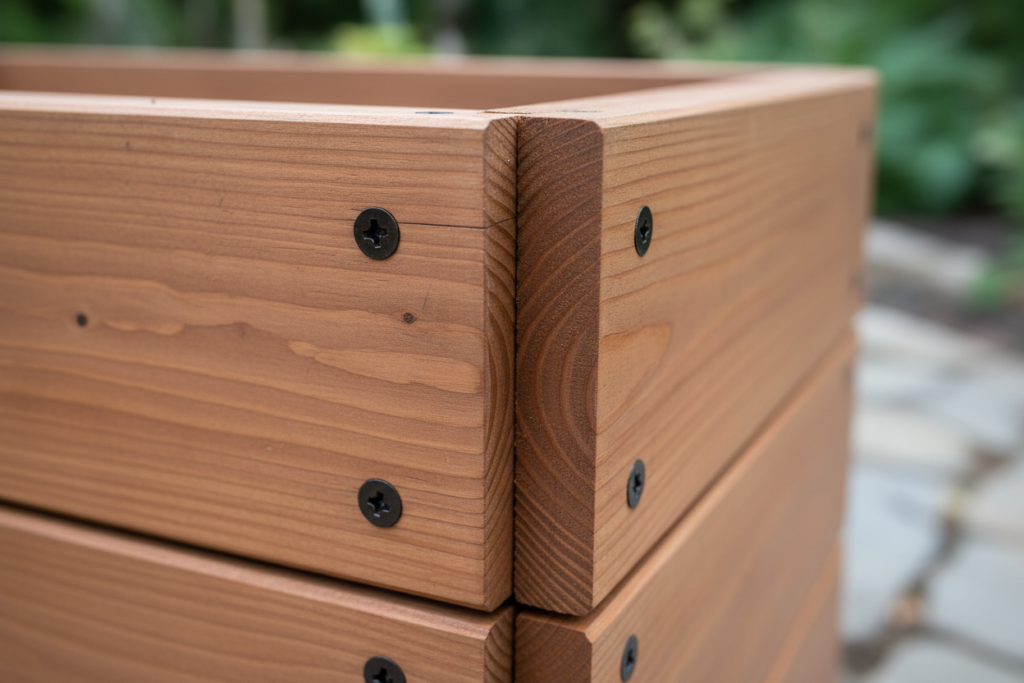
Drill pilot holes to prevent wood from splitting when you add screws
Assemble the four side pieces first to create the box frame
Attach the bottom boards with space between for drainage holes
Apply your chosen finish to protect wood from weather exposure
Add drainage layer of gravel inside before filling with soil
Line sides with landscape fabric to keep soil contained
Key Success Factor
Take your time with measurements. Double-check each cut before you make it. Accurate cuts create tight joints that look professional and last longer. This attention to detail separates amateur projects from quality work.
Common Challenges and Solutions
Every builder faces obstacles during construction. Knowing solutions ahead of time keeps your project moving forward.
What Works Well
Pre-drilling all screw holes prevents splitting
Using clamps holds pieces steady during assembly
Applying finish before assembly reaches inside corners
Building on flat surface ensures square corners
Starting with smaller projects builds confidence
What to Avoid
Skipping wood treatment leads to early rot
Using indoor screws causes rust and failure
Forgetting drainage holes kills plants quickly
Rushing cuts creates gaps and mistakes
Ignoring grain direction weakens structure
Skip the Guesswork with Professional Plans
Get detailed blueprints with exact measurements, materials lists, and illustrated instructions. Build with confidence knowing every step is clearly explained by woodworking experts.
Once you master basic construction, expand into creative variations. Different designs serve different purposes and add visual interest to your garden.
Popular Planter Box Styles
Tiered Garden Boxes
Stack multiple levels to create vertical growing space. This design maximizes limited area while creating dramatic visual impact in any garden spot.
Rolling Mobile Planters
Add wheels to the bottom for easy movement. Follow the sun throughout the day or rearrange your space whenever you want a fresh look.
Bench Planter Combos
Combine seating with growing space in one project. These dual-purpose pieces work perfectly for small patios where every square foot counts.
Raised Garden Beds
Build larger boxes directly on the ground for vegetable gardens. The raised height makes planting and harvesting easier on your back.
Window Box Style
Create long, narrow planters for mounting under windows. These classic designs add charm to home exteriors and bring flowers to eye level.
Corner Triangle Design
Utilize corner spaces with triangular boxes. These unique shapes fit where rectangular planters cannot, making use of every available area.
Adding Personal Touches
Customize your planters to reflect your style. Small details make big differences in the final appearance.
Apply contrasting stain colors for modern appeal
Add decorative trim pieces along top edges
Incorporate lattice panels for climbing plants
Install interior shelf dividers for organization
Attach nameplates or address numbers
Paint designs or patterns on outer surfaces
Include built-in irrigation systems
Create removable liner boxes for seasonal changes
Maintaining Your Wooden Planter Box for Years of Use
Proper care extends planter life significantly. A little maintenance each year keeps boxes looking great and functioning well.
Seasonal Care Schedule
Different seasons require different attention. Follow this schedule to keep planters in top condition year after year.
Spring Preparation
Clean out old soil and debris from the previous season. Inspect wood for damage or rot. Apply fresh coat of protective finish if needed. Check that drainage holes remain clear and open.
Summer Monitoring
Watch for signs of wood drying or cracking in hot weather. Keep soil moist but not waterlogged. Check screws and joints periodically to ensure they remain tight and secure.
Fall Maintenance
Remove spent plants and refresh soil for next year. Clean exterior surfaces thoroughly. This is the best time to apply protective stain or sealer for winter protection.
Winter Protection
Move boxes under cover if possible during harsh weather. Ensure proper drainage to prevent ice damage. Cover or wrap planters in extreme cold climates to protect wood.
Signs Your Planter Needs Attention
Catch problems early before they become serious. Watch for these warning signs during regular inspections.
Red Flags to Address Immediately
Soft or spongy wood indicates rot beginning
Loose joints mean screws need tightening or replacement
Fading color signals time for fresh protective finish
Cracks wider than hairline need filling and sealing
Standing water inside shows drainage issues
4.8
Overall Satisfaction Rating
Build Difficulty
3.5/5
Material Cost
4.1/5
Time Investment
3.8/5
Durability
4.6/5
Visual Appeal
4.9/5
Tips for Guaranteed DIY Planter Box Success
Learn from experienced builders to avoid common mistakes. These insights help you create planters that exceed your expectations.
Expert Recommendations
The difference between a planter that lasts three years and one that lasts fifteen comes down to preparation and protection. Never skip the sealing step, and your boxes will reward you with decades of service.
Getting the Most from Your Build
Maximize Your Investment
Make smart choices that increase value and reduce waste. Your planter project deserves the best approach from start to finish.
Buy wood in standard lengths to minimize cuts and waste
Build multiple boxes at once to save time on setup
Choose designs you can expand or modify later
Invest in quality screws that will not rust over time
Keep leftover wood pieces for future repairs
Document your process with photos for next project
Share plans with friends to split material costs
Consider selling completed boxes to offset expenses
Taking Your Skills Further
Building planters teaches valuable skills you can apply to other projects. Each box you complete increases your confidence and ability.
Start with simple rectangular designs to master basic techniques. Move to more complex shapes as your comfort level grows. The skills you develop transfer directly to other woodworking projects around your home and garden area.
Many builders discover a genuine passion for woodworking through planter projects. What starts as a simple garden enhancement becomes a fulfilling hobby that creates beauty and function throughout your property.
Start Building Your Perfect Garden Planters Today
Creating wooden planter boxes transforms both your garden and your sense of accomplishment. Every project teaches new skills while adding beauty to your outdoor space.
The journey from raw lumber to finished planter brings genuine satisfaction. You control every aspect of design, from size and shape to finish and style. This creative freedom lets you craft exactly what your garden needs.
Quality materials and proper construction techniques ensure your boxes serve you well for many years. The time you invest today creates lasting value that enhances your property and provides growing space for seasons to come.
Whether you build one small herb box or create an entire garden system, each planter represents your personal touch. These are not mass-produced containers but custom creations that reflect your vision and effort.
Transform Your Garden Vision Into Reality
Stop struggling with incomplete instructions and guesswork. Get access to professional woodworking plans that include detailed diagrams, complete materials lists, and expert guidance for every skill level. Build stunning planters with confidence.
Your garden awaits the custom planters only you can create. Take that first step toward building beautiful wooden boxes that showcase your plants and your craftsmanship for years ahead.
You walk into the gym ready to transform your body. The free weights section calls to you, but doubt creeps in. Where do you start? What exercises actually work? You’re not alone in feeling overwhelmed.This Website contains affiliate links. That means I may earn a small commission if you purchase through my links, at no…
Valentine’s Day isn’t just about flowers and chocolates for her. Creating a personalized gift basket for the special man in your life shows thoughtfulness and care that goes beyond a store-bought card. Whether he’s a foodie, sports enthusiast, or self-care newbie, a curated Valentine’s Day basket filled with items tailored to his interests will make…
Turning your woodworking hobby into a profitable business starts with choosing the right projects. The wood market offers incredible opportunities for crafters who know what customers actually want to buy. Whether you’re working from a small garage or a dedicated workshop, certain wood projects consistently generate sales and deliver solid profit margins.This Website contains affiliate…
Your metabolism controls how many calories your body burns throughout the day. Every meal you eat, every workout you complete, and every hour of sleep you get affects this vital process. But what if you could boost metabolism in just sixty seconds?This Website contains affiliate links. That means I may earn a small commission if…
Your gut houses trillions of microorganisms that control everything from digestion to immunity. The foods you eat directly shape this internal ecosystem. Fermented foods offer a powerful way to support your gut health through natural probiotics and beneficial bacteria.This Website contains affiliate links. That means I may earn a small commission if you purchase through…
Your bridesmaids stand by your side through wedding planning stress, late-night venting sessions, and countless dress fittings. They’re your support system on one of the most important days of your life. Finding the perfect bridesmaid gifts to thank them isn’t just tradition—it’s a meaningful way to express your gratitude for their friendship and support.This Website…