

How to Stay Focused for Long Hours: Transform Your Productivity Today
Your mind wanders after twenty minutes. Your phone beckons every few seconds. That important project sits unfinished while hours slip away.
This Website contains affiliate links. That means I may earn a small commission if you purchase through my links, at no extra cost to you.
You are not alone in this struggle. Millions of people face the same challenge every single day.
The ability to stay focused for long hours determines success in nearly every area of life. Students need it to master complex subjects. Professionals require it to complete meaningful work. Entrepreneurs depend on it to build their dreams.
Yet most people never develop this critical ability. They rely on willpower, which fails them repeatedly. They try superficial tips that provide temporary relief but no lasting change.
This article reveals the science-backed strategies that actually work. You will discover how your brain processes attention. You will learn practical techniques used by top performers across industries. You will understand why your current approach keeps failing and what to do instead.
Understanding How Your Brain Maintains Focus
Your brain was not designed for the modern world. Evolution shaped human attention for survival in dangerous environments, not for sitting at desks completing abstract tasks.
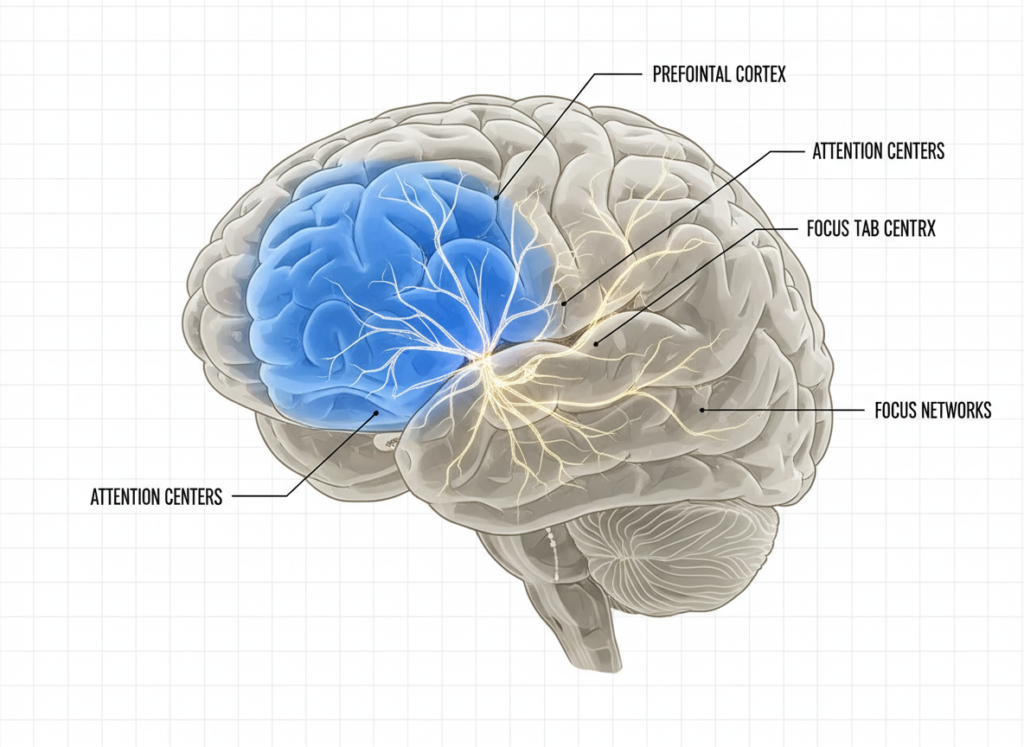
The prefrontal cortex controls your ability to focus. This region manages executive functions like planning, decision-making, and sustained attention. But it has severe limitations.
Research shows the average person can maintain peak focus for about ninety minutes before mental fatigue sets in. After this window, your brain needs recovery time. Pushing through without breaks actually reduces overall productivity.
Your brain also operates on ultradian rhythms. These are ninety-minute cycles of high and low energy throughout the day. Understanding and working with these natural rhythms dramatically improves your ability to stay focused.
Glucose and oxygen fuel your brain. When levels drop, so does your concentration. This explains why you struggle to focus when hungry or in poorly ventilated spaces.
Neurotransmitters like dopamine play crucial roles in attention. Low dopamine levels make focusing feel nearly impossible. Activities that spike then crash dopamine create focus problems hours later.
The good news? You can train your brain to focus better. Neuroplasticity means your brain physically changes based on how you use it. Consistent practice with the right techniques literally rewires neural pathways for improved concentration.
Ready to Master Your Focus?
Thousands of professionals have discovered a proven system that transforms scattered attention into laser-sharp focus. Learn the complete method that goes beyond basic tips to create lasting change in how your brain processes concentration.
Seven Focus Destroyers Sabotaging Your Productivity
Identifying what breaks your focus matters as much as knowing what builds it. Most people battle invisible enemies they never recognize.
Digital Distractions Fragmenting Your Attention
Your phone interrupts you an average of ninety-six times per day. Each notification fractures your focus, requiring up to twenty-three minutes to fully recover your previous level of concentration.
Social media platforms employ teams of psychologists to make their apps addictive. They exploit dopamine loops that make checking your phone feel urgent even when nothing important awaits.

Email creates similar problems. Studies show people check email every six minutes on average. This constant task-switching devastates productivity and mental energy.
Poor Sleep Destroying Mental Clarity
Sleep deprivation impairs focus as severely as intoxication. Just one night of poor sleep reduces attention span by forty percent the following day.
Most adults need seven to nine hours of quality sleep. Anything less accumulates as sleep debt, progressively worsening your ability to concentrate over time.
The brain consolidates learning and clears metabolic waste during sleep. Skipping adequate rest literally poisons your mind with cellular debris that impairs cognitive function.
Multitasking Myth Reducing Effectiveness
Multitasking is actually rapid task-switching. Your brain cannot truly focus on two complex tasks simultaneously.
Research proves multitasking reduces productivity by forty percent. It also increases errors dramatically while creating the false impression of getting more done.
Every time you switch tasks, you incur a cognitive switching cost. Your brain needs time to disengage from one activity and fully engage with another.
Environmental Chaos Overwhelming Your Senses
Cluttered workspaces bombard your visual cortex with stimuli. This constant processing drains mental energy needed for focus.
Noise pollution similarly disrupts concentration. Even background sounds you think you have tuned out consume cognitive resources.
Poor lighting strains your eyes and reduces alertness. Temperature extremes force your body to divert energy toward thermoregulation instead of mental tasks.

Blood Sugar Rollercoaster Crashing Energy
High-sugar meals spike glucose then crash it hours later. These crashes devastate focus and create intense cravings that further disrupt attention.
Skipping meals depletes the fuel your brain needs. The mind uses twenty percent of your daily calories despite being only two percent of body weight.
Dehydration reduces cognitive performance significantly. Even mild water deficits impair memory, attention, and processing speed.
Stress and Anxiety Hijacking Mental Resources
Chronic stress floods your system with cortisol. Elevated cortisol impairs the prefrontal cortex while activating primitive threat-detection systems.
Anxiety keeps your mind scanning for dangers instead of focusing on tasks. This hypervigilance exhausts mental resources rapidly.
Unresolved worries create background mental processes that consume attention. Your conscious mind may try to work while unconscious processes replay concerns repeatedly.
Lack of Clear Purpose Draining Motivation
Tasks without meaning feel impossible to sustain. Your brain allocates attention based on perceived importance and reward.
When you cannot connect current work to meaningful outcomes, maintaining focus requires enormous willpower. This approach fails quickly under pressure.
Unclear goals create decision fatigue. Every moment spent wondering what to do next drains the mental energy needed for actual work.
The Science Behind Sustained Attention and Deep Work
Understanding how focus actually works transforms your approach from guessing to strategic implementation.
Flow States and Peak Performance
Flow describes complete absorption in an activity. Time seems to disappear. Distractions fade away. Performance reaches its highest level.
Neuroscientists have identified the brain patterns during flow. Prefrontal cortex activity actually decreases, reducing self-criticism and doubt. Meanwhile, areas associated with deep focus become highly active.

Achieving flow requires specific conditions. The task must challenge your skills without overwhelming them. Clear goals and immediate feedback help maintain engagement. Elimination of distractions allows full immersion.
Research shows people in flow states are five times more productive than normal. They also report significantly higher satisfaction and well-being.
Attention Restoration Theory
Directed attention is a finite resource. Like a muscle, it fatigues with use and requires rest to recover.
Nature uniquely restores this capacity. Studies prove twenty minutes in natural settings significantly improves subsequent focus. Even viewing nature images provides measurable benefits.
This explains why a walk outside rejuvenates your mind more effectively than scrolling social media. Nature engages involuntary attention, allowing directed attention systems to rest.
Cognitive Load Theory
Your working memory holds only about seven items simultaneously. Exceeding this capacity overwhelms your cognitive system.
Complex tasks consume more working memory. When you approach capacity limits, focus deteriorates and errors multiply.
Reducing cognitive load through better organization and systems frees mental resources for actual thinking. This principle underlies many productivity methodologies.
The Role of Habits in Focus
Habits operate automatically, requiring minimal mental energy. Converting focus practices into habits dramatically reduces the willpower needed.
The brain forms habits through repeated association between cues and behaviors. Consistent practice creates neural pathways that make focusing feel increasingly natural.
Research shows it takes an average of sixty-six days to establish a new habit. The initial weeks feel difficult, but persistence creates lasting change.
Transform Your Focus in Just Weeks
Stop struggling with scattered attention and start experiencing the power of deep, sustained focus. The comprehensive system used by thousands combines neuroscience, practical techniques, and habit formation to create permanent improvement.
Practical Techniques to Stay Focused for Long Hours
Knowledge means nothing without application. These proven techniques translate science into actionable strategies you can implement immediately.
The Pomodoro Technique for Time Management
This method breaks work into focused intervals separated by short breaks. The traditional approach uses twenty-five-minute work sessions followed by five-minute breaks.

The timer creates productive urgency. Knowing a break approaches helps maintain intensity during work intervals.
After four intervals, take a longer break of fifteen to thirty minutes. This pattern respects your brain’s natural rhythms.
Many people modify the intervals based on their tasks. Complex analytical work might use fifty-minute sessions. Creative tasks might benefit from shorter bursts.
Deep Work Sessions for Maximum Productivity
Deep work means sustained focus on cognitively demanding tasks without distraction. This practice produces exceptional results in less time.
Schedule specific blocks for deep work. Protect these sessions fiercely from interruptions, meetings, and communications.
Start with sixty to ninety-minute sessions. Gradually build endurance as your focus capacity expands.
Communicate boundaries clearly. Let colleagues know you are unavailable during deep work blocks except for genuine emergencies.
Environment Optimization Strategies
Your physical space profoundly impacts mental performance. Small adjustments create significant improvements.
Eliminate visual clutter. Keep only essential items within view. File away papers. Close unnecessary browser tabs.
Control noise levels. Use noise-canceling headphones if needed. Some people focus best in complete silence while others prefer ambient sounds.

Optimize lighting. Natural light works best when possible. Position your workspace to avoid glare on screens.
Maintain comfortable temperature. Research suggests slightly cool environments around sixty-eight to seventy degrees Fahrenheit enhance alertness.
Strategic Break Implementation
Breaks are not weakness. They are essential for sustained high performance over long hours.
Move during breaks. Physical activity increases blood flow to the brain and triggers neurochemical releases that restore focus.
Avoid screens during rest periods. Your eyes and mind need genuine breaks from digital stimulation.
Step outside when possible. Even brief nature exposure provides measurable cognitive benefits.
Practice strategic recovery activities. Meditation, stretching, or brief conversations can all restore mental energy.
Nutrition and Hydration for Brain Power
What you consume directly affects your ability to focus. Strategic eating maintains stable energy and sharp cognition.
Eat balanced meals with protein, healthy fats, and complex carbohydrates. This combination provides sustained energy without crashes.
Time meals strategically. Heavy meals redirect blood flow to digestion, reducing mental clarity. Lighter meals work better during intensive focus periods.
Stay hydrated consistently. Keep water nearby and drink regularly throughout the day. Waiting until you feel thirsty means you are already slightly dehydrated.
Consider brain-supporting foods. Omega-3 fatty acids, berries, nuts, and green vegetables provide nutrients that enhance cognitive function.
Digital Minimalism and Focus
Technology enables incredible productivity but also creates unprecedented distraction. Intentional management is essential.
Use website blockers during focus sessions. Apps like Freedom or Cold Turkey prevent access to distracting sites.
Turn off all notifications. Every ping fragments your attention. Check communications during designated breaks instead.
Remove social media apps from your phone. The extra friction of using a browser reduces mindless checking.
Implement email batching. Process email two to three times daily rather than constantly monitoring your inbox.

Physical Exercise for Cognitive Enhancement
Exercise powerfully enhances brain function. Regular physical activity literally grows the brain regions responsible for focus and memory.
Morning exercise primes your brain for peak performance throughout the day. Even twenty minutes of moderate activity provides significant benefits.
Movement breaks during long work sessions restore mental energy. Brief walks or stretching routines refresh concentration.
Cardiovascular exercise increases blood flow to the brain. This delivers more oxygen and nutrients while removing waste products.
Consistent exercise improves sleep quality. Better sleep creates better focus in a positive reinforcement cycle.
Sleep Optimization for Next-Day Focus
Your ability to focus tomorrow depends on how you sleep tonight. Prioritizing sleep quality multiplies daytime performance.
Maintain consistent sleep and wake times, even on weekends. This stabilizes your circadian rhythm.
Create a wind-down routine. Dim lights, avoid screens, and engage in calming activities for the hour before bed.
Keep your bedroom cool, dark, and quiet. Invest in blackout curtains and consider white noise if needed.
Avoid caffeine after early afternoon. Its half-life means evening consumption disrupts sleep even if you fall asleep normally.
Limit alcohol before bed. While it may help you fall asleep, it disrupts sleep architecture and reduces rest quality.
Advanced Strategies for Extended Concentration
Once you master the fundamentals, these advanced techniques unlock even higher levels of sustained focus.
Meditation and Mindfulness Training
Meditation directly trains the neural circuits responsible for attention control. Even brief daily practice produces measurable improvements.
Start with just five minutes daily. Sit comfortably and focus on your breath. When your mind wanders, gently return attention to breathing.

Research shows eight weeks of consistent meditation increases gray matter density in attention-related brain regions. These physical changes create lasting improvements.
Mindfulness throughout the day builds focus capacity. Notice when attention drifts during tasks and consciously redirect it.
Energy Management Over Time Management
Managing your energy proves more important than managing your time. Schedule demanding tasks during your peak energy hours.
Most people experience highest mental clarity in late morning. Use this window for your most important work.
Track your energy patterns for a week. Note when you feel most alert and when energy dips occur.
Design your day around these rhythms. Batch similar tasks together. Place low-energy tasks during natural dip periods.
Single-Tasking as a Superpower
The ability to focus exclusively on one task has become rare. This makes it incredibly valuable.
Close all unrelated programs and tabs. Have only what you need for your current task visible.
Keep a notepad nearby for capturing intrusive thoughts. Write them down so you can return to your task without fear of forgetting.
Practice bringing your attention back when it wanders. This metacognitive awareness strengthens over time.
Building Focus Endurance Progressively
Like physical training, focus capacity improves through progressive overload. Start where you are and gradually extend duration.
If you currently focus for fifteen minutes before distraction, aim for eighteen minutes next week. Small increments compound dramatically over time.
Track your focus sessions. Seeing progress motivates continued practice and helps identify patterns.
Celebrate improvements. Acknowledge when you achieve new personal records for sustained attention.
Leveraging Music and Soundscapes
The right audio environment enhances focus for many people. Experiment to find what works for you.
Instrumental music without lyrics often works best. Lyrics can engage language processing centers and distract from reading or writing.

White noise or nature sounds mask environmental distractions. Apps provide endless varieties of ambient soundscapes.
Binaural beats may enhance certain mental states. Some people report improved focus with specific frequency patterns.
Some tasks require complete silence. High-complexity analytical work often benefits from eliminating all auditory input.
Accountability Systems and Tracking
What gets measured gets improved. Tracking focus creates awareness and motivates progress.
Use time-tracking apps to monitor how you actually spend your day. The data often reveals surprising patterns.
Share goals with an accountability partner. Regular check-ins create positive pressure to follow through.
Join or create a focus group. Working alongside others pursuing similar goals provides motivation and ideas.
Review your progress weekly. Identify what worked well and what needs adjustment.
Stop Settling for Scattered Attention
You have learned the science and strategies. Now discover the complete system that ties everything together into a practical, sustainable approach. Join thousands who have transformed their ability to focus and unlocked new levels of achievement.
Overcoming Common Obstacles to Long-Hour Focus
Even with the best strategies, challenges arise. Knowing how to navigate obstacles separates consistent performers from those who give up.
Dealing with Mental Fatigue
Mental exhaustion signals you have exceeded your current capacity. Pushing through usually worsens the problem.
Take a genuine break when fatigue hits. A fifteen-minute walk outside often restores surprising mental clarity.
Recognize the difference between fatigue and resistance. Fatigue feels heavy and foggy. Resistance feels like avoidance of difficulty.
Build recovery time into your schedule. Periods of intense focus require corresponding periods of rest.
Managing Intrusive Thoughts
Your mind will wander. Accept this as normal rather than fighting it constantly.
The capture habit helps tremendously. Keep paper nearby to write down intrusive thoughts so you can return to your task.
Scheduled worry time paradoxically reduces intrusive thoughts. Dedicate fifteen minutes daily to thinking through concerns.
Mindfulness practice improves your ability to notice when attention drifts and redirect it without self-criticism.
Handling Motivation Dips
Motivation fluctuates naturally. Systems and habits matter more than feelings.
Connect daily tasks to larger meaningful goals. Understanding the “why” behind work sustains effort when motivation fades.
Use implementation intentions. Instead of “I will focus more,” try “When I sit at my desk at nine, I will immediately begin task X.”
Lower the barrier to starting. Sometimes beginning a task for just five minutes builds momentum that carries you forward.
Adapting to Different Task Types
Different work requires different approaches. Creative tasks need different conditions than analytical work.
Analytical tasks often benefit from quiet, distraction-free environments. These require maximum cognitive resources.
Creative work sometimes benefits from moderate ambient noise. Coffee shop levels of sound can enhance creativity.
Administrative tasks require less deep focus. Batch these together during lower-energy periods.
Learning new material demands frequent breaks for consolidation. The brain needs time to process and store information.
Building Sustainable Focus Habits for Life
Short-term improvements mean little without lasting change. These principles create sustainable transformation.
The Power of Routine and Ritual
Routines eliminate decision fatigue and create automatic pathways to focused states.
Develop a pre-focus ritual. This might include making coffee, reviewing goals, and arranging your workspace in a specific way.

Consistency matters more than perfection. Following your routine ninety percent of the time beats perfection that lasts only a week.
Adjust routines based on feedback. Track what works and refine your approach over time.
Identity-Based Habits
Focus on becoming a focused person rather than just performing focused actions.
Ask yourself “What would a focused person do?” in challenging moments. This question shifts perspective powerfully.
Small consistent actions build identity. Each time you choose focus over distraction, you strengthen this self-image.
Your identity drives behavior more than willpower. Becoming someone who values and practices focus creates automatic alignment.
Progressive Challenge and Growth
Maintain engagement by continually expanding your capabilities. Stagnation leads to boredom and backsliding.
Set progressive focus goals. After mastering ninety-minute sessions, aim for two hours with a short break.
Apply your improving focus to increasingly complex tasks. This creates positive feedback as you achieve more challenging goals.
Document your journey. Reviewing how far you have come provides motivation during difficult periods.
Creating Environmental Defaults
Engineer your environment to make focus the path of least resistance.
Keep your phone in another room during work sessions. Adding physical distance dramatically reduces checking impulses.
Use separate user profiles or devices for work and entertainment. This creates psychological boundaries.
Prepare your workspace the night before. Waking to an organized environment ready for focused work removes morning friction.
Measuring and Tracking Your Focus Improvement
Objective measurement reveals true progress and identifies areas needing adjustment.
Quantitative Metrics
Track time spent in deep focus daily. This single metric correlates directly with meaningful output.
Monitor distraction frequency. Count how many times you check your phone or switch tasks during work sessions.
Measure output quality and quantity. More focused hours should produce better results in less time.
Note energy levels throughout the day. Patterns emerge that inform optimal scheduling.
Qualitative Assessment
How does focused work feel? Improving focus should feel increasingly natural, not forced.
Rate task satisfaction. Work completed with full attention typically feels more rewarding.
Notice stress levels. Better focus often reduces anxiety about uncompleted tasks.
Assess life balance. Improved focus should create more genuine free time, not just longer work hours.
Weekly Review Process
Set aside thirty minutes weekly to review your focus practice.
What worked well this week? Identify successful strategies to continue.
What challenges arose? Problem-solve obstacles before they become chronic issues.
What will you adjust next week? Continuous small improvements compound dramatically.
Your Journey to Sustained Focus Starts Now
You now understand how to stay focused for long hours. The science reveals why your brain struggles. The strategies provide proven solutions.

Knowledge alone changes nothing. Application creates transformation.
Start with one technique today. Perhaps the Pomodoro method or environment optimization. Master it before adding more.
Remember that building focus capacity takes time. You are rewiring neural pathways formed over years. Be patient with yourself while maintaining consistency.
The ability to focus deeply for extended periods will distinguish you in an increasingly distracted world. This skill multiplies the value of your time and the quality of your output.
Your competitors settle for scattered attention and mediocre results. You now have the tools to achieve what seems impossible to others.
Every hour you invest in building focus capacity pays dividends for decades. This might be the highest-return investment you ever make.
Transform Your Focus and Your Life Today
You have learned the fundamentals, but mastery requires more. The complete focus transformation system provides everything you need: step-by-step implementation guides, advanced techniques, troubleshooting strategies, and ongoing support. Thousands have already made the shift from scattered to focused. Your transformation starts the moment you decide to take action.