Healthy Habits for Sustainable Weight Loss: Your Complete Guide to Lasting Results
Are you tired of the endless cycle of losing weight only to gain it back? You’re not alone. Millions of people struggle with weight loss because they focus on quick fixes instead of building lasting habits. The truth is simple: sustainable weight loss isn’t about extreme diets or punishing exercise routines. It’s about creating healthy habits that fit naturally into your life.
This Website contains affiliate links. That means I may earn a small commission if you purchase through my links, at no extra cost to you.
This guide will show you exactly how to build those habits. You’ll discover science-backed strategies that actually work for the long term. No more yo-yo dieting. No more frustration. Just real, practical advice you can start using today.
Understanding Sustainable Weight Loss: Why Most Diets Fail
Most people approach weight loss the wrong way. They start with extreme restrictions and unsustainable plans. Research shows that 95% of fad diets fail within a year. The problem isn’t willpower. The problem is the approach itself.
Sustainable weight loss happens when you make small changes that become permanent lifestyle habits. Your body adapts to gradual changes much better than sudden restrictions. When you lose weight too quickly, your metabolism slows down. Your body fights to regain that weight.
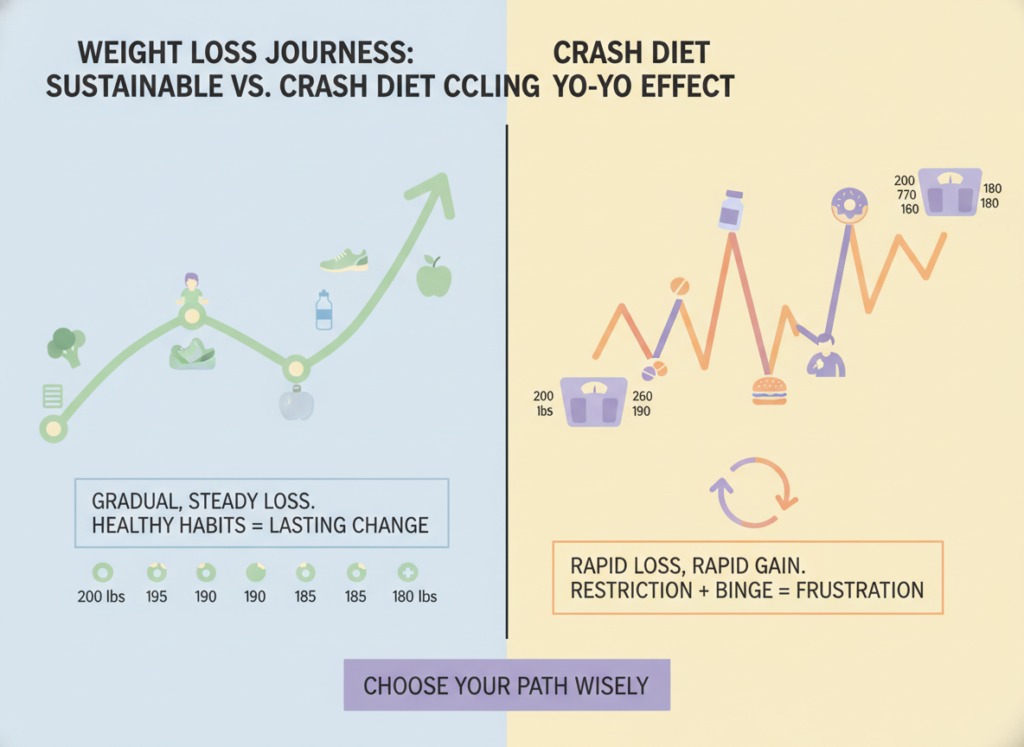
The Centers for Disease Control recommends losing one to two pounds per week for sustainable results. This pace gives your body time to adjust. It helps preserve muscle mass while burning fat. Most importantly, it allows new habits to take root in your daily routine.
Think of weight loss as a lifestyle change, not a temporary diet. The goal isn’t just to lose weight. The goal is to become healthier and maintain that health for life. That requires a completely different mindset from quick-fix approaches.
Creating Realistic Goals That Actually Work
Setting the right goals makes all the difference in your weight loss journey. Vague goals like “lose weight” don’t provide clear direction. Specific, measurable goals give you something concrete to work toward each week.
Start by determining a healthy weight range for your body type and height. Your doctor can help with this assessment. Once you know your target, break it down into smaller milestones. Instead of focusing on losing 50 pounds, focus on losing five pounds this month.
Short-Term Goals (Weekly)
- Exercise for 30 minutes five days this week
- Prepare healthy meals at home four times
- Drink eight glasses of water daily
- Get seven to eight hours of sleep each night
- Track food intake in a journal
Long-Term Goals (Monthly)
- Lose one to two pounds per week consistently
- Develop three new healthy recipes you enjoy
- Build strength with resistance training twice weekly
- Reduce processed food consumption by 50%
- Establish a sustainable exercise routine
Write your goals down and review them regularly. Track your progress in a journal or app. Celebrate small victories along the way. When you reach a milestone, acknowledge your success before moving to the next goal.
Remember that setbacks are normal. One bad day doesn’t erase weeks of progress. The key is getting back on track quickly without guilt or shame. Progress isn’t always linear, but consistency over time produces results.
Nutrition Fundamentals for Sustainable Weight Loss
What you eat matters more than how much you eat. Quality nutrition fuels your body and supports healthy weight loss. You don’t need to count every calorie, but you do need to understand basic nutrition principles.
Building Balanced Meals
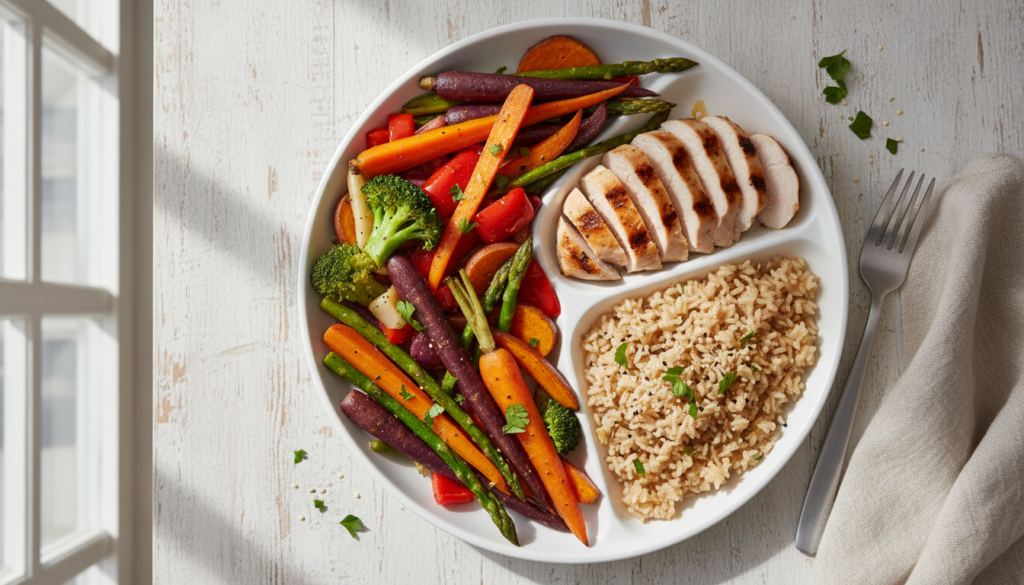
Every meal should include three components: protein, complex carbohydrates, and healthy fats. This combination keeps you full longer and stabilizes blood sugar. When your blood sugar is stable, you experience fewer cravings and more consistent energy throughout the day.
Fill half your plate with vegetables at each meal. Vegetables are low in calories but high in nutrients and fiber. They help you feel satisfied without consuming excess calories. Choose a variety of colors to get different vitamins and minerals.
- Lean proteins: chicken breast, fish, tofu, legumes, eggs
- Complex carbohydrates: brown rice, quinoa, sweet potatoes, oats
- Healthy fats: avocado, nuts, olive oil, fatty fish
- Vegetables: leafy greens, broccoli, peppers, carrots, tomatoes
- Fruits: berries, apples, oranges, bananas in moderation
Portion Control Without Deprivation
You don’t need to weigh every morsel of food. Simple visual cues work just as well. A serving of protein should be about the size of your palm. A serving of carbohydrates fits in your cupped hand. Fats should be roughly the size of your thumb.
Eat slowly and pay attention to hunger signals. It takes about 20 minutes for your brain to register fullness. When you eat too quickly, you often consume more than your body needs. Put your fork down between bites. Engage in conversation during meals.
Supporting Your Metabolism: While building these healthy eating habits, many people find that natural metabolism support helps optimize their results. The right nutritional supplements can work alongside your diet to enhance fat burning and energy levels throughout the day.
Hydration and Weight Loss
Water plays a crucial role in weight loss. Drinking water before meals can reduce calorie intake by helping you feel fuller. Proper hydration also supports your metabolism and helps your body burn fat more efficiently.
Aim for at least eight glasses of water daily. More if you’re exercising or in hot weather. Sometimes thirst masquerades as hunger. Before reaching for a snack, drink a glass of water and wait 10 minutes to see if you’re truly hungry.
Physical Activity: Moving Your Body for Lasting Results
Exercise is essential for sustainable weight loss. But you don’t need to spend hours at the gym every day. The key is finding activities you actually enjoy and can maintain long-term. Consistency beats intensity when it comes to lasting results.

Types of Exercise for Weight Loss
Combine cardiovascular exercise with strength training for optimal results. Cardio burns calories during the activity. Strength training builds muscle, which increases your resting metabolism. This means you burn more calories even when you’re not exercising.
Start with 30 minutes of moderate activity most days of the week. Moderate activity means you can talk but not sing during the exercise. This might include brisk walking, cycling, swimming, or dancing. Choose activities that fit your lifestyle and preferences.
Cardiovascular Exercise
Activities that elevate your heart rate and burn calories during the session.
- Brisk walking or hiking
- Swimming or water aerobics
- Cycling or spinning
- Dancing or Zumba
Strength Training
Resistance exercises that build lean muscle and boost metabolism.
- Bodyweight exercises (pushups, squats)
- Free weights or resistance bands
- Yoga or Pilates
- Weight machines at the gym
Daily Movement
Increasing general activity throughout your day adds up significantly.
- Take stairs instead of elevators
- Park farther from entrances
- Stand while working when possible
- Walk during lunch breaks
Active Recreation
Fun activities that don’t feel like traditional exercise but burn calories.
- Playing with children or pets
- Gardening or yard work
- Recreational sports leagues
- Active hobbies like hiking
Creating a Sustainable Exercise Routine
Start small and build gradually. If you’re not currently active, begin with just 10 minutes a day. Add five minutes each week until you reach 30 minutes. This gradual approach prevents burnout and reduces injury risk.
Schedule exercise like any important appointment. Morning workouts work well for many people because they get it done before the day gets busy. Others prefer evening exercise to decompress from work stress. Find what works for your schedule and stick with it.
Mix up your activities to prevent boredom. Doing the same workout every day gets monotonous. Variety also challenges different muscle groups and prevents plateaus. Try a new class, explore different walking routes, or workout with a friend for accountability.
Lifestyle Changes That Support Weight Loss
Successful weight loss extends beyond diet and exercise. Your daily habits, sleep patterns, and stress levels all impact your ability to lose weight and keep it off. Small lifestyle adjustments can make a significant difference in your results.

Sleep and Weight Loss Connection
Sleep affects your weight more than most people realize. When you don’t get enough quality sleep, your body produces more ghrelin, the hunger hormone. It also produces less leptin, which signals fullness. This hormonal imbalance makes you hungrier and less satisfied after eating.
Aim for seven to nine hours of quality sleep each night. Establish a consistent sleep schedule by going to bed and waking up at the same time daily. Create a relaxing bedtime routine. Avoid screens for at least an hour before bed, as blue light interferes with melatonin production.
Stress Management Techniques
Chronic stress triggers cortisol release, which promotes fat storage, especially around your midsection. Stress also leads many people to emotional eating as a coping mechanism. Learning to manage stress is crucial for sustainable weight loss.
- Practice deep breathing exercises for five minutes daily
- Try meditation or mindfulness apps to reduce anxiety
- Engage in regular physical activity to release tension
- Spend time in nature or practice grounding techniques
- Connect with supportive friends and family members
- Consider professional counseling if stress feels overwhelming
Building a Support System
People who have social support lose more weight and maintain it better than those going it alone. Share your goals with family and friends who will encourage you. Consider joining a weight loss support group or finding an accountability partner with similar goals.
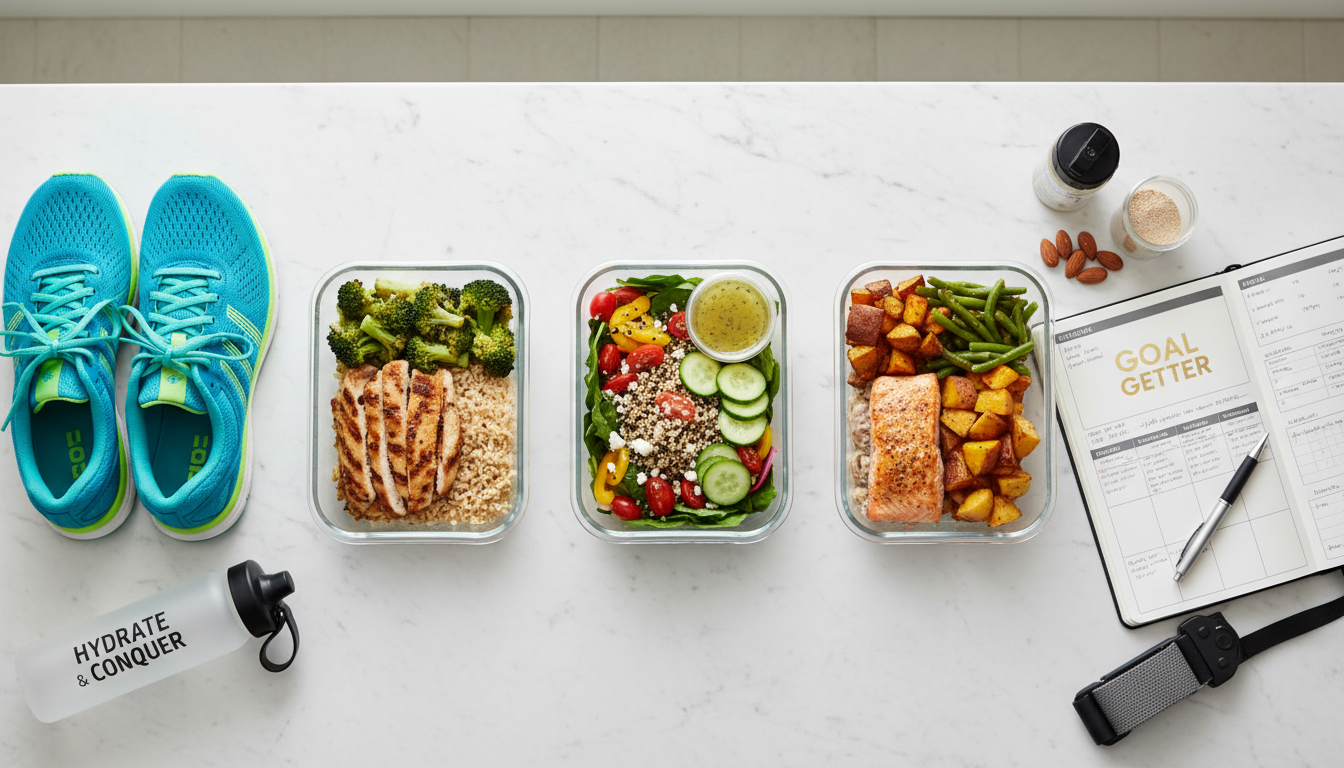
Your environment matters too. Set up your home to support your goals. Keep healthy foods visible and accessible. Remove tempting snacks from easy reach. Prep meals in advance so healthy choices are convenient when you’re busy or tired.
Enhance Your Healthy Lifestyle
As you build these sustainable habits, the right natural support can help maximize your efforts. Many people find that combining lifestyle changes with targeted nutritional support accelerates their progress while maintaining a healthy, balanced approach.
Overcoming Common Weight Loss Obstacles
Every weight loss journey includes challenges. Knowing what to expect and having strategies ready helps you navigate obstacles without derailing your progress. Most problems have simple solutions once you understand the underlying cause.

Breaking Through Weight Loss Plateaus
Almost everyone hits a plateau where weight loss stalls despite continued effort. This is completely normal. As you lose weight, your body needs fewer calories. What worked initially may need adjustment after you’ve lost 10 or 15 pounds.
When you hit a plateau, reassess your calorie needs. You might need to slightly reduce portions or increase activity. Sometimes the solution is actually eating more, especially if you’ve been too restrictive. Your metabolism slows when your body thinks food is scarce.
Change up your exercise routine. Your body adapts to repetitive activities and becomes more efficient, burning fewer calories. Try a new workout class, increase intensity, or add variety to your current routine. Even small changes can restart progress.
Managing Cravings and Emotional Eating
Cravings often signal nutrient deficiencies or emotional needs rather than true hunger. Before giving in to a craving, ask yourself if you’re actually hungry or if something else is driving the urge. Are you bored, stressed, tired, or sad?
If you’re truly hungry, eat a balanced meal or snack. If the craving is emotional, address the underlying feeling differently. Call a friend, take a walk, practice deep breathing, or engage in a hobby you enjoy. Over time, you’ll build new coping mechanisms.
Smart Craving Strategy: Allow yourself small portions of foods you love rather than completely eliminating them. Deprivation leads to binge eating. When you know you can have a treat occasionally, the urgency around cravings diminishes. Plan these treats into your week so you’re in control.
Dealing With Social Situations
Parties, restaurants, and family gatherings present unique challenges. You can enjoy social events without sabotaging your goals. Plan ahead by eating a small healthy snack before you go so you’re not ravenous. At the event, fill your plate mostly with vegetables and lean proteins.
Don’t feel pressured to explain your choices to others. A simple “I’m trying to eat healthier” usually suffices. If someone pushes food on you, politely decline. Your health goals matter more than avoiding momentary awkwardness.
Tracking Progress Beyond the Scale
The number on the scale doesn’t tell the whole story. Weight fluctuates daily due to water retention, hormone cycles, and other factors that have nothing to do with fat loss. Relying solely on weight can be misleading and discouraging.

Track multiple indicators of progress. Take body measurements monthly. Notice how your clothes fit. Pay attention to energy levels, sleep quality, and overall mood. These non-scale victories often appear before significant weight changes show up.
Effective Tracking Methods
Quantitative Measures
- Weekly weigh-ins at the same time of day
- Monthly body measurements (waist, hips, thighs)
- Progress photos every four weeks
- Fitness performance (distance, speed, strength)
- Resting heart rate improvements
Qualitative Indicators
- How your clothes fit and feel
- Energy levels throughout the day
- Sleep quality and duration
- Mood and mental clarity
- Reduced joint pain or inflammation
Keep a food and exercise journal. Writing down what you eat increases awareness and accountability. You don’t need to count calories obsessively, but tracking helps identify patterns. You might discover you eat more when stressed or skip meals on busy days.
Review your journal weekly to spot trends. Are you eating enough protein? Drinking enough water? Getting adequate vegetables? Use this information to make small adjustments. Over time, these minor course corrections add up to major improvements.
Celebrating Milestones
Acknowledge your achievements along the way. When you reach a goal, reward yourself with something meaningful that isn’t food. Buy new workout clothes, get a massage, plan a fun activity, or invest in a fitness gadget you’ve wanted.
Share your success with your support system. Telling others about your progress reinforces your commitment and inspires those around you. Your journey might encourage a friend or family member to start their own health transformation.
Maintaining Your Results for Life
Reaching your goal weight is an achievement, but maintaining that weight requires ongoing commitment. The habits that helped you lose weight are the same habits that will keep it off. This is why sustainable methods matter more than quick fixes.

Research shows that people who successfully maintain weight loss share common characteristics. They continue monitoring their weight and food intake. They remain physically active. They eat breakfast regularly. They don’t let small slips become big slides. Most importantly, they view their healthy habits as permanent lifestyle changes, not temporary measures.
Strategies for Long-Term Success
Stay vigilant without becoming obsessed. Weigh yourself weekly to catch small gains before they become large ones. If you notice a three to five pound increase, take immediate action. Return to stricter portion control and increase exercise for a week or two until you’re back on track.
Continue setting new goals even after reaching your target weight. Train for a 5K race. Master a challenging yoga pose. Increase your strength training weights. Having ongoing fitness goals keeps you motivated and prevents complacency.
- Maintain regular exercise as a non-negotiable part of your routine
- Continue meal planning and preparation habits
- Stay connected with your support system
- Keep unhealthy foods out of your regular environment
- Address emotional issues without using food as comfort
- Get adequate sleep and manage stress effectively
- Allow occasional treats without guilt or shame
Adapting to Life Changes
Life brings changes that can impact your routine. A new job, relationship, baby, or move might disrupt established habits. Plan for these transitions. Think through how you’ll maintain healthy eating and exercise despite schedule changes.
Give yourself grace during challenging times. You might not be able to maintain the same intensity of effort during major life stress. That’s okay. Focus on maintaining rather than improving. Do what you can, and recommit fully when things settle down.
Remember that maintaining weight loss is easier than losing weight initially. You’ve already built the habits and knowledge. You know what works for your body. Trust the process and stay consistent with the fundamentals that got you here.
Your Journey to Sustainable Weight Loss Starts Now
Sustainable weight loss isn’t complicated, but it does require commitment. The healthy habits outlined in this guide work because they’re based on solid science and real-world success. Small, consistent changes compound over time into remarkable transformations.
You don’t need perfect execution. You just need to stay consistent more often than not. Some days will be harder than others. Some weeks you’ll make more progress than others. What matters is that you keep moving forward, learning from setbacks, and staying committed to your health.

The habits you build today create the body and health you’ll have tomorrow. Every healthy meal, every workout, every good night’s sleep moves you closer to your goals. Trust the process. Be patient with yourself. Celebrate every victory, no matter how small.
Your future self will thank you for starting today. The time will pass anyway. Six months from now, you can be in the same place or significantly healthier. The choice is yours, and you have all the tools you need to succeed.
Ready to Accelerate Your Sustainable Weight Loss Journey?
You’ve learned the foundations of healthy, sustainable weight loss. Now it’s time to take action. While building these essential habits, many people discover that natural metabolic support helps optimize their results and maintain consistent energy throughout their transformation.
CitrusBurn combines science-backed natural ingredients designed to support healthy metabolism, enhance fat burning, and boost energy levels—all while complementing the sustainable lifestyle changes you’re making. It’s not a magic pill, but rather a smart addition to the healthy habits you’re already building.