Wooden Storage Projects to Organize Your Workshop and Home
Every woodworker faces the same challenge. Scrap wood piles up in corners. Tools disappear when you need them most. Your workspace becomes cluttered and frustrating.
This Website contains affiliate links. That means I may earn a small commission if you purchase through my links, at no extra cost to you.
The solution sits right in front of you. Those lumber scraps and leftover boards can become your best organizational tools. Building wooden storage projects transforms chaos into order while putting waste material to work.
This guide walks you through practical storage solutions you can build this weekend. Each project uses basic tools and common materials already sitting in your shop.
Why Build Your Own Wooden Storage Solutions
Commercial storage systems cost hundreds of dollars. They rarely fit your exact space or needs. Building your own storage gives you complete control over size, design, and functionality.
Scrap wood becomes valuable again. Those leftover pieces from previous projects find new purpose. You save money while creating custom solutions perfectly matched to your workflow.
Benefits of DIY Storage
- Custom sizing for your exact space requirements
- Use existing scrap wood and lumber pieces
- Build to match your specific tool collection
- Modify designs as your needs change
- Achieve professional results at fraction of retail cost
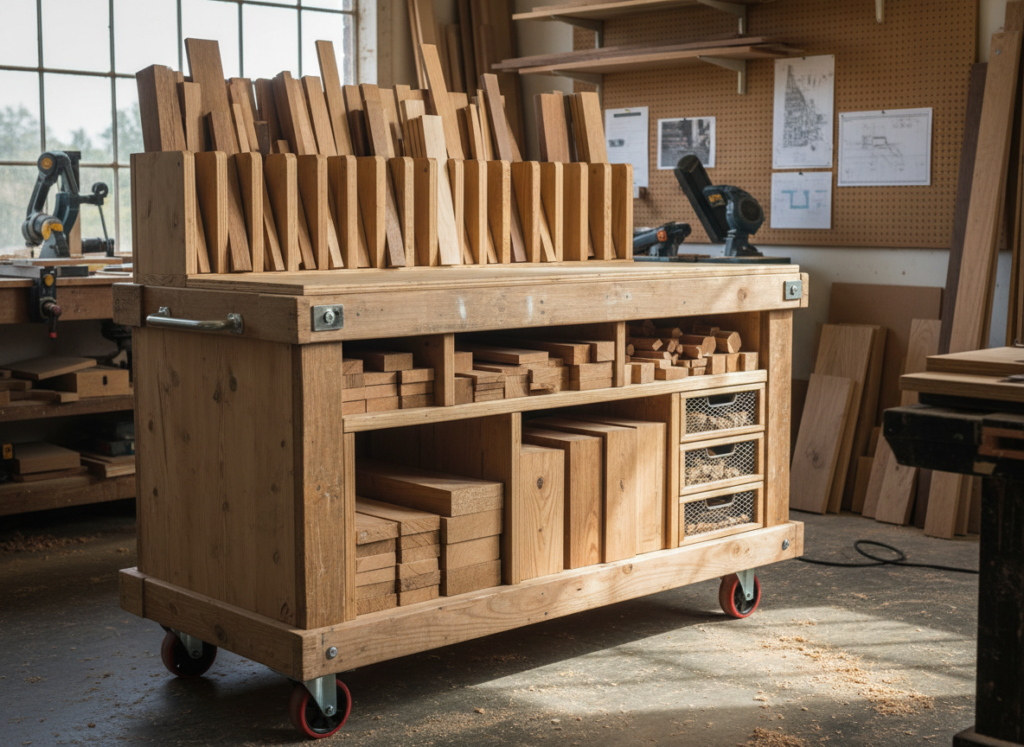
The best part about these wooden storage projects is flexibility. Start with one simple rack this weekend. Add another cart next month. Your storage system grows with your collection.
Essential Scrap Wood Storage Cart Project
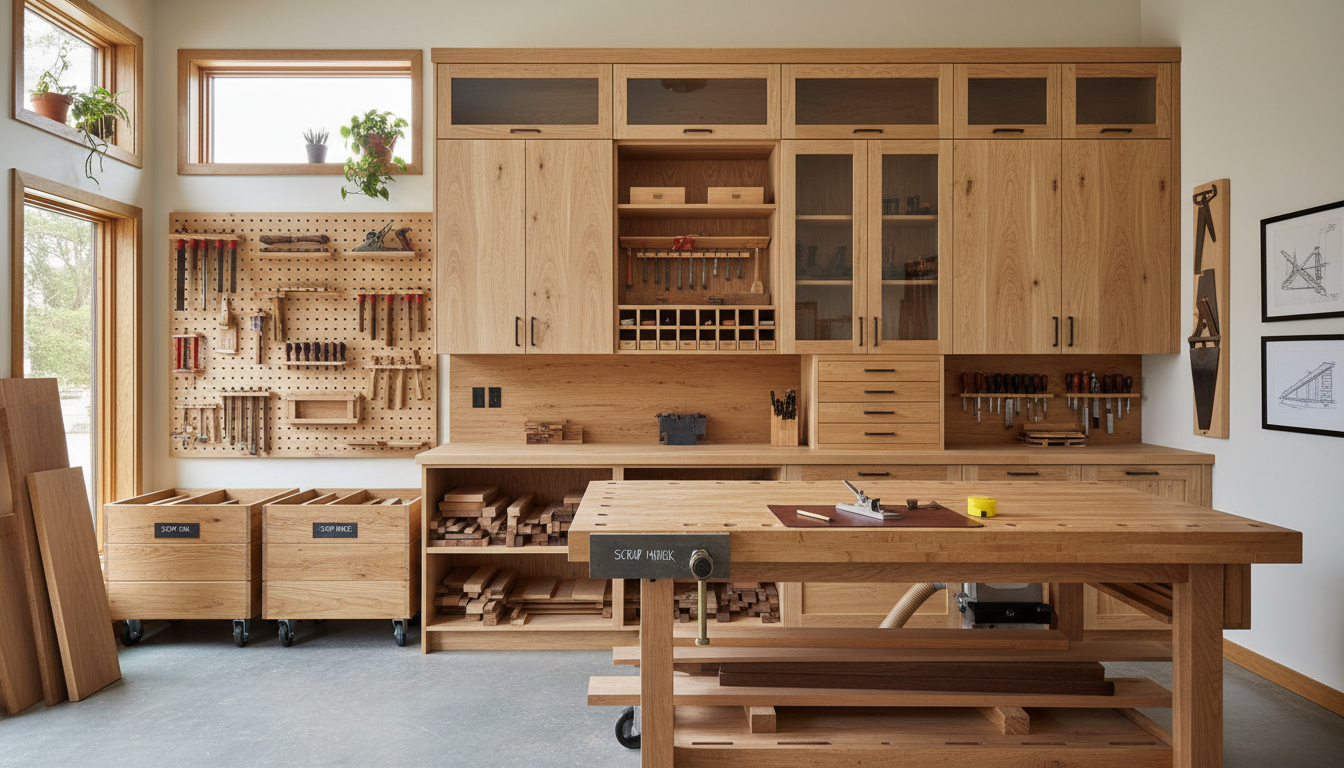
A rolling scrap wood cart solves your biggest workshop headache. This mobile storage solution keeps lumber scraps organized and accessible. The cart moves easily around your space on sturdy wheels.
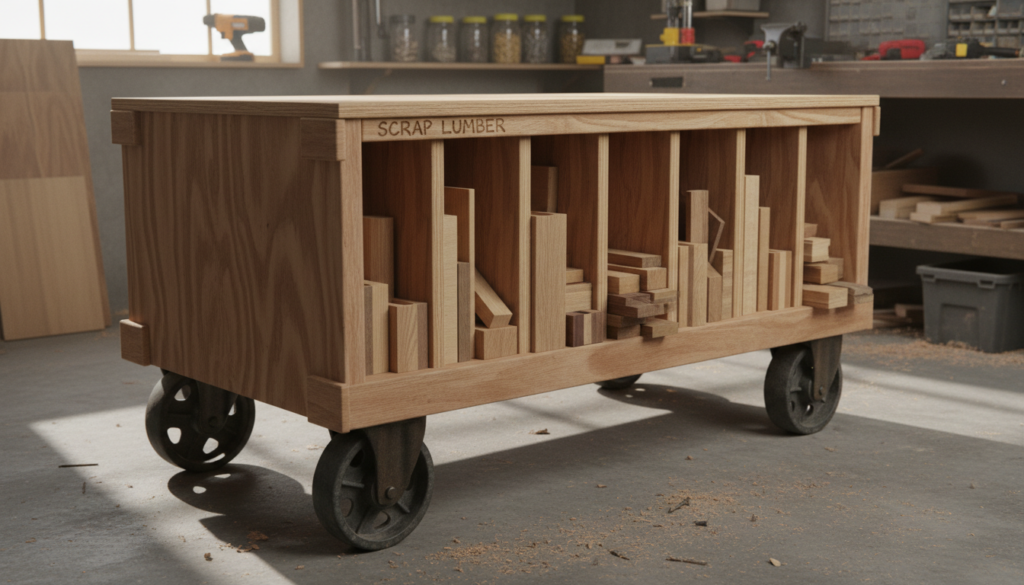
Building Your Scrap Wood Cart
The basic design uses simple plywood construction. Cut two side panels to your desired height. Add dividers to create compartments for different board sizes. The bottom piece provides stability while wheels enable easy movement.
Materials Needed
- One sheet 3/4 inch plywood for main structure
- Four heavy-duty swivel wheels with brakes
- Wood screws for assembly connections
- Wood glue for reinforced joints
- Sandpaper for smooth edges
Tool Requirements
- Circular saw or table saw for cutting
- Drill with screwdriver bits
- Measuring tape and square
- Clamps for holding pieces during assembly
- Safety equipment including glasses and dust mask
Cart Design Variations
Customize your cart for specific storage needs. Add more dividers for smaller scrap pieces. Create wider sections for larger lumber. Some builders include a top shelf for frequently used tools.
The key is making compartments match your typical scrap wood sizes. Measure your common leftover pieces before cutting dividers. This ensures efficient use of space and easy access to materials.
Ready to Build Professional Storage Projects?
Get access to detailed woodworking plans with step-by-step instructions, cut lists, and professional design blueprints. Transform your workshop with proven storage solutions.
Vertical Lumber Storage Rack Design
Wall-mounted lumber racks maximize your vertical space. These storage solutions keep long boards organized and off the floor. Your workspace stays clear while materials remain easily accessible.
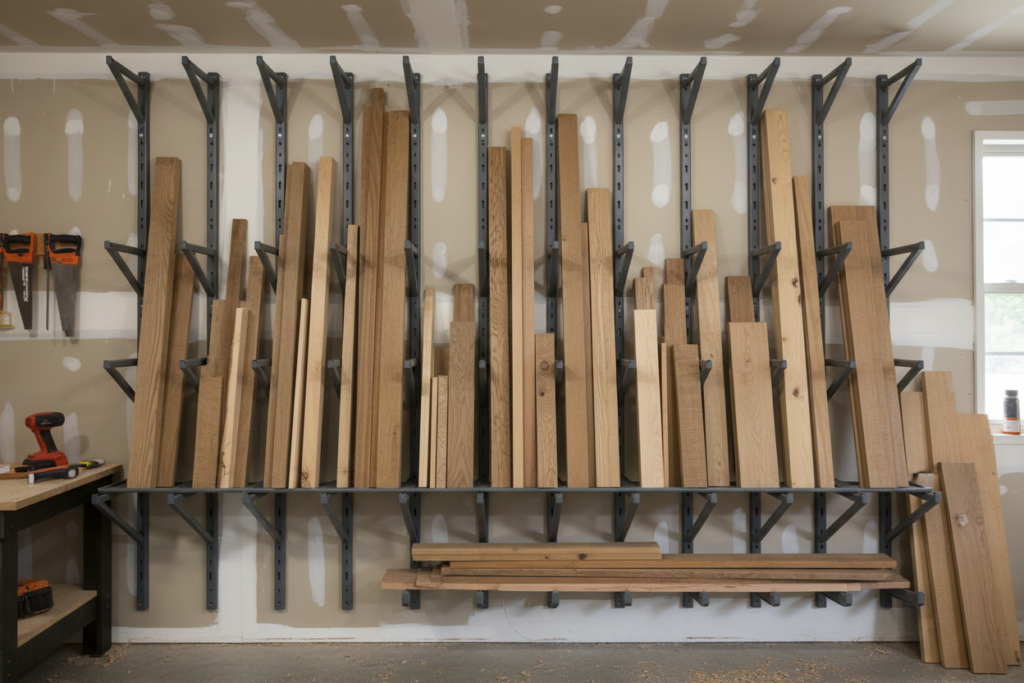
Simple Wall Rack Construction
The basic rack design uses sturdy wall brackets. Each bracket holds lumber at a slight angle for secure storage. Space brackets according to your typical board lengths and weight requirements.
Build brackets from scrap lumber pieces. Two-by-four lumber works perfectly for most applications. Cut angled supports to hold boards at approximately 30 degrees from the wall. This angle prevents boards from sliding while allowing easy removal.
Short Board Rack
Perfect for pieces under four feet. Mount lower on the wall for easy access. Space brackets 16 inches apart for adequate support.
- Two to three bracket sets
- Lower wall mounting height
- Ideal for scrap wood storage
Full Length Rack
Accommodates eight-foot boards and longer. Requires ceiling height clearance. Install brackets every 24 inches for proper weight distribution.
- Four to six bracket sets
- Higher mounting position
- Heavy-duty wall anchoring
Combo Storage System
Combines short and long board storage. Uses vertical wall space efficiently. Provides maximum storage flexibility.
- Multiple bracket heights
- Customized spacing options
- Expandable design approach
Installation Considerations
Find wall studs before installing brackets. Heavy lumber requires solid mounting. Use appropriate screws that penetrate studs at least two inches deep.
Consider your workshop layout carefully. Position racks where boards won’t interfere with workspace movement. Leave adequate clearance for removing and replacing lumber pieces safely.
Mobile Tool Storage Organizer Projects
Tool organization determines workshop efficiency. A well-designed storage system puts every tool within easy reach. Mobile organizers take this convenience further by bringing tools directly to your work area.
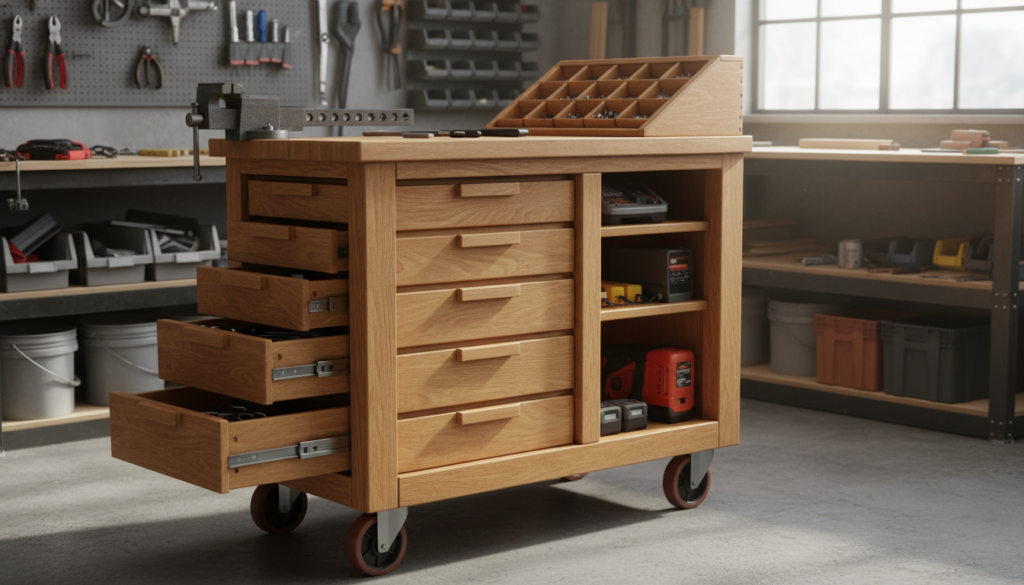
Rolling Tool Cabinet Design
Build a simple rolling cabinet using plywood construction. The basic box design includes multiple shelves and drawer spaces. Add wheels to the bottom for easy movement around your shop.
Size your cabinet based on available space and tool collection. A typical design measures 36 inches tall by 24 inches wide. This size provides ample storage without overwhelming smaller workshops.
Cabinet Components
- Cut plywood panels for top, bottom, sides, and back pieces
- Install adjustable shelf supports for flexible organization
- Add drawer slides for smooth-operating storage drawers
- Mount heavy-duty wheels with locking mechanisms
- Attach door or leave open for quick tool access
- Apply finish or paint for professional appearance
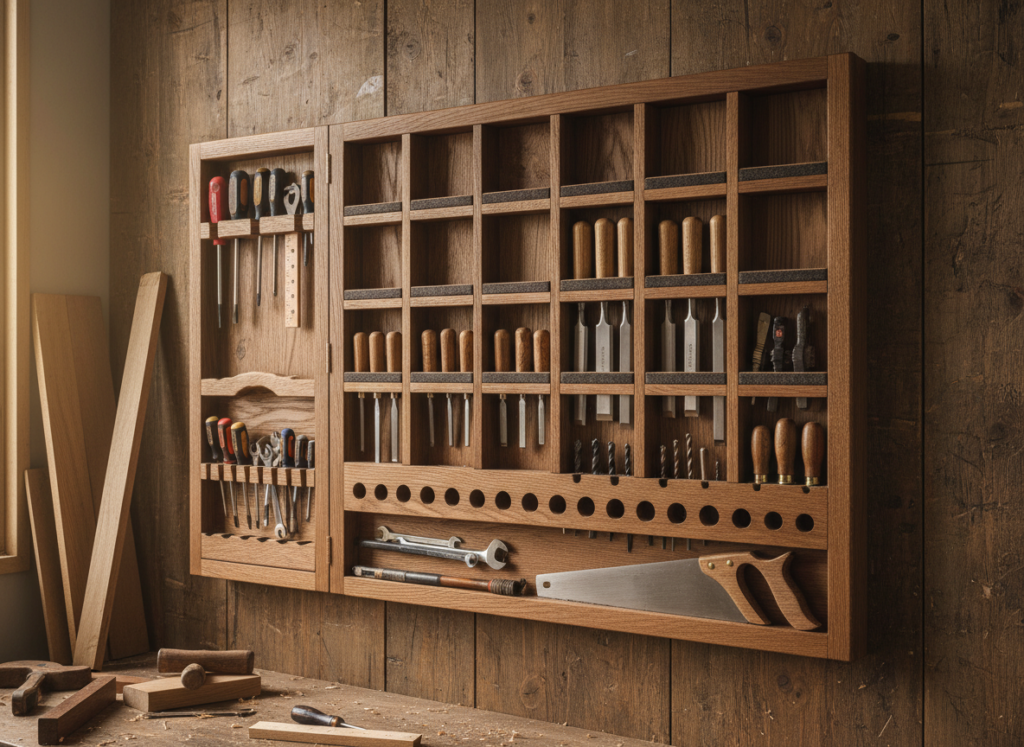
Specialized Tool Racks
Create dedicated storage for specific tool types. Chisel racks keep blades protected and organized. Clamp storage prevents tangled messes. Each specialized rack improves workflow efficiency.
Wall-mounted tool boards work exceptionally well for frequently used items. Cut a piece of plywood to desired size. Add hooks, holders, and custom brackets. Your most-used tools stay visible and immediately accessible.
Space-Saving Storage Solutions for Small Workshops
Limited workshop space demands creative storage approaches. Vertical solutions and compact designs maximize every square foot. Smart planning turns cramped quarters into functional workspace.
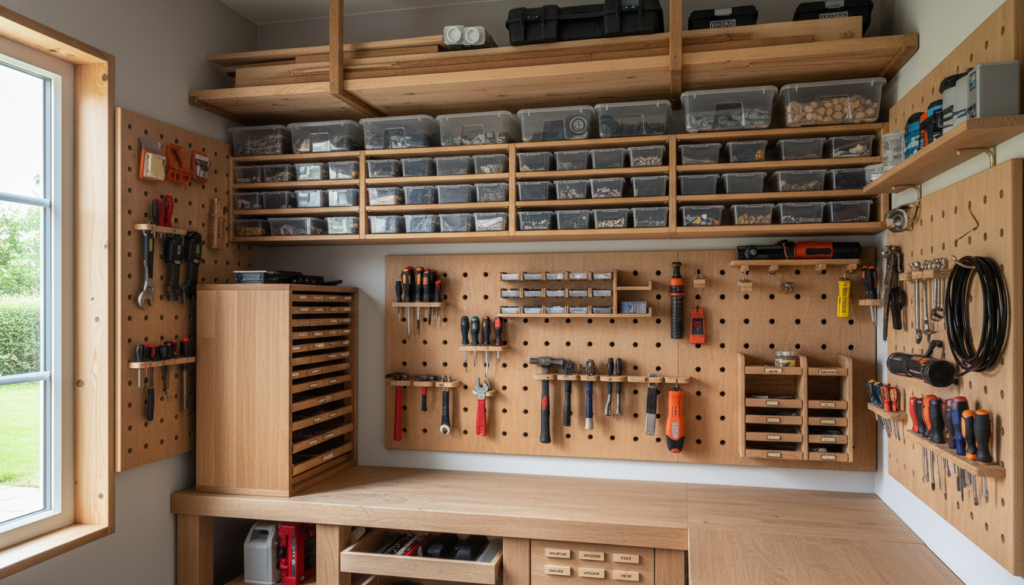
Overhead Storage Racks
Ceiling space often goes unused in workshops. Overhead racks store seldom-used items safely out of the way. This approach keeps floor and wall space available for active projects.
Build simple overhead platforms using sturdy lumber. Two-by-four construction supports substantial weight when properly installed. Mount to ceiling joists for maximum strength and safety.
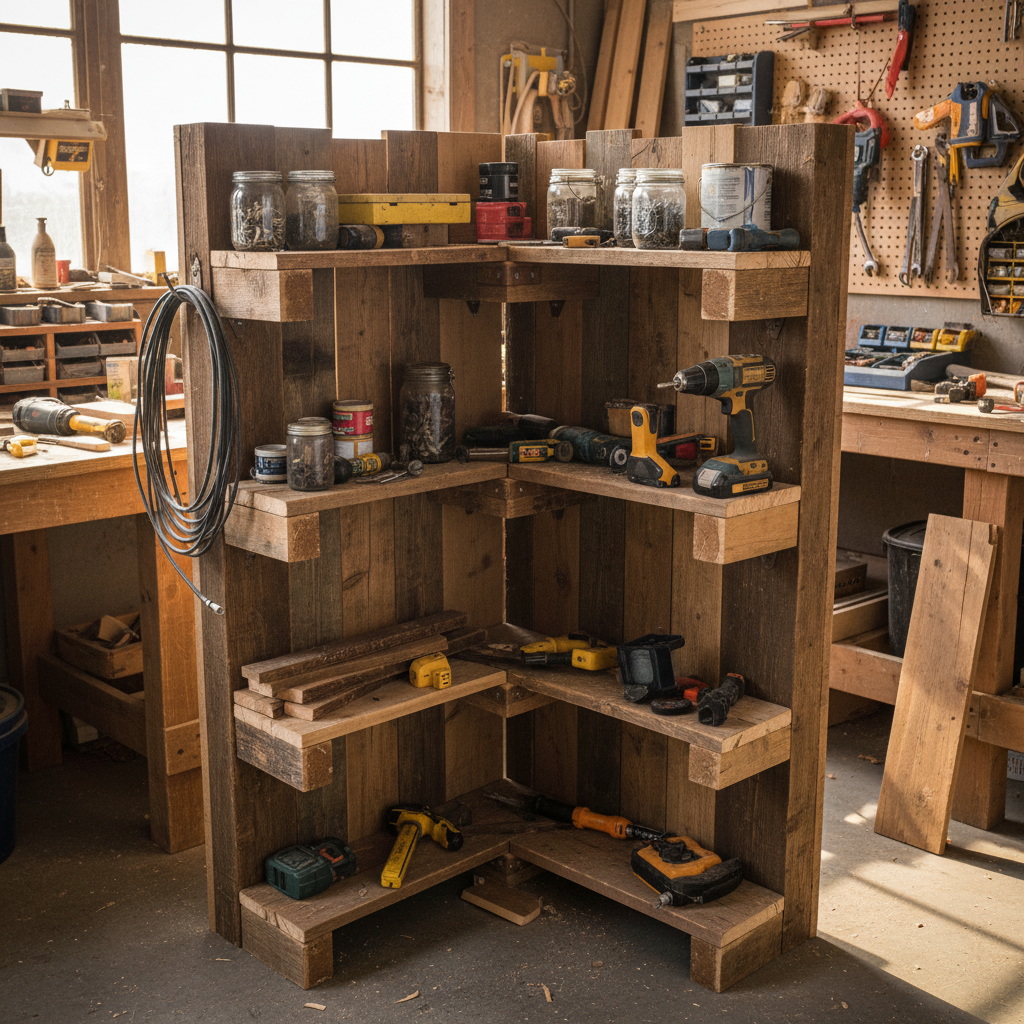
Corner Shelf Units
Corners often become dead space in workshops. Triangle-shaped shelving units fit perfectly into corners. Build using scrap lumber pieces for economical storage expansion.
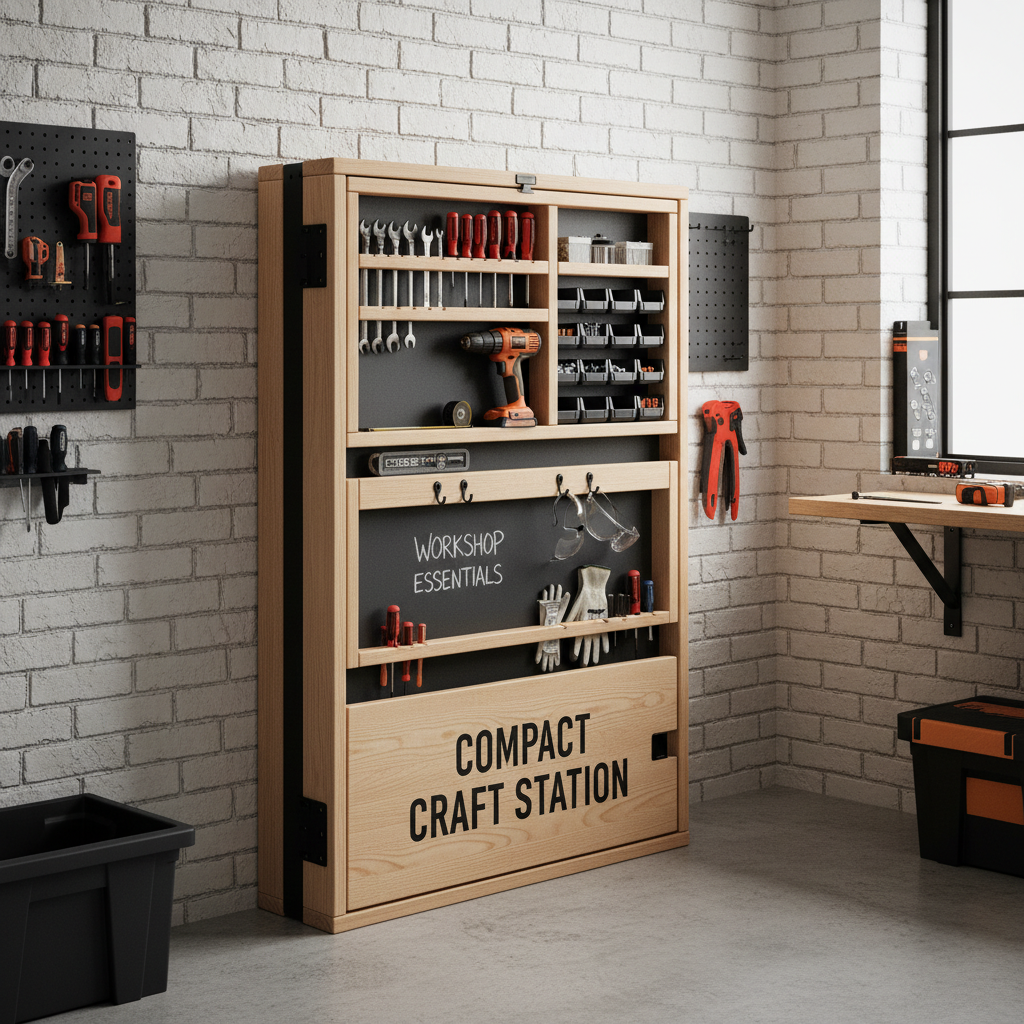
Fold-Down Work Surfaces
Wall-mounted fold-down benches provide work surface when needed. They fold up to save floor space when not in use. Include storage compartments for maximum functionality.
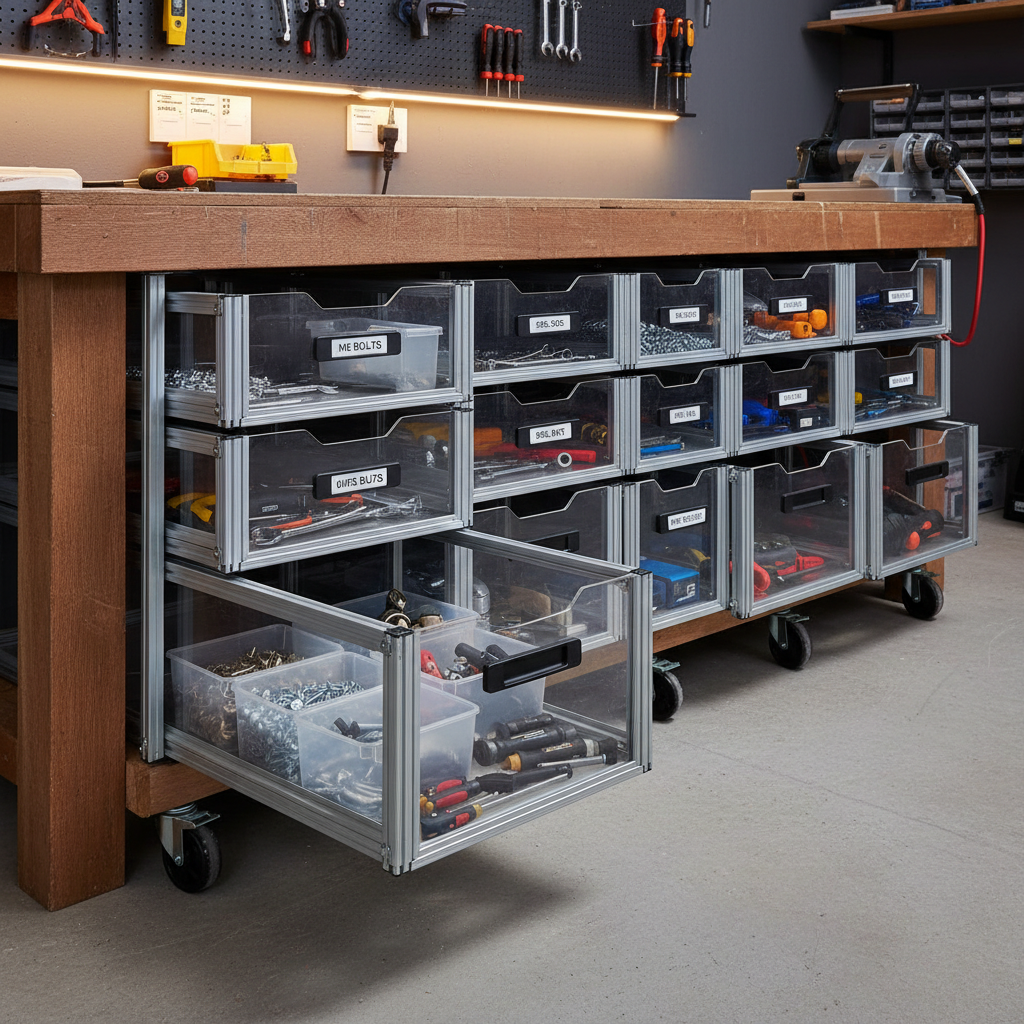
Under-Bench Sliding Bins
Utilize space beneath workbenches with sliding storage bins. Add wheels for easy access to stored materials. This solution keeps supplies organized and readily available.
Vertical Panel Storage
Sheet goods like plywood require special storage considerations. Vertical storage prevents warping while saving floor space. Build a simple frame that holds panels upright with adequate support.
Position panel storage against an unused wall section. Create dividers using two-by-four pieces. Space dividers to accommodate your typical sheet sizes. This design provides easy access while protecting expensive materials.
Garage Storage Projects Using Scrap Wood
Garages present unique storage challenges. Combining vehicle parking with workshop activities demands efficient organization. Wooden storage projects help reclaim valuable garage space.
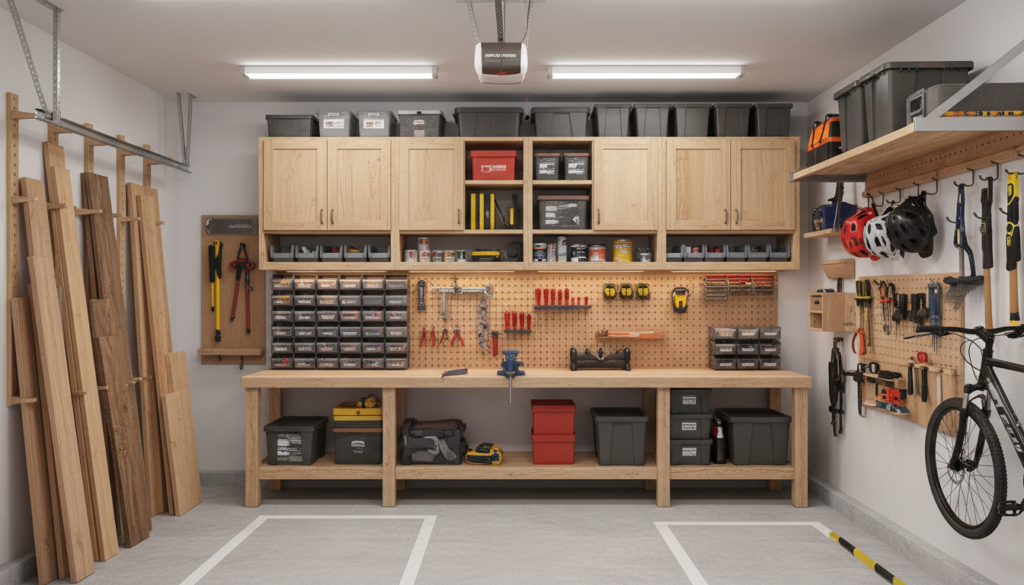
Wall-Mounted Garage Organizers
Transform bare garage walls into functional storage. Simple shelf systems hold containers, tools, and supplies. Build shelves from leftover lumber pieces for economical organization.
French cleat systems offer incredible versatility. Mount the cleat rail along your garage wall. Create custom hanging components that slide onto the rail. Rearrange storage configuration as needs change over time.
Garden Tool Rack
Keep rakes, shovels, and long-handled tools organized. Build a simple rack using scrap boards. Mount at convenient height for easy access.
- Vertical storage saves floor space efficiently
- Individual slots prevent tool tangling
- Quick build time under two hours
- Uses minimal materials and hardware
Sports Equipment Organizer
Design custom storage for balls, bats, and sporting gear. Use PVC pipe sections mounted to wooden backing. This solution keeps equipment accessible and organized.
- Customizable for various equipment types
- Keeps items off garage floor
- Easy to expand as collection grows
- Inexpensive materials widely available
Seasonal Storage Solutions
Rotating seasonal items creates storage headaches. Build overhead platforms for holiday decorations and seasonal equipment. This keeps rarely-used items accessible but out of the way.
Label storage boxes clearly for easy identification. Stack boxes on sturdy overhead platforms. Your garage stays organized year-round with everything having its designated place.
Workshop Lumber Organization Systems
Proper lumber storage protects your investment. Wood warps when stored improperly. Organized lumber storage saves time and prevents material waste.
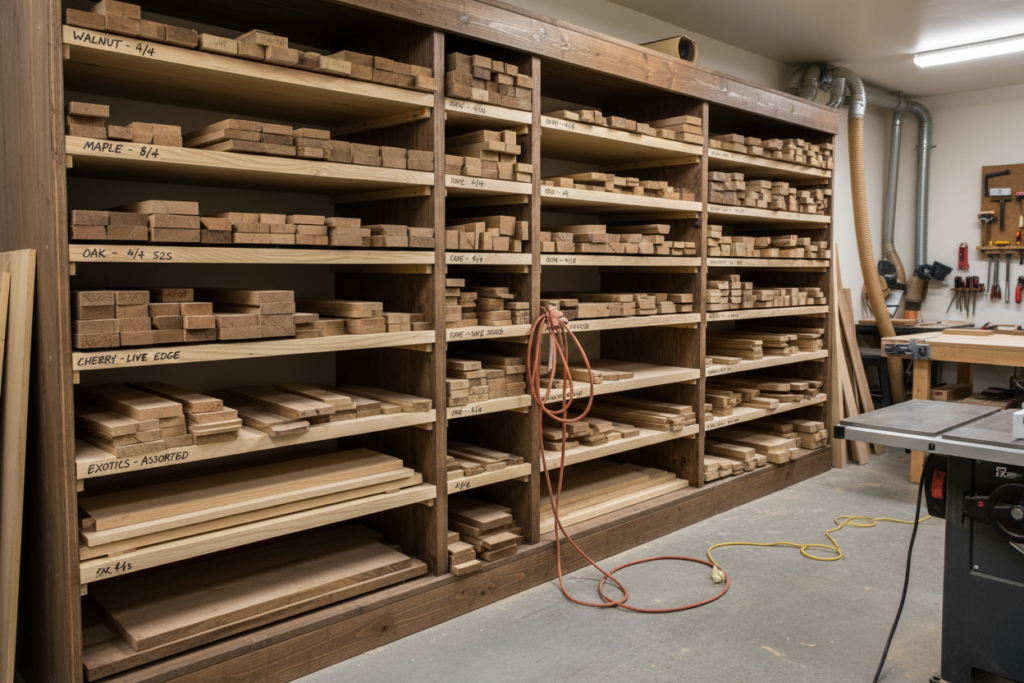
Horizontal Lumber Rack Design
Some boards store better horizontally than vertically. Build tiered racks that support lumber along its length. This prevents sagging and keeps boards perfectly straight.
Create racks using simple two-by-four construction. Space support points every 24 inches along rack length. This spacing adequately supports most lumber weights without excessive material use.
- Prevents board warping over time
- Easy access to individual pieces
- Supports very long boards safely
- Visual inventory of available lumber
- Protects wood from moisture damage
Horizontal Storage Benefits
- Maximizes limited floor space efficiently
- Ideal for shorter board lengths
- Simpler construction requirements
- Lower material costs for rack
- Quick installation process
Vertical Storage Benefits
- Flexibility for different board types
- Optimizes available workshop space
- Accommodates varying lumber sizes
- Expandable as collection grows
- Professional organization appearance
Combined System Benefits
Lumber Sorting Strategies
Organize lumber by species, size, and project destination. This system eliminates searching through entire stock. Create separate sections for different wood types.
Label each storage section clearly. Include wood species and typical dimensions. Future you will appreciate this organizational effort when starting new projects.
Build Like a Professional Woodworker
Stop struggling with incomplete instructions and unclear measurements. Professional woodworking plans provide exact dimensions, detailed diagrams, and proven construction methods for every storage project.
Small Parts Storage Box Projects
Screws, nails, and small hardware multiply quickly. Without proper organization, finding the right fastener wastes valuable project time. Simple wooden storage boxes solve this problem elegantly.
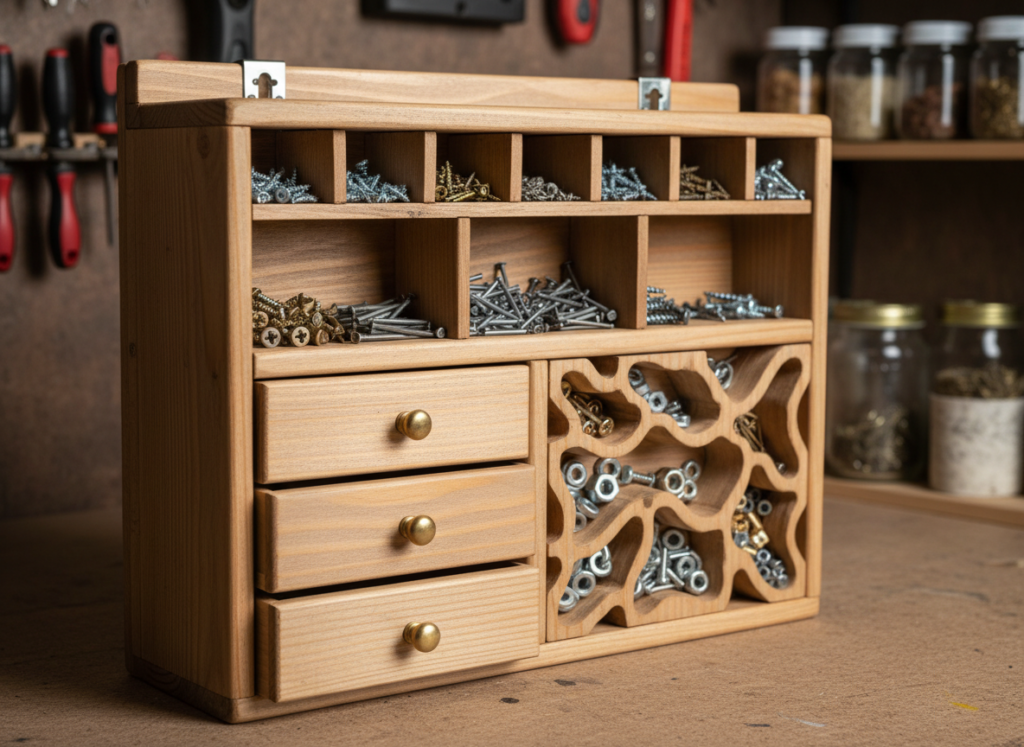
Drawer Organizer Construction
Build custom drawer dividers from scrap wood pieces. Measure your drawer dimensions carefully. Create compartments sized for your typical hardware collection.
Use thin plywood or hardboard for dividers. These materials waste minimal drawer space while providing adequate separation. Cut pieces to exact size for snug, rattle-free fit.
Wall-Mounted Parts Bins
Create a wall system of small storage boxes. Each box holds specific fastener types or sizes. Clear labeling makes finding correct parts effortless.
Build boxes from scrap lumber pieces. Simple box joints work perfectly for this application. Add a small lip to prevent contents from spilling when removing boxes from wall mounts.
DIY Storage Cart Design Variations
Not every workshop needs identical storage carts. Customize cart designs for specific purposes. Specialized carts improve efficiency for particular tasks or material types.
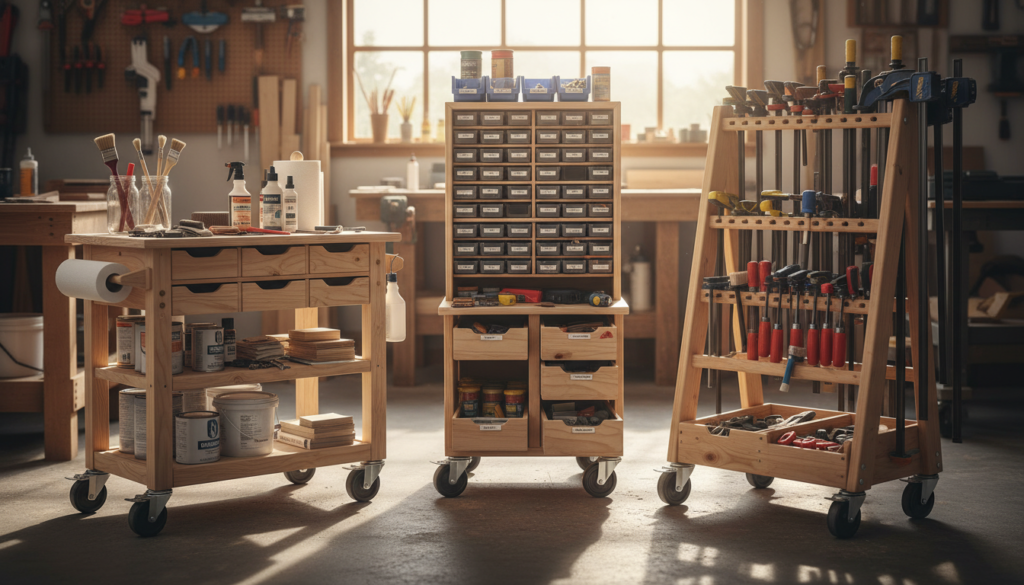
Finishing Supplies Cart
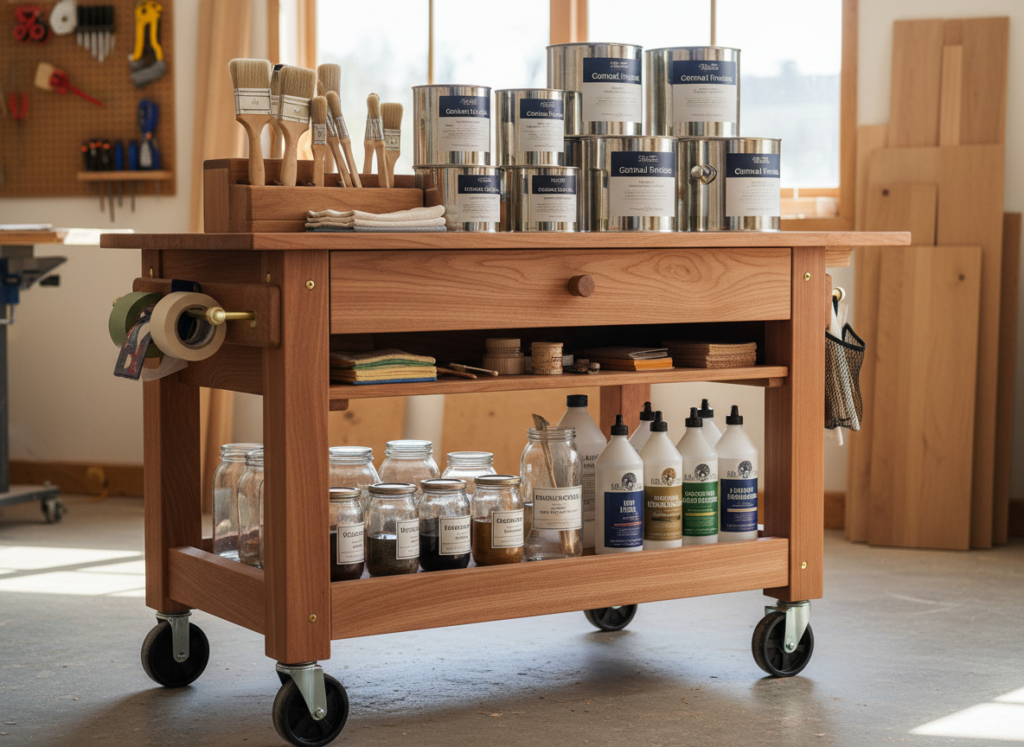
Dedicate one cart to finishing supplies and materials. Include space for stains, brushes, rags, and sandpaper. This mobile solution brings finishing materials directly to your project.
Design the cart with enclosed storage for liquid products. Add ventilation holes to prevent fume buildup. Include a pull-out work surface for mixing stains or setting up finishing supplies.
Paint and Stain Organization
- Lower shelves for heavy paint cans
- Upper compartments for brushes and tools
- Side hooks for hanging rags
- Dedicated space for sandpaper storage
- Easy-clean surface for spill management
Clamp Storage Cart Solution
Clamps deserve special storage consideration. A dedicated cart keeps clamps organized and accessible. Design includes holders for various clamp sizes and types.
Mount dowels or pipes horizontally across the cart frame. Slide bar clamps onto these holders. Add hooks for spring clamps and specialty clamps. Your entire clamp collection stays organized in one mobile location.
Essential Building Tips for Storage Projects
Success with wooden storage projects depends on proper techniques. Following basic woodworking principles ensures sturdy, long-lasting results. These tips apply across all storage project types.
Accurate Measurement Practices
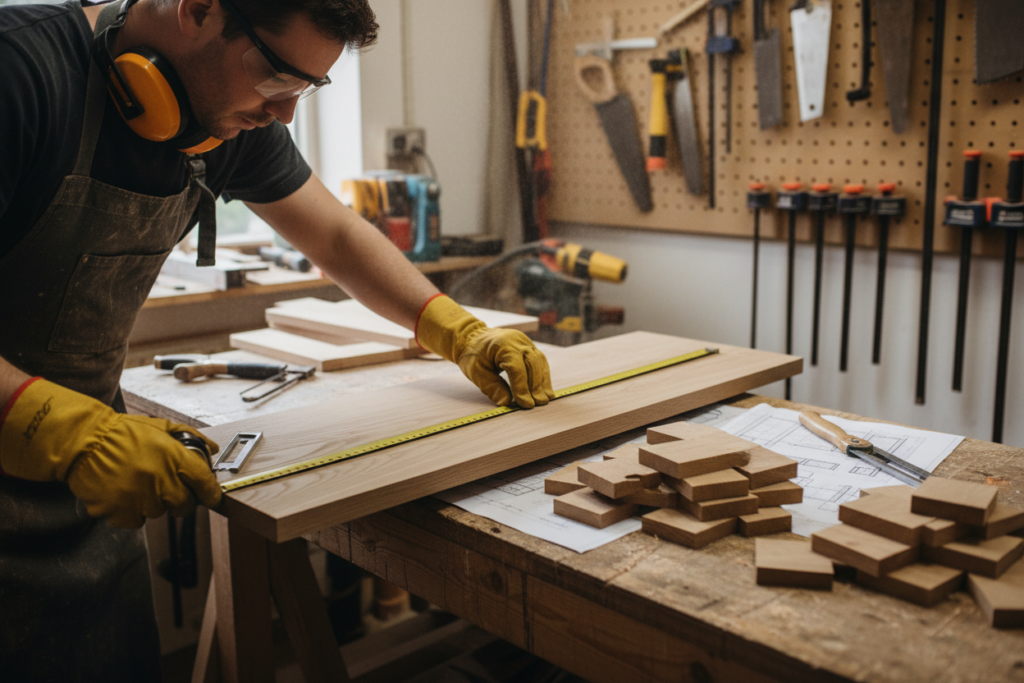
Measure twice, cut once remains excellent advice. Take time to verify measurements before cutting. This simple practice prevents material waste and ensures proper fit.
Use quality measuring tools consistently. A reliable tape measure and combination square are essential. Check square frequently to maintain accuracy throughout projects.
Recommended Techniques
- Create detailed cutting diagrams before starting
- Label each piece during cutting process
- Dry-fit components before final assembly
- Use wood glue with mechanical fasteners
- Apply finish to protect wood surfaces
- Allow adequate drying time between steps
Common Mistakes to Avoid
- Rushing through measurement and layout steps
- Using warped lumber for structural components
- Skipping dry-fit assembly testing
- Over-tightening screws causing wood splitting
- Neglecting to sand sharp edges smooth
- Starting assembly without complete material list
Material Selection Guidelines
Choose appropriate materials for each project component. Plywood works excellently for large panels and shelving. Solid lumber provides strength for frames and structural elements.
Inspect lumber carefully before purchasing or using scrap pieces. Avoid wood with large knots in structural areas. Check boards for straightness and reject severely warped pieces.
Assembly Best Practices
Work on flat, level surfaces during assembly. This ensures square construction and proper alignment. Use clamps liberally to hold pieces while fasteners set.
Pre-drill screw holes to prevent wood splitting. This step takes extra time but produces professional results. Countersink screw heads for flush, clean appearance.
Maximizing Your Scrap Wood for Storage Projects
Every woodworker accumulates scrap wood. These leftover pieces represent significant value when properly utilized. Storage projects offer perfect opportunities to use scrap lumber productively.
Sorting Scrap Wood Effectively
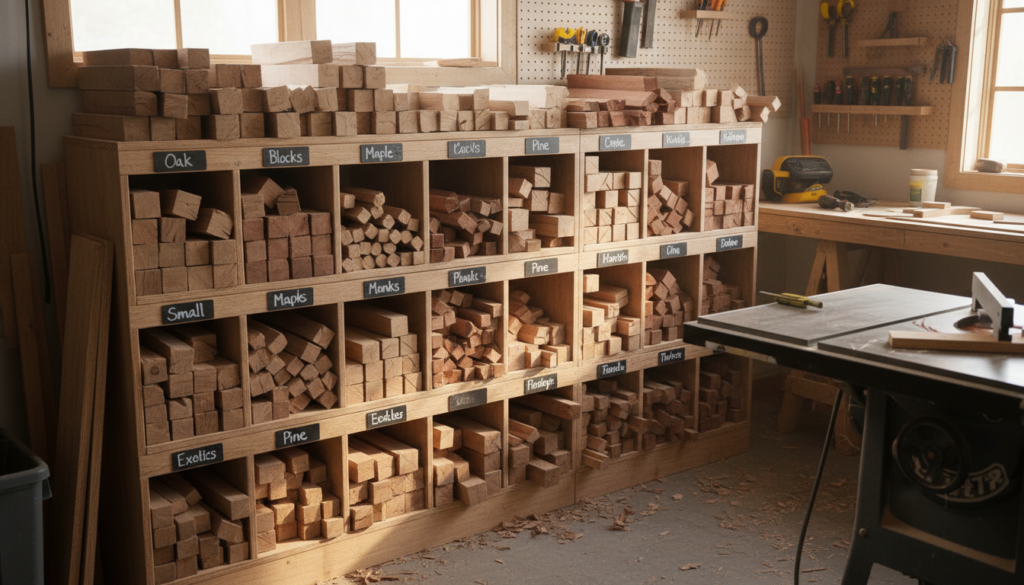
Organize scraps by approximate size categories. Create bins for small, medium, and large pieces. This system helps quickly identify appropriate materials for each project component.
Keep particularly nice scrap pieces separate. Premium hardwood scraps deserve special consideration for visible project parts. Save construction-grade scraps for structural elements and internal components.
Small Scraps
Pieces under 12 inches find purpose in dividers, spacers, and small brackets. These become drawer organizers, shelf supports, or decorative elements.
- Drawer divider components
- Small box construction projects
- Shims and spacers for assembly
- Test pieces for finish samples
Medium Scraps
Pieces between 12 and 36 inches work for shelf construction, bracket supports, and small project components. These sizes handle many storage project needs.
- Shelf supports and brackets
- Cart dividers and compartments
- Small rack construction parts
- Tool holder components
Large Scraps
Pieces over 36 inches become shelves, cart sides, or rack components. These valuable scraps replace purchased lumber for substantial savings.
- Main shelf panels and surfaces
- Cart side panels and backs
- Rack structural components
- Workbench surface additions
Sheet Goods
Plywood and other sheet material scraps excel for box construction, drawer bottoms, and backing panels. These pieces often prove more useful than solid lumber scraps.
- Storage box panels and bottoms
- Cabinet backing materials
- Drawer bottom installations
- Dust panel applications
Planning Projects Around Available Scraps
Design storage projects based on scrap inventory. Measure available pieces before finalizing plans. Adjust dimensions slightly to maximize scrap wood usage.
This approach eliminates waste while reducing material costs significantly. Your scrap pile shrinks as functional storage solutions emerge from previously unused materials.
Advanced Wooden Storage Project Ideas
After mastering basic storage builds, challenge yourself with complex designs. Advanced projects combine multiple storage functions. These solutions provide maximum organization efficiency.
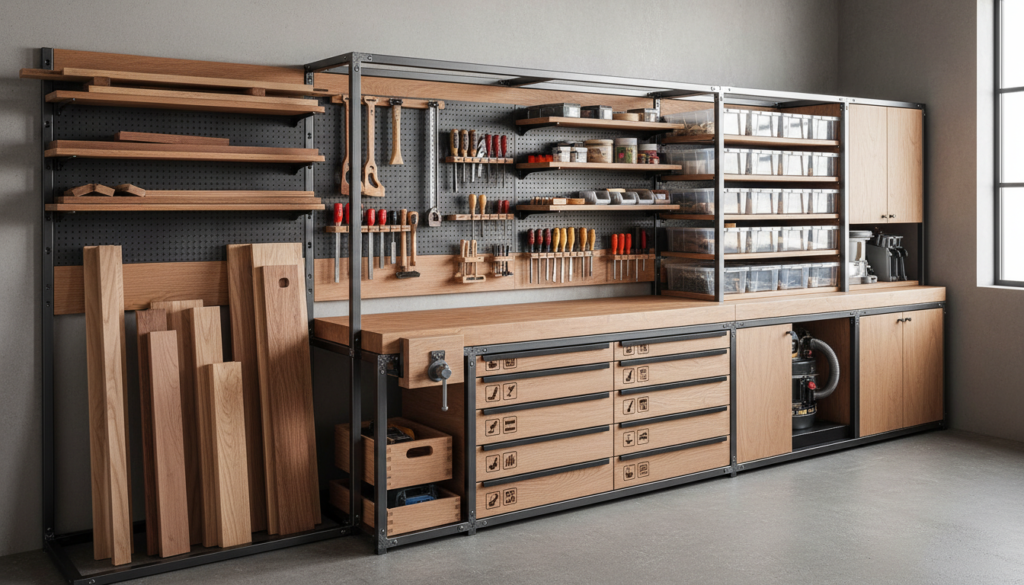
Modular Storage Wall System
Create an entire wall of integrated storage components. Combine open shelving, enclosed cabinets, and specialized tool holders. This comprehensive approach maximizes wall space utilization.
Design the system with standardized module sizes. This allows future expansion and reconfiguration. Start with essential modules and add components as time and budget allow.
Multi-Function Workshop Island
Build a central island combining storage with work surface. Include drawers, shelves, and specialized tool holders. Add wheels for mobility or build as permanent installation.
The island design provides accessible storage from all sides. Include electrical outlets for power tools. This becomes your workshop’s central hub for active projects and tool storage.
Maintaining Your Wooden Storage Systems
Built storage systems require minimal maintenance. Simple care extends their useful life significantly. Regular attention keeps organization systems functioning effectively.
Routine Maintenance Tasks
Inspect wheels and moving parts periodically. Tighten loose screws and hardware. Apply lubricant to drawer slides and cart wheels for smooth operation.
Clean storage surfaces regularly to prevent dust accumulation. Wipe down shelves and compartments. This maintenance protects stored items and keeps systems looking professional.
Monthly Maintenance
- Tighten loose fasteners and connections
- Clean dust from shelves and surfaces
- Check wheel function and lubricate if needed
- Verify structural stability of racks
- Reorganize misplaced items to proper locations
Annual Maintenance
- Apply fresh finish to worn surfaces
- Replace damaged components promptly
- Evaluate system effectiveness and adjust
- Add new storage as collection grows
- Deep clean entire storage system
Adapting Systems Over Time
Workshop needs change as skills develop and tool collections grow. Modify existing storage to accommodate new requirements. Add modules rather than rebuilding entire systems.
This flexibility represents a key advantage of custom-built storage. Commercial systems lock you into fixed configurations. Your DIY solutions evolve alongside your woodworking journey.
Transform Your Workshop with Strategic Storage
Organized storage changes everything about woodworking. Projects start faster when tools appear immediately. Workflow improves when materials stay accessible and protected. Your workshop becomes genuinely enjoyable rather than frustrating.
Start with one simple project this weekend. Build a basic scrap wood cart or tool rack. Experience the immediate improvement in workshop functionality. Success with initial projects builds confidence for tackling more complex storage solutions.
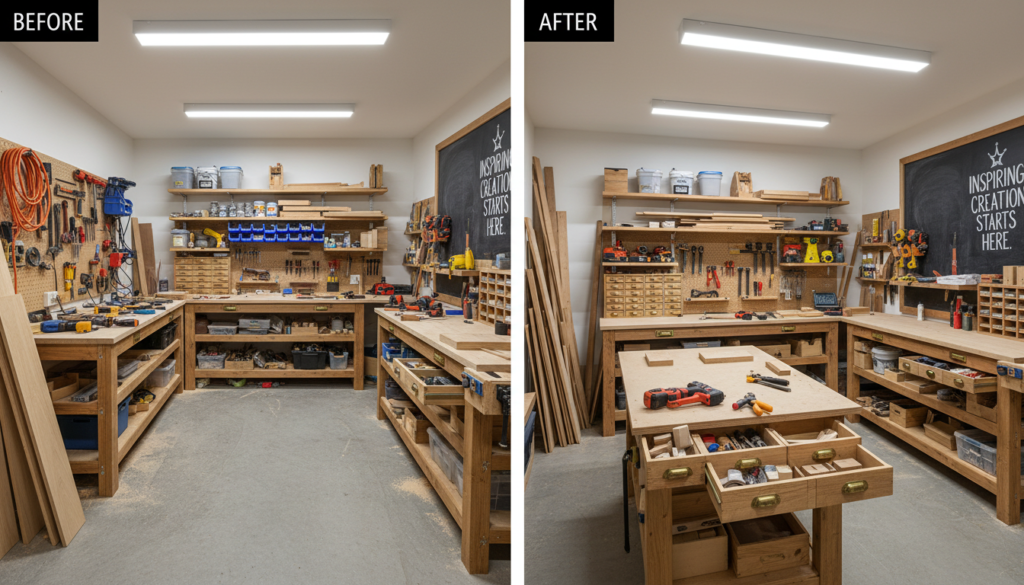
The materials sit in your shop already. Scrap wood awaits transformation into useful storage. Basic tools you own handle every project described here. Time investment remains minimal compared to organizational benefits gained.
Remember that perfect doesn’t exist in workshop storage. Build functional solutions that work for your specific situation. Adjust designs to match available space and materials. Your custom storage system will outperform any commercial alternative.
Start Building Professional Storage Today
Stop wasting time with incomplete project ideas and guesswork construction. Get instant access to comprehensive woodworking plans featuring detailed diagrams, exact measurements, complete materials lists, and step-by-step instructions. Build storage projects with confidence using proven designs that professional woodworkers rely on.
Your organized workshop awaits. Those lumber scraps hold incredible potential. Transform chaos into order one storage project at a time. The satisfaction of building functional solutions from waste materials never diminishes.
Begin today with available materials and basic tools. Your future self will thank you every time you locate the exact tool needed or find that perfect scrap piece immediately. Workshop organization through wooden storage projects represents time well invested in your craft.