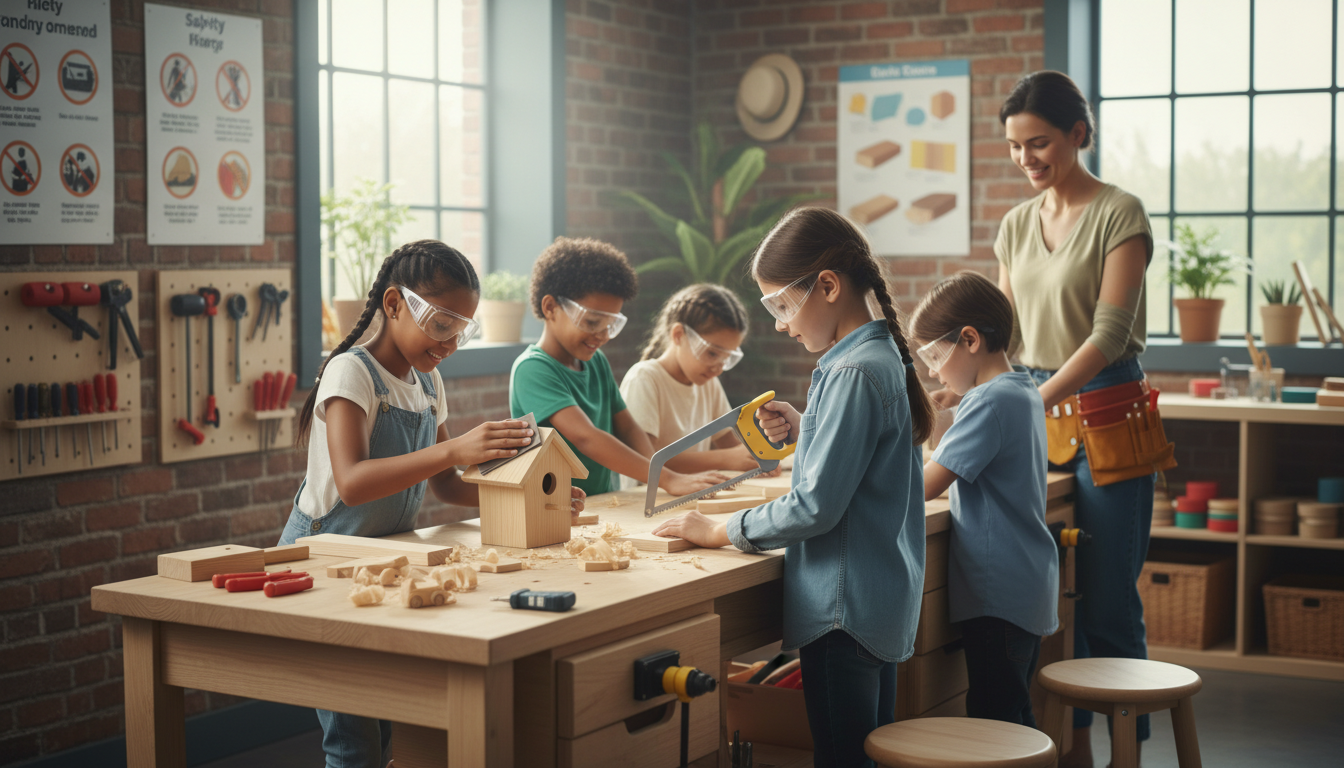
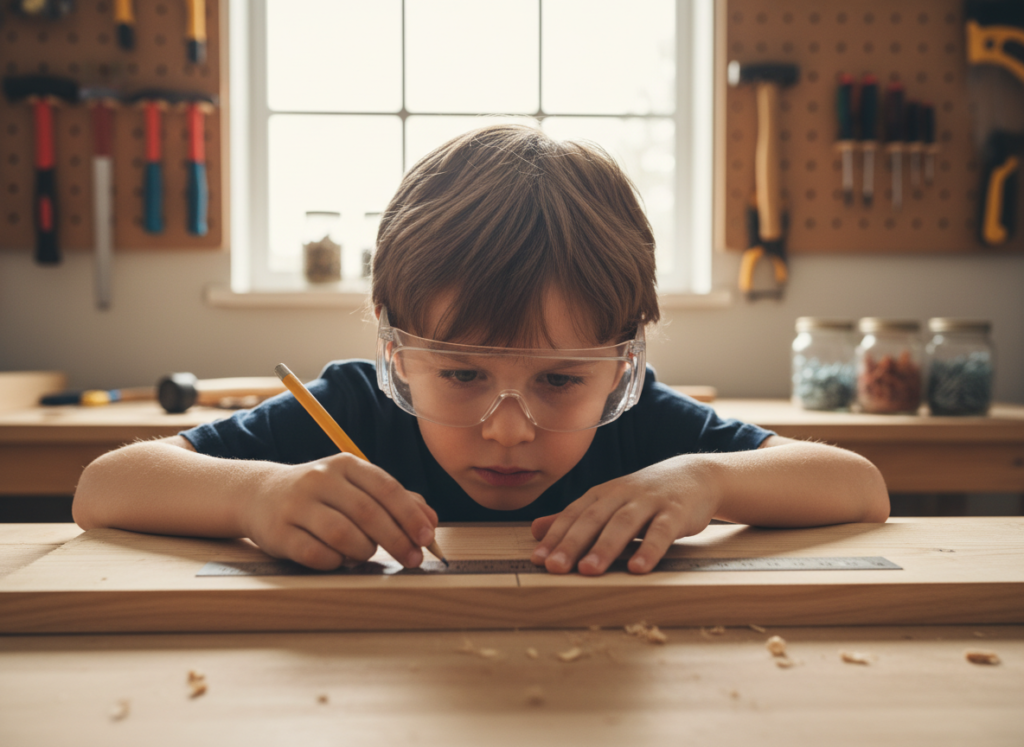
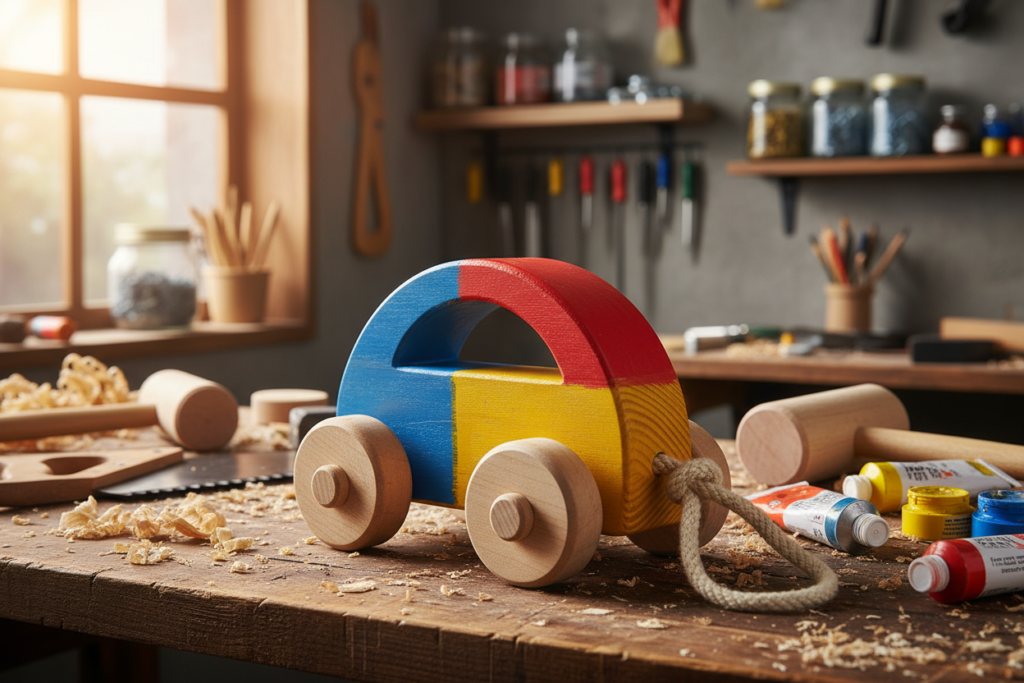
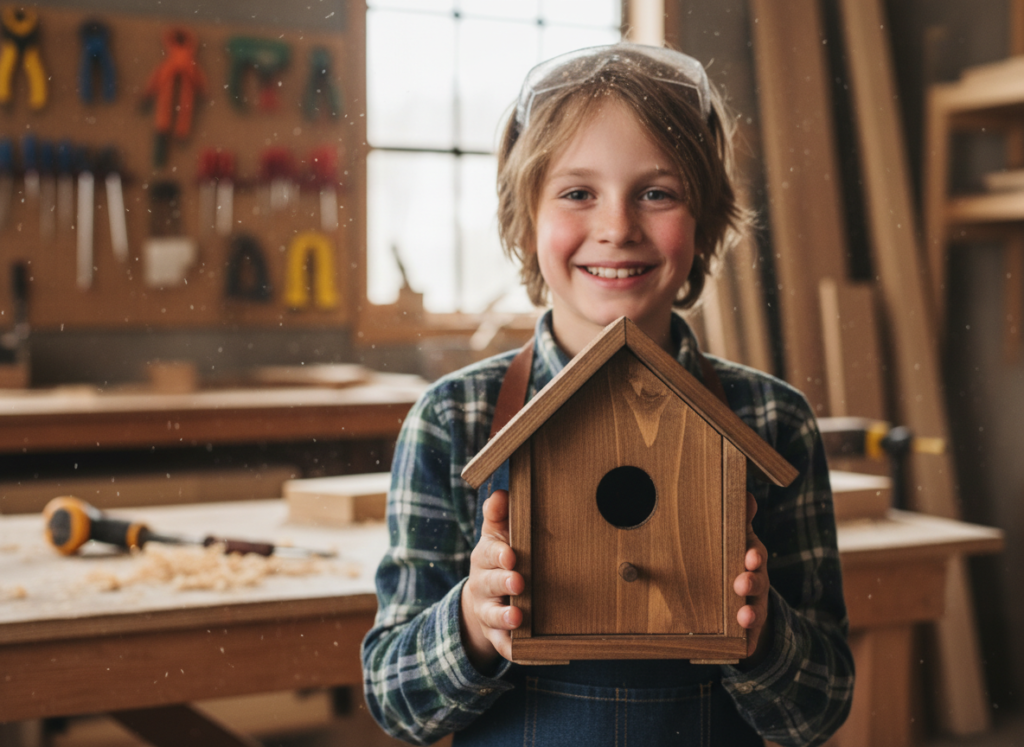
Woodworking offers children a unique opportunity to create something tangible with their own hands. Kids woodworking projects teach patience, problem-solving, and practical skills that last a lifetime. Unlike screen-based activities, working with wood engages multiple senses and develops fine motor coordination.
This Website contains affiliate links. That means I may earn a small commission if you purchase through my links, at no extra cost to you.
Parents often worry about safety when introducing kids to tools. However, age-appropriate projects with proper supervision create a secure learning environment. Children as young as five can begin with simple tasks using basic tools.
The sense of accomplishment a child feels after completing their first project builds confidence that extends beyond the workshop. From pencil holders to bird feeders, these projects provide practical items kids can actually use or gift to family members.
Many parents find that structured guidance makes introducing woodworking safer and more rewarding. A comprehensive approach helps families progress from simple projects to more advanced builds while maintaining proper safety standards. Explore complete woodworking resources designed specifically for families.
Why Woodworking Benefits Children’s Development
Working with wood provides educational value that goes far beyond craft time. Kids develop spatial reasoning as they visualize how pieces fit together. Measuring and cutting wood introduces practical math concepts in a hands-on way that makes abstract ideas concrete.
Woodworking teaches kids to follow sequential instructions. Each project requires completing steps in order, which builds executive function skills. Children learn to plan ahead and think through consequences before making cuts.
The physical aspect strengthens hand-eye coordination and fine motor skills. Hammering nails, turning screws, and sanding surfaces all require precise movements. These activities build the same small muscle control needed for writing and other detailed tasks.
Cognitive Benefits
Problem-solving through trial and error
Mathematical thinking with measurements
Planning and sequential reasoning
Spatial awareness and geometry concepts
Emotional Growth
Confidence from completing tangible projects
Patience and delayed gratification
Pride in creating useful items
Resilience when mistakes require fixes
Kids who engage in woodworking often show improved focus in other areas. The concentration required to use tools safely translates to better attention spans. Working with wood also provides a healthy outlet for energy and creativity.
Essential Safety Guidelines for Kids Using Wood and Tools
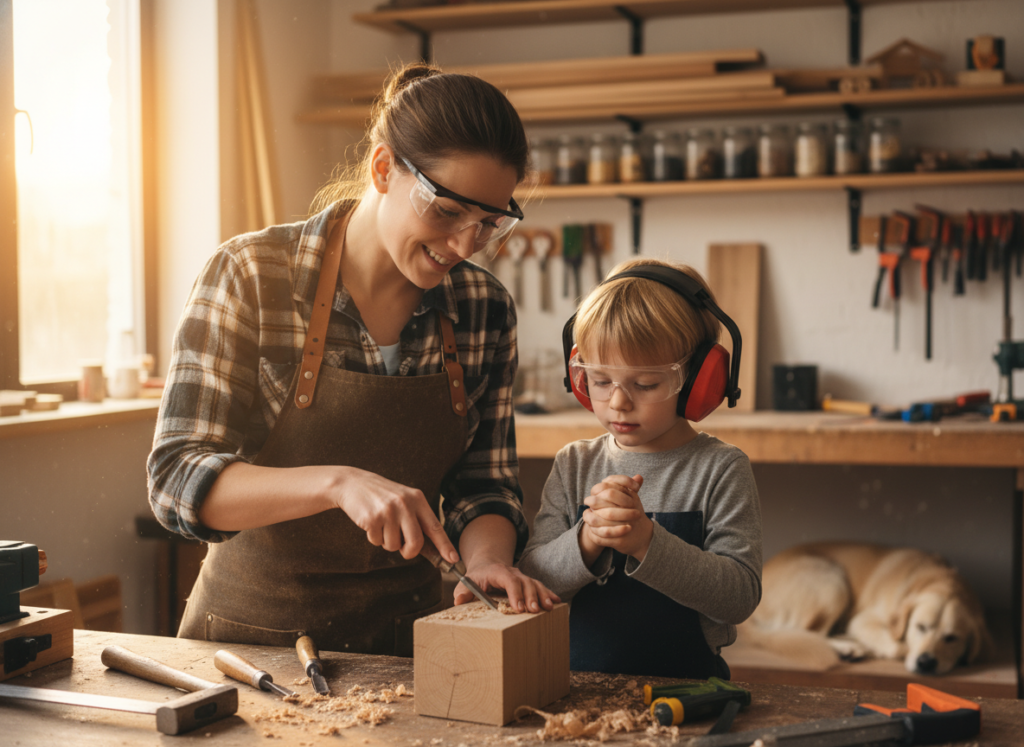
Safety must always come first when children work with wood and tools. Proper supervision prevents accidents and builds good habits from the start. Never leave young children unattended with woodworking tools, even simple ones.
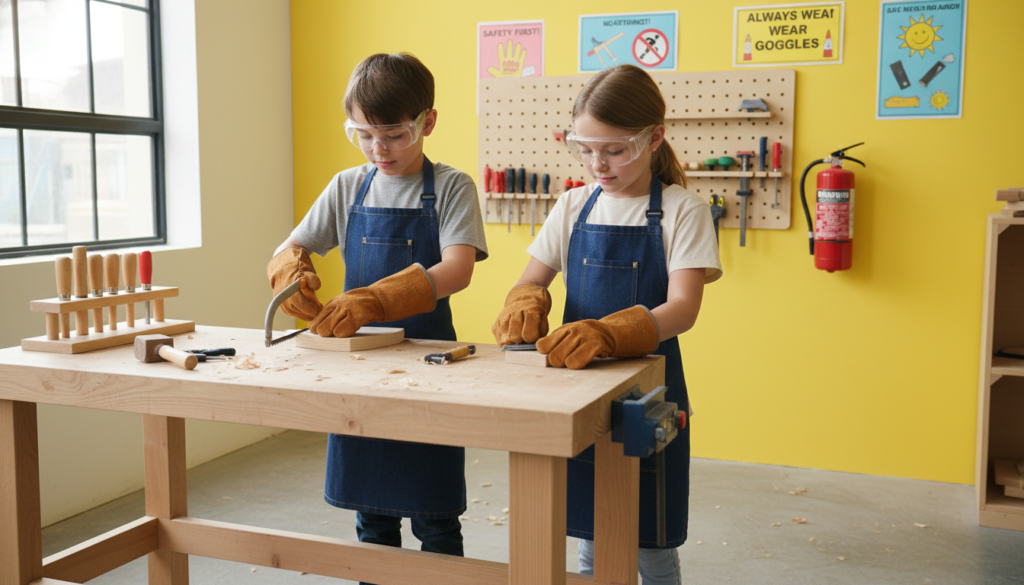
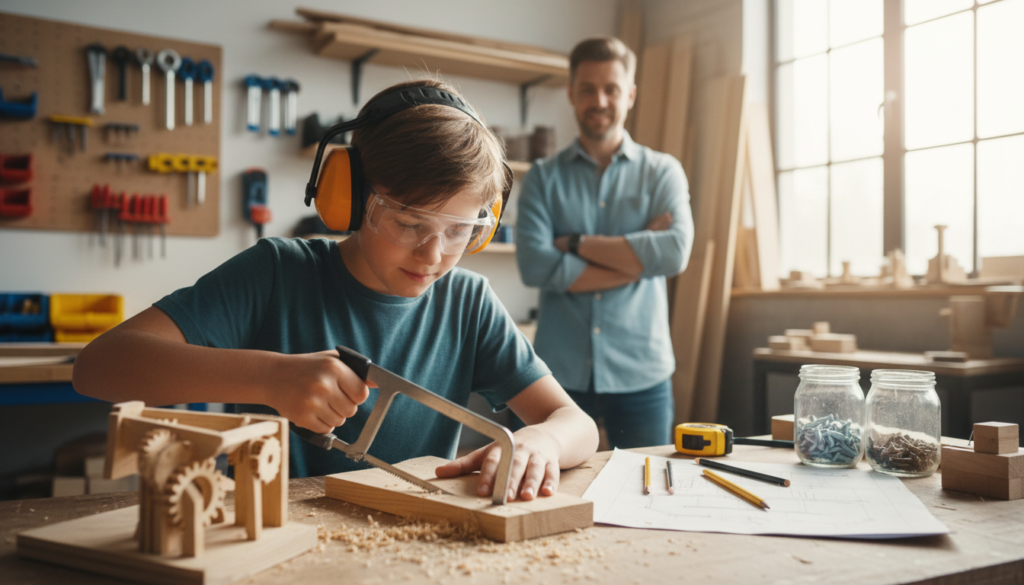
Eye protection is non-negotiable for any project involving cutting or sanding. Safety goggles should fit properly and stay on throughout the entire work session. Wood dust and flying splinters can cause serious eye injuries.
Age-Appropriate Tool Introduction
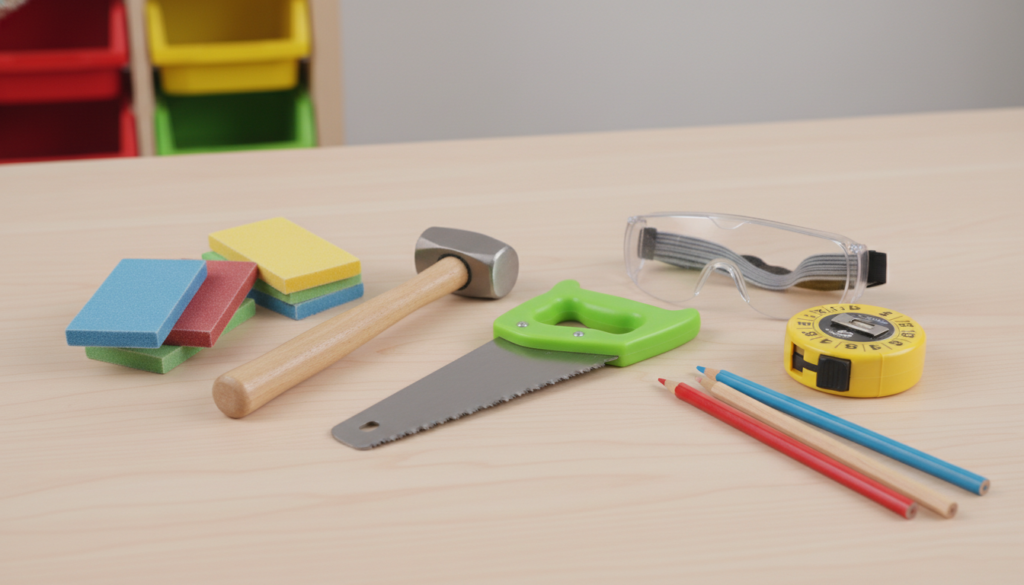
Children aged five to seven can start with simple hand tools. Sandpaper, hammers, and pre-drilled wood pieces allow safe participation. Kids in this age range should work on scrap wood projects that require minimal cutting.
Eight to ten-year-olds can graduate to basic saws with supervision. Hand saws designed for children have smaller handles and finer teeth. Power tools remain off-limits at this stage, but kids can learn proper technique with manual alternatives.
Children eleven and older may begin using power tools under direct adult supervision. Start with less intimidating tools like electric sanders before progressing to drills. Each child develops at their own pace, so assess readiness individually.
Critical Safety Rules: Always keep fingers away from cutting lines. Secure wood pieces with clamps, never hold them by hand while cutting. Work in well-ventilated areas when using paint or finish. Keep the workspace clean to prevent tripping hazards.
Creating a Safe Workshop Space
Designate a specific area for woodworking projects. Good lighting prevents mistakes and eye strain. A stable work surface at the right height for your child makes tool use safer and more comfortable.
Store tools properly when not in use. Sharp implements should be kept out of reach of younger siblings. A tool caddy teaches kids organization while keeping dangerous items secure.
Build Confidence with Expert Guidance
Safety concerns stop many families from starting woodworking together. Structured instruction helps parents teach proper techniques and progress through projects safely. Discover a complete system designed for families.
Young children need projects that deliver quick results with minimal frustration. Simple designs using basic tools build confidence and teach fundamental skills. These beginner-friendly ideas require mostly assembly rather than complex cutting.
Wooden Tool Caddy
A tool caddy lets kids organize their own supplies. This project teaches measurement and assembly using pre-cut wood pieces. Children practice hammering nails into pilot holes and applying wood glue.
The caddy becomes a useful item kids can actually use. Personalization with paint or markers makes each one unique. This project typically takes thirty to forty-five minutes with help.
Simple Bird Feeder
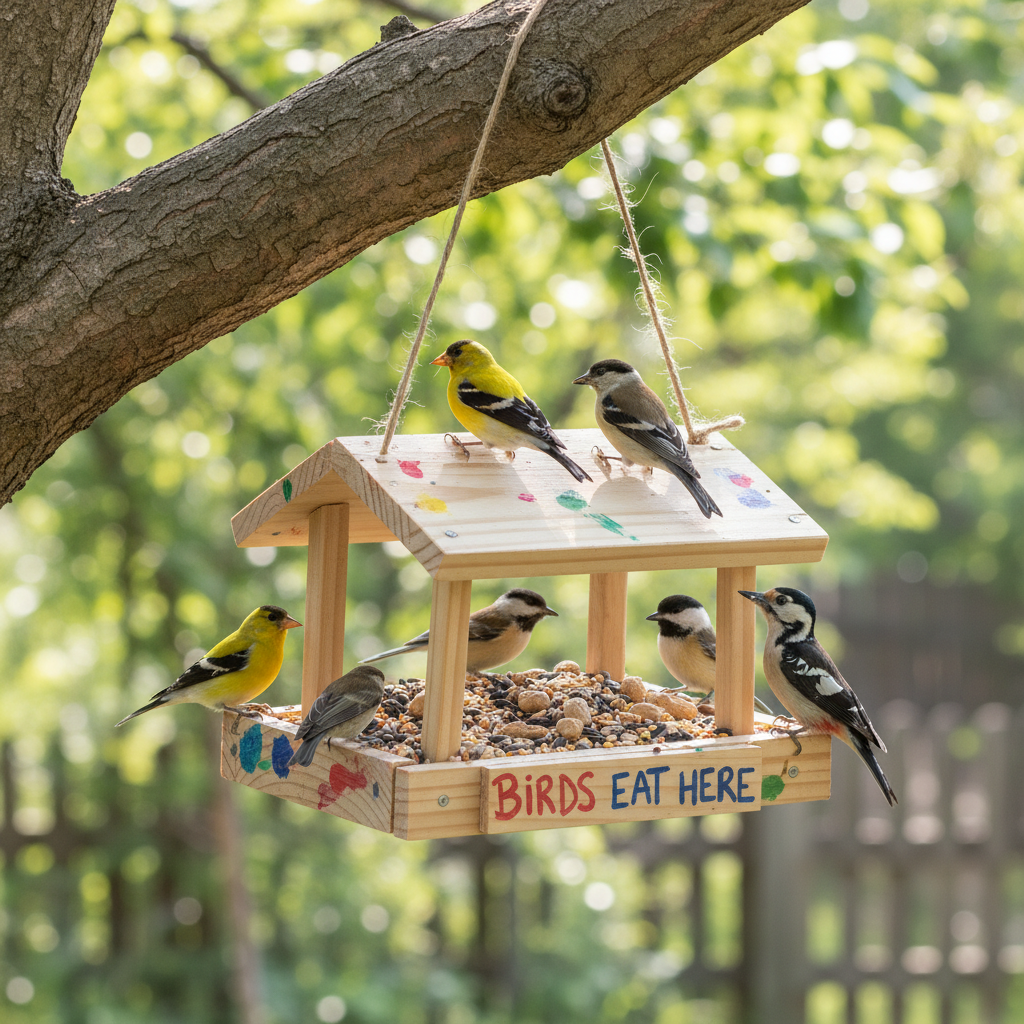
Bird feeders connect woodworking with nature observation. Kids use basic tools to assemble a platform-style feeder from scrap wood. The project lets kids use nails, glue, and sandpaper to smooth rough edges.
Watching birds visit their creation provides ongoing reward. This project teaches kids about helping wildlife while building practical skills. A simple roof design keeps seeds dry and adds architectural interest.
Picture Frame
Picture frames make great gifts for family members. This project uses four pieces of wood joined at corners. Kids learn about right angles and how pieces fit together to create a finished product.
Pre-cut molding simplifies the process for beginners. Children focus on assembly, sanding, and finishing. Adding their own artwork or a family photo makes the frame personally meaningful.
Pencil Holder
A pencil holder provides desk organization while teaching basic construction. Kids drill holes in a wooden base or assemble a box-style holder. This project introduces measuring and spacing concepts.
Children can decorate their pencil holder with paint or wood burning under supervision. The finished product goes straight to their homework area. This quick project builds a sense of accomplishment in under an hour.
What You’ll Need
Pre-cut wood pieces or scrap wood
Wood glue suitable for children
Small hammer and nails with large heads
Sandpaper in medium and fine grits
Safety goggles for each participant
Non-toxic paint or finish
Tips for Success
Pre-drill nail holes to prevent splitting
Use soft woods like pine for easier work
Let glue dry completely between steps
Sand all edges smooth before finishing
Celebrate effort, not just perfect results
Take breaks to maintain enthusiasm
Wood Projects for Kids Ages 9-12
Older children can handle more complex designs that challenge their growing skills. These projects introduce new tools and techniques while building on foundational knowledge. Kids at this age appreciate projects with practical applications or moving parts.
Step Stool
A step stool provides real utility around the house. This project requires measuring, cutting, and joining multiple pieces. Kids learn about weight distribution and structural stability.
The step stool challenges children to work with different wood thicknesses. They practice making right angles and ensuring legs are level. Younger siblings can use the finished stool, creating pride in making something for others.
Wooden Toy Box
A toy box teaches box construction techniques. This larger project requires planning and sustained effort across multiple work sessions. Children learn to cut panels, attach sides, and add a hinged lid safely.
The box becomes a permanent bedroom fixture. Kids practice measuring interior dimensions and calculating material needs. Adding wheels makes the box mobile and introduces basic mechanical concepts.
Advanced Bird House
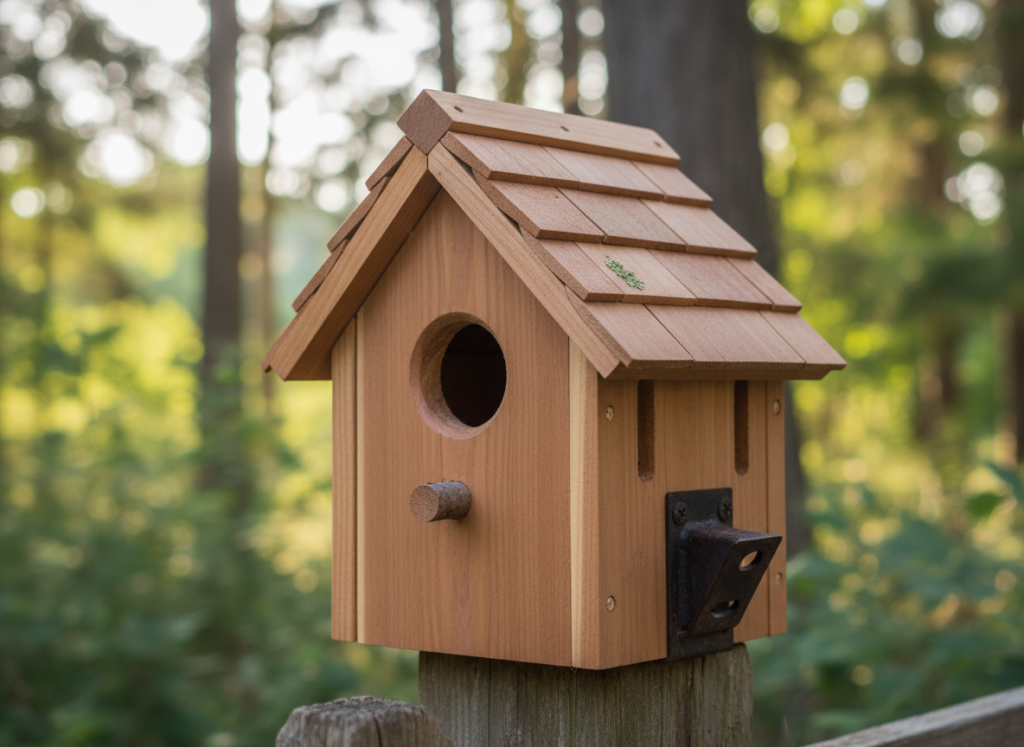
Unlike simple bird feeders, a proper bird house requires precision. Kids cut entrance holes to specific sizes for different bird species. This project combines biology with craftsmanship.
Children learn to create ventilation and drainage holes. The design requires understanding bird behavior and habitat needs. This project lets kids contribute to local ecosystems while developing technical skills.
Wooden Name Sign
Name signs let kids practice precision cutting and letter work. This project develops steady hand control with coping saws or scroll saws. Children learn to transfer patterns onto wood and follow lines carefully.
The sign decorates their room and showcases their growing abilities. Kids can add painted details or wood-burned designs. This project builds patience as intricate cuts require time and concentration.
Desktop Organizer
A multi-compartment organizer teaches division of space. Kids measure and cut dividers to create sections for different supplies. This project introduces dado joints or simple slotted construction.
The organizer holds pens, scissors, paper clips, and other desk items. Children practice creating uniform compartments and smooth finishes. Adding small drawers increases complexity for advanced builders.
Take Skills to the Next Level
Ready to move beyond basic projects? Comprehensive woodworking programs provide progressive skill-building with professional instruction. Kids learn advanced techniques safely while parents gain confidence supervising more complex builds.
Teenagers can tackle projects approaching adult complexity. These builds incorporate multiple skills and require sustained focus across several sessions. Teen-level projects often result in furniture-quality pieces.
Small Bookshelf
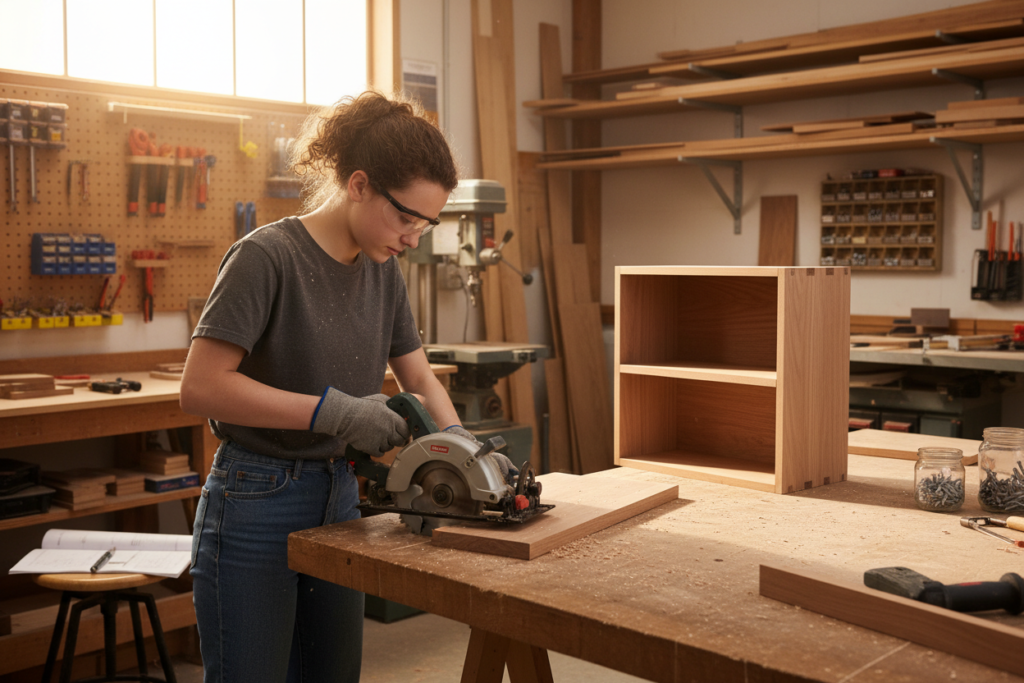
A bookshelf teaches furniture construction principles. Teens learn to work with sheet goods and create adjustable shelving. This project requires accurate measuring to ensure shelves sit level.
The bookshelf serves the teen’s own room, making it personally relevant. They practice edge banding, backing installation, and finishing techniques. This substantial project typically spans several weekends.
Wooden Laptop Stand
A laptop stand combines function with modern design. This project teaches angle cutting and ergonomic considerations. Teens learn to create stable, weight-bearing structures from relatively thin materials.
The stand improves their own workspace setup. Children practice precision measuring and clean finishing for a professional appearance. Adding cable management features increases complexity and utility.
Chess Board and Box
A chess board requires precise cutting and alternating wood patterns. This project teaches inlay techniques and working with contrasting wood species. The storage box adds a second component with fitted compartments.
Creating a chess set showcases advanced skills to family and friends. Teens learn about grain direction, wood movement, and tight-tolerance joinery. This heirloom-quality project becomes a lasting achievement.
Skills Developed
Reading and interpreting detailed plans
Power tool operation with proper safety
Joint-making techniques for strength
Wood finishing and staining methods
Project planning and material estimation
Problem-solving when designs need adjustment
Tool Proficiency
Table saw operation under supervision
Drill press for accurate holes
Orbital sander for smooth finishes
Miter saw for precise angle cuts
Router for decorative edges
Measuring tools for exact dimensions
Selecting the Right Tools for Kids Woodworking Projects
Tool selection impacts both safety and project success. Starting with quality basics prevents frustration and builds proper technique. Invest in child-sized tools when available, as adult tools can be unwieldy for small hands.
Essential Hand Tools
A small claw hammer with a comfortable grip fits children’s hands better. Look for weights between eight and twelve ounces. The claw end teaches kids about fixing mistakes by removing nails.
Hand saws with finer teeth and ergonomic handles work well for kids. Japanese-style pull saws offer excellent control and safety. These saws cut on the pull stroke, which feels more natural to beginners.
Measuring tools should include both a standard tape measure and a combination square. Kids need to see measurements clearly marked. A pencil with hard lead prevents constant sharpening interruptions.
Introducing Power Tools
Power tools require maturity and close supervision. Start with less intimidating options like electric sanders. The orbital sander teaches tool control with minimal risk.
Cordless drills give kids power tool experience safely. Begin with pre-marked drill points and backing boards. Children learn trigger control and maintaining steady pressure.
The scroll saw offers precise cutting with better visibility than other saws. Kids can see the blade and their cutting line simultaneously. This tool works well for detailed project work.
Power Tool Safety: Never allow multiple children to operate power tools simultaneously. Maintain one-on-one supervision until mastery is clear. Keep power tools unplugged when not actively in use. Establish clear “tool on” and “tool off” signals.
Safety Equipment
Safety goggles must fit properly without gaps. Over-the-glasses styles accommodate kids who wear prescription lenses. Keep multiple pairs available so friends can participate safely.
Hearing protection matters even with hand tools. Hammering and sawing create noise levels that can damage young ears. Earmuffs designed for children stay in place better than adult versions.
Work gloves protect hands during rough work but should be removed for power tool use. Gloves can catch in moving parts, creating serious hazards. Teach kids when to wear gloves and when to remove them.
Choosing the Best Wood for Children’s Projects
Wood selection affects how easily kids can work and how projects turn out. Softer woods forgive beginner mistakes and require less strength to cut. Understanding wood characteristics helps match materials to skill levels.
Best Woods for Beginners
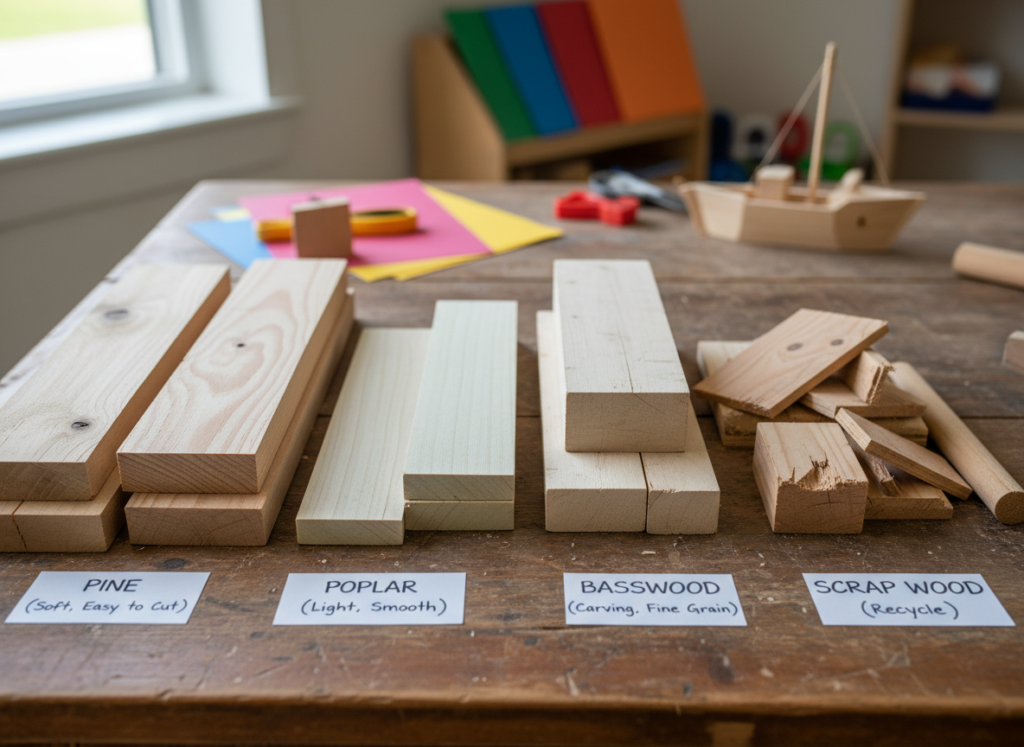
Pine remains the most popular choice for kids woodworking projects. This softwood cuts easily and costs less than hardwoods. Pine accepts paint well and shows grain patterns when stained.
Basswood offers incredibly smooth working properties. This wood sands to a silky finish with minimal effort. Basswood works perfectly for carving projects and delicate cuts.
Poplar bridges softwoods and hardwoods in working characteristics. It cuts cleanly and resists splitting better than pine. The subtle green tones add visual interest to natural finishes.
Using Scrap Wood Effectively
Scrap wood provides free materials for practice and experimentation. Kids can make mistakes on scrap pieces without wasting money. Many lumber yards offer scrap bins where useful pieces hide.
Pallet wood has gained popularity for rustic projects. However, check that pallets haven’t carried chemicals before letting children use them. Heat-treated pallets marked “HT” are safe, while “MB” indicates chemical treatment.
Plywood and oriented strand board work well for larger projects. These sheet goods provide stable surfaces for boxes and signs. Kids learn to work with different materials and adapt techniques.
Softwoods (Easier to Work)
Pine – affordable and widely available
Cedar – natural rot resistance for outdoor projects
Fir – straight grain and good strength
Basswood – excellent for carving and detail work
Beginner-Friendly Hardwoods
Poplar – works like softwood, stronger finish
Aspen – light color and smooth texture
Alder – cuts cleanly with minimal tear-out
Soft maple – introduces hardwood properties
Understanding Wood Grain
Teaching kids about grain direction improves their results. Cutting and sanding with the grain produces smoother surfaces. Against the grain often causes tear-out and rough edges.
Wood grain affects how pieces split when nailed. Kids learn to position nails to avoid following grain lines. This knowledge prevents frustrating splits in nearly finished projects.
Safe Finishing Methods for Kids’ Wood Projects
Finishing transforms rough projects into polished creations. Kids take pride in applying final touches that make their work shine. Choose non-toxic products designed for children’s safety.
Sanding Techniques
Sanding teaches patience and attention to detail. Start with coarse grit to remove rough spots, then progress to finer grits. Kids learn how each grit level improves smoothness.
Hand sanding builds arm strength and control. Sanding blocks prevent uneven surfaces and finger fatigue. Children should sand following grain direction for best results.
Electric sanders speed the process for larger projects. Palm sanders offer good control for beginners. Kids must learn to keep sanders moving to avoid creating low spots.
Paint and Stain Options
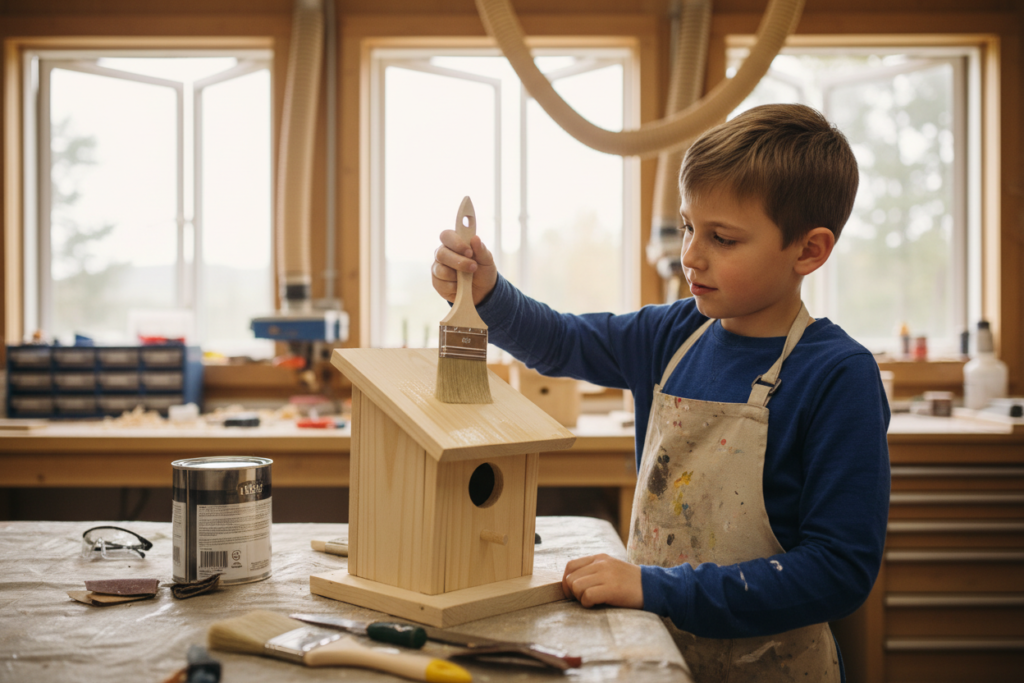
Water-based paints provide vibrant colors without toxic fumes. These paints clean up easily with soap and water. Kids can apply multiple coats to achieve solid coverage.
Non-toxic wood stains enhance natural grain patterns. Children learn how different woods absorb stain differently. Testing on scrap pieces prevents surprises on finished projects.
Food-safe finishes work well for items like cutting boards or utensil holders. Mineral oil and beeswax combinations protect wood naturally. These finishes require reapplication but remain completely safe.
Clear Protective Coats
Water-based polyurethane offers durable protection without strong odors. This finish dries quickly between coats. Kids can apply it with brushes or foam applicators.
Paste wax provides a traditional finish for decorative pieces. Children learn application and buffing techniques. The immediate shine gratifies kids who want quick results.
Natural oils like linseed or tung oil penetrate wood deeply. These finishes bring out grain beauty while protecting surfaces. Oil finishes require longer drying time between coats.
Seasonal Kids Woodworking Projects Throughout the Year
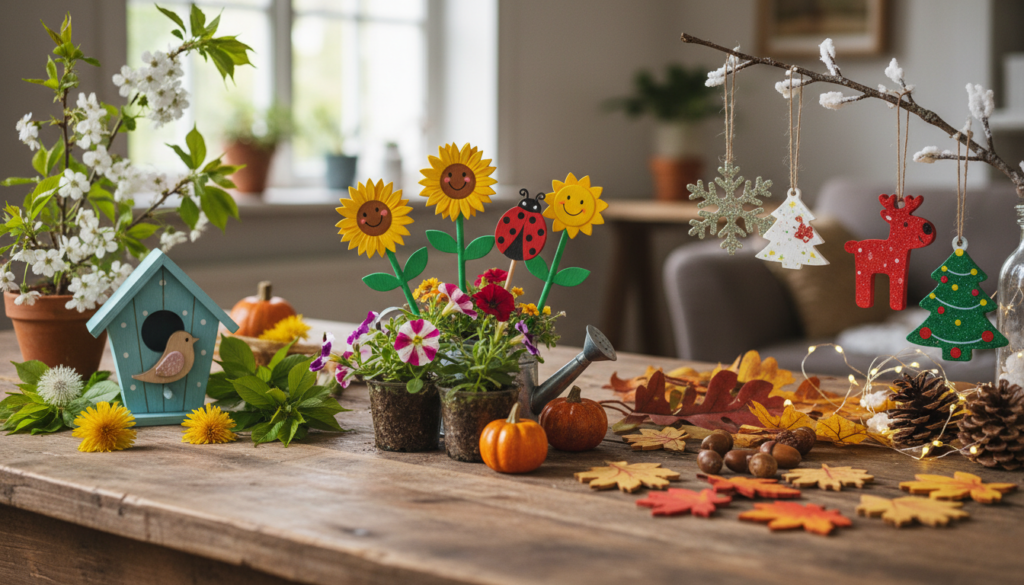
Seasonal projects connect woodworking with celebrations and nature’s cycles. These themed builds maintain year-round interest in the craft. Kids enjoy creating decorations and gifts tied to specific occasions.
Spring Garden Projects
Spring brings opportunities for outdoor woodworking. Garden markers let kids label vegetable plants or flower beds. These simple stakes require cutting, sanding, and weather-resistant paint.
Butterfly houses attract beneficial insects to gardens. This project teaches kids about pollinator importance. The box design requires precise entrance dimensions for target species.
Plant stands elevate containers for better drainage and visibility. Kids practice building stable structures that support weight. This project combines function with decorative potential.
Summer Outdoor Builds
Summer weather enables larger outdoor projects. A simple bench provides seating in yards or gardens. Kids learn furniture construction basics at a manageable scale.
Lawn games like cornhole boards teach angle cutting and measuring. These projects combine woodworking with family recreation. Children take pride in equipment they helped create.
Planter boxes bring gardening and woodworking together. Kids build containers, then plant flowers or vegetables. This project shows how different skills complement each other.
Fall Harvest Creations
Fall projects often incorporate natural materials. Pumpkin stands display autumn decorations safely. These quick builds use scrap wood and simple joinery.
Trick-or-treat buckets with wooden handles offer personalization options. Kids decorate bases while practicing handle attachment. These containers last for years of Halloween use.
Turkey decorations and centerpieces prepare for Thanksgiving. Children cut bird shapes and add colorful tail feathers. These projects develop scroll saw skills through curved cuts.
Winter Holiday Projects
Winter brings gift-making opportunities. Kids create presents for family members using their woodworking skills. This builds both craftsmanship and thoughtfulness.
Ornaments require small-scale precision work. Children practice detail cuts and decorative techniques. Personalized ornaments become family heirlooms over time.
Snowman or reindeer yard decorations spread holiday cheer. These larger projects challenge kids to work with weather-resistant materials. Outdoor display showcases their abilities to the neighborhood.
How Parents Can Effectively Teach Kids Woodworking
Teaching woodworking requires patience and clear communication. Parents don’t need expert skills to guide children successfully. Focus on safety, encouragement, and letting kids learn from mistakes.
Setting Realistic Expectations
First projects won’t look perfect, and that’s acceptable. Emphasize effort and learning over flawless results. Children develop skills gradually through repeated practice.
Break complex projects into smaller steps. Kids feel accomplishment as they complete each phase. This approach prevents overwhelm and maintains enthusiasm.
Time projects appropriately for attention spans. Young children may need thirty-minute sessions with breaks. Older kids can sustain focus for longer periods but still benefit from structured work times.
Demonstration and Practice
Show each technique before asking kids to try it. Demonstrate proper tool grip and body position. Verbal instructions combined with visual modeling work better than words alone.
Let children practice on scrap before working on actual projects. This builds confidence and muscle memory. Practice pieces can be saved to show skill progression over time.
Work alongside kids rather than just supervising. Your participation models sustained effort and problem-solving. Children learn by watching how adults handle challenges and setbacks.
Encouraging Problem-Solving
Ask guiding questions when kids encounter difficulties. “What do you think would happen if…” prompts critical thinking. Avoid immediately providing solutions to every challenge.
Celebrate creative problem-solving even when ideas don’t work. Failed approaches teach valuable lessons about materials and design. This resilience serves kids beyond woodworking.
Let children make minor mistakes that can be fixed. A slightly crooked nail or rough sanding spot provides learning opportunities. Rescuing kids from every error prevents skill development.
Gain Confidence as a Woodworking Parent
Many parents want to teach woodworking but feel uncertain about their own knowledge. Structured programs provide the guidance parents need to confidently introduce kids to this valuable skill. Learn proven teaching methods while kids master age-appropriate techniques.
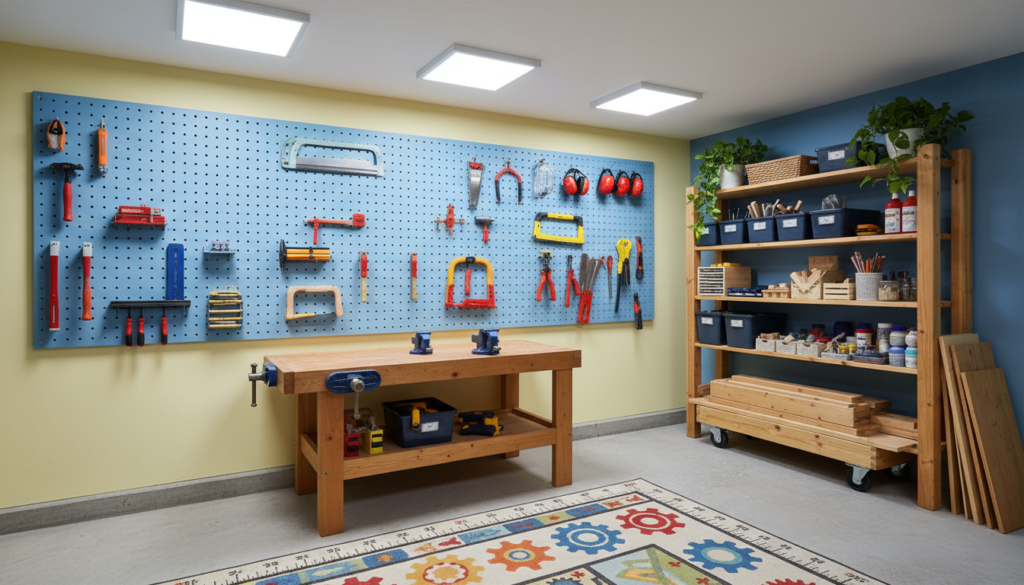
A dedicated workspace makes projects easier and safer. The area doesn’t require expensive renovations or large square footage. Thoughtful organization maximizes available space for productive work.
Workbench Considerations
The workbench should match the child’s height for comfortable working. Standing work surfaces should be at elbow height. This positioning reduces strain and improves control.
A sturdy surface that won’t wobble during hammering or sawing is essential. Stability prevents accidents and makes tool use easier. Secure the bench to the wall if needed for additional strength.
Built-in storage below the work surface keeps tools accessible. Shelves or drawers organize materials by project type. This organization teaches responsibility for equipment care.
Lighting and Ventilation
Bright overhead lighting prevents eye strain and improves safety. Task lighting focused on the work surface illuminates detail work. Natural light provides the truest color perception for finishing work.
Adequate ventilation removes dust and finishing fumes. Windows or exhaust fans maintain air quality. Fresh air makes longer work sessions more comfortable.
Dust collection, even simple shop vacuums, reduces cleanup time. Keeping work areas clean prevents tracked sawdust throughout the house. Children learn that cleaning up is part of every project.
Tool Storage Systems
Pegboard walls provide visible tool storage. Outlining each tool’s position helps kids return items correctly. This system builds organizational habits early.
Clear containers for hardware items let kids see supplies at a glance. Label containers with both words and pictures for younger children. Organized storage reduces frustration during projects.
A tool caddy can be carried to the work area. This portable option works when dedicated space is limited. Kids can set up and clean up their workspace as needed.
Turning Woodworking Mistakes into Learning Opportunities
Every woodworker makes mistakes, from beginners to experts. How parents handle errors shapes children’s attitudes toward challenges. Mistakes offer chances to teach problem-solving and resilience.
Common Beginner Errors
Measuring mistakes happen frequently when kids start woodworking. Teaching “measure twice, cut once” prevents many errors. When mistakes occur, discuss what went wrong and how to avoid it next time.
Split wood from improper nailing frustrates beginners. Show kids how pilot holes prevent splitting. Keep damaged pieces as examples of what not to do.
Uneven sanding creates waves in wood surfaces. Explain how consistent pressure and motion produce better results. Let kids feel the difference between well-sanded and poorly-sanded pieces.
Recovery Techniques
Wood filler repairs small mistakes effectively. Kids learn that errors can often be fixed rather than starting over. This reduces anxiety about making mistakes.
Redesigning projects to work around errors teaches creative adaptation. A too-short piece might become a different component. This flexibility builds innovation skills.
Sometimes starting fresh proves necessary. Discuss when to persist and when to begin again. This judgment develops with experience and parental guidance.
Building Resilience
Share stories of your own woodworking mistakes. Normalizing errors reduces shame when kids make them. Your vulnerability models healthy responses to setbacks.
Praise effort and learning, not just successful outcomes. “You figured out a solution” matters more than “This looks perfect.” This mindset encourages risk-taking and growth.
Keep early projects to show improvement over time. Children see concrete evidence of skill development. This visual progress motivates continued learning.
Finding Support and Inspiration for Kids Woodworking Projects
Connecting with other woodworking families provides encouragement and ideas. Community resources expand what children can learn and create. These connections build lasting relationships around shared interests.
Local Workshops and Classes
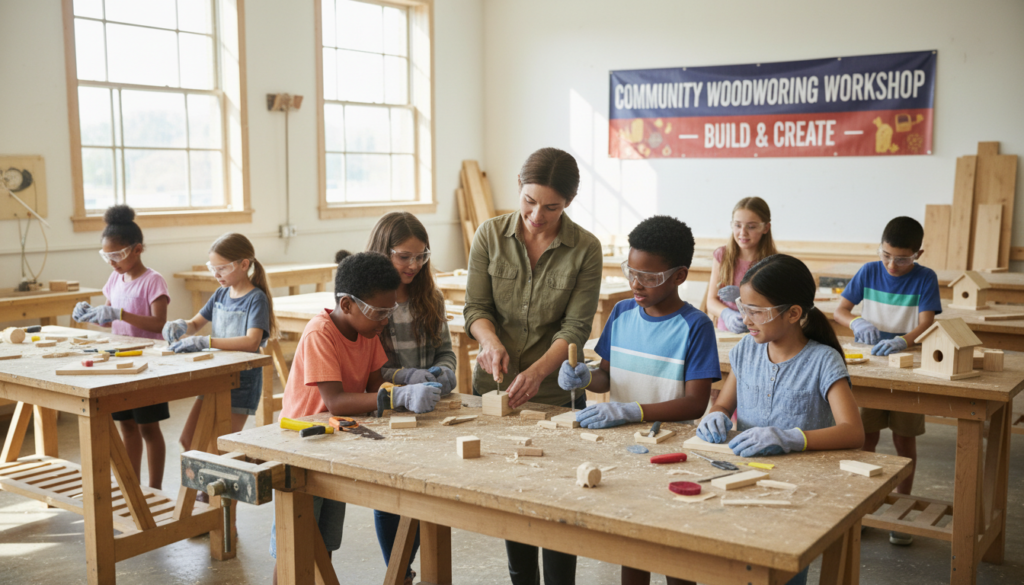
Many communities offer youth woodworking classes through recreation departments. These programs provide professional instruction and specialized equipment. Kids benefit from learning alongside peers with similar interests.
Hardware stores sometimes host kids’ building workshops. These free events introduce basic skills through simple projects. Children receive tools and materials to complete builds.
Maker spaces and community workshops often have youth programs. These facilities provide access to tools families might not own. Membership connects kids with experienced makers willing to mentor.
Online Resources and Communities
Video tutorials demonstrate techniques visually. Kids can pause and replay instructions as needed. Many woodworkers share beginner-friendly content specifically for children.
Online forums connect woodworking families worldwide. Parents exchange project ideas and troubleshooting advice. These communities offer support when local resources are limited.
Project plan libraries provide endless inspiration. Free and paid plans guide kids through new builds. Following established plans builds skills before designing original projects.
Books and Magazines
Woodworking books designed for children explain concepts clearly. Illustrated instructions help visual learners. Building a library provides reference materials for years of projects.
Magazines showcase current projects and techniques. Subscriptions deliver regular inspiration and skill-building articles. Kids enjoy seeing what other young woodworkers create.
Library borrowing lets families explore different resources. Try various instructional styles to find what works best for your child. Free access removes financial barriers to learning.
Building a Foundation for Lifelong Skills
Kids woodworking projects offer far more than finished products. Children develop confidence, creativity, and practical abilities that serve them throughout life. The patience learned while sanding a rough surface translates to persistence in academic and personal challenges.
Starting with age-appropriate projects prevents frustration while building competence. As skills grow, kids tackle increasingly complex builds. This progression mirrors how learning happens in all areas of life.
The parent-child bond strengthens through shared workshop time. Working together on projects creates memories beyond the finished items. These experiences build relationships through collaboration and mutual accomplishment.
Safety remains the foundation of positive woodworking experiences. Proper supervision and age-appropriate tool introduction prevent accidents. Children who learn safe practices early maintain them as they gain independence.
Every child who picks up a hammer and wood begins a unique creative journey. Some may pursue woodworking as lifelong hobbies or careers. Others simply gain problem-solving skills and the satisfaction of creating with their hands.
Give Your Family the Complete Woodworking System
Free project ideas provide a starting point, but structured guidance accelerates learning and builds confidence. Comprehensive woodworking programs offer:
Progressive skill-building from beginner to advanced projects
Professional video instruction showing proper techniques
Safety protocols that give parents peace of mind
Complete material lists and cutting diagrams
Ongoing support from experienced instructors
Age-appropriate project libraries for years of builds
Thousands of families have discovered the joy of woodworking together through expert guidance. Stop piecing together random projects and start following a proven path to woodworking success.
The simple act of transforming raw wood into useful items teaches children they can shape their world. This empowerment extends beyond the workshop into every aspect of their lives. Starting today opens a pathway to skills, creativity, and confidence that lasts a lifetime.
Starting your woodworking journey doesn’t require years of experience or expensive power tools. Whether you want to refresh your living room or create functional pieces for your house, simple projects offer the perfect way to build skills and confidence.This Website contains affiliate links. That means I may earn a small commission if you purchase through…
Mental clarity feels distant when brain fog clouds your thinking. You struggle to focus on simple tasks throughout day. Your cognitive function seems slower than usual. This frustrating experience affects millions of people seeking relief.This Website contains affiliate links. That means I may earn a small commission if you purchase through my links, at no…
The health of your digestive system influences nearly every aspect of your wellbeing. Your gut microbiome contains trillions of microorganisms that regulate digestion, immunity, mood, and energy levels. When this delicate ecosystem falls out of balance, the consequences extend far beyond stomach discomfort.This Website contains affiliate links. That means I may earn a small commission…
Embarking on a weight loss journey can feel overwhelming. With countless diets, conflicting advice, and endless products promising quick results, finding a sustainable path forward seems nearly impossible. The truth is that effective weight management requires understanding how your body works and implementing evidence-based strategies that fit your lifestyle.This Website contains affiliate links. That means…
Finding the perfect birthday gift for your boyfriend can feel like navigating a minefield of potential misses. You want something thoughtful that shows how well you know him, but also something he’ll genuinely use and enjoy. If you’ve been searching for inspiration, you’re in the right place. We’ve scoured Amazon to find the most talked-about,…
Finding the perfect housewarming gift is about celebrating new beginnings and helping turn a house into a home. Whether your friend or family member has purchased their first property, upgraded to a larger space, or simply relocated to a new rental, a thoughtful housewarming present acknowledges this significant milestone. The best gifts combine practicality with…