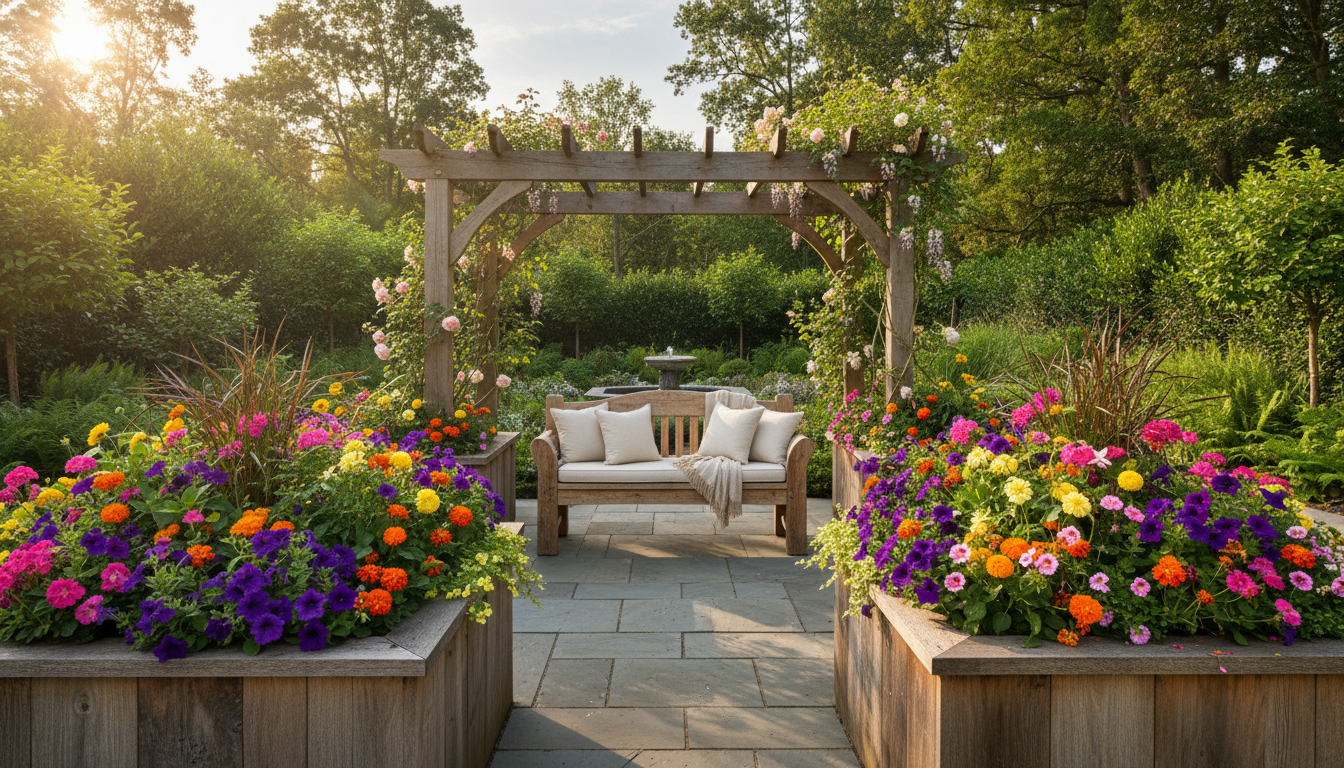
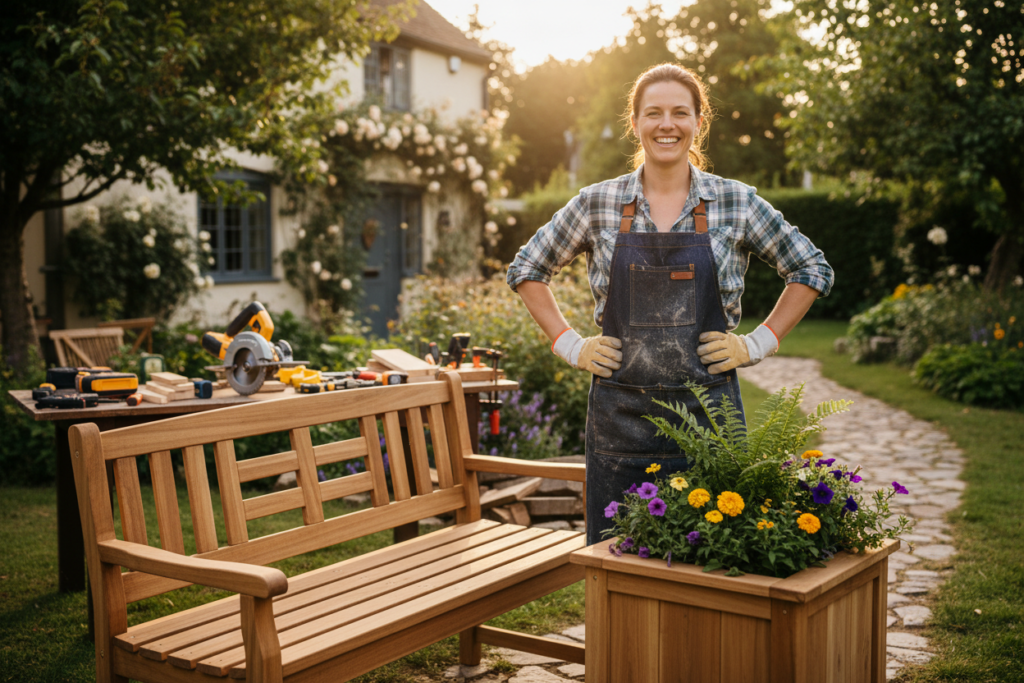
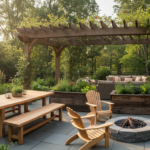
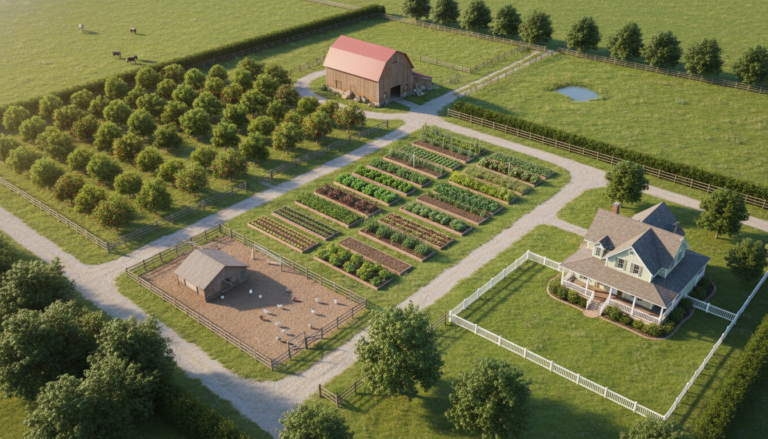
Your backyard holds incredible potential. With the right garden woodworking projects, you can create an outdoor oasis that reflects your personal style.
This Website contains affiliate links. That means I may earn a small commission if you purchase through my links, at no extra cost to you.
Whether you have basic tools or you’re expanding your woodworking skills, DIY outdoor projects offer endless possibilities. From simple planter boxes to elaborate patio furniture, each creation adds character to your space.
The beauty of outdoor woodworking lies in its accessibility. You don’t need a professional workshop to get started. Many projects require only weekend time and basic materials.
This guide showcases 16 inspiring diy projects that will enhance your garden. Each one is designed to be achievable while delivering professional-looking results that will make your neighbors ask where you bought them.
Why Choose Wooden Garden Projects for Your Outdoor Space
Wood remains the top choice for outdoor projects because it blends naturally with garden settings. Unlike plastic or metal alternatives, wood creates warmth and authenticity in your backyard.
The versatility of wood allows you to customize every project. You can stain it dark for a modern look or leave it natural for rustic charm. Paint opens even more design possibilities.
Durability is another major advantage. When properly treated, wooden structures withstand years of weather exposure. Cedar and redwood naturally resist rot and insects.
Benefits of Wood for Outdoor Projects
Natural aesthetic that complements plants and landscaping
Easy to work with using basic tools
Customizable through staining, painting, or natural finishes
Sustainable and eco-friendly material option
Cost-effective compared to stone or metal alternatives
Popular Wood Types for Garden Projects
Cedar: Naturally rot-resistant and aromatic
Redwood: Beautiful color with excellent durability
Pine: Affordable option when treated properly
Teak: Premium choice for high-end furniture
Oak: Strong and long-lasting for structural projects
Cost-effectiveness makes wood appealing for DIY enthusiasts. You can build impressive pieces for a fraction of retail prices. Leftover materials from one project often supply the next.
Essential Tools and Materials for Outdoor Woodworking Projects
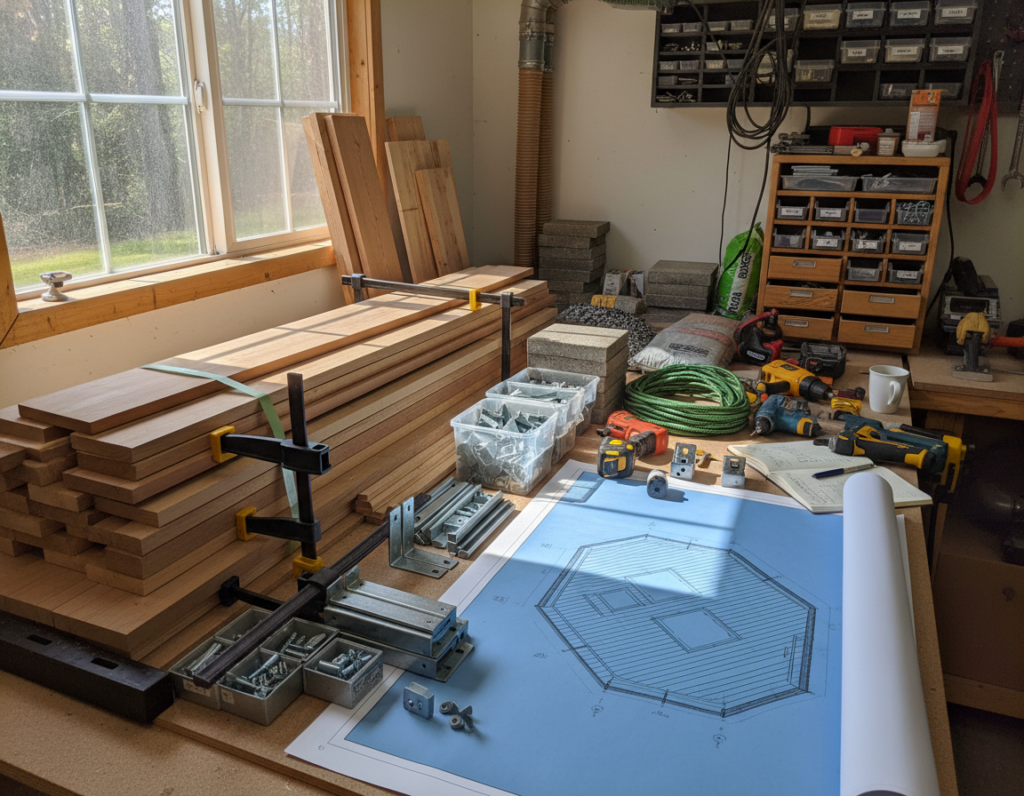
Success in any woodworking project starts with having the right equipment. You don’t need an extensive collection to begin your DIY journey.
Basic Tools Every DIY Builder Needs
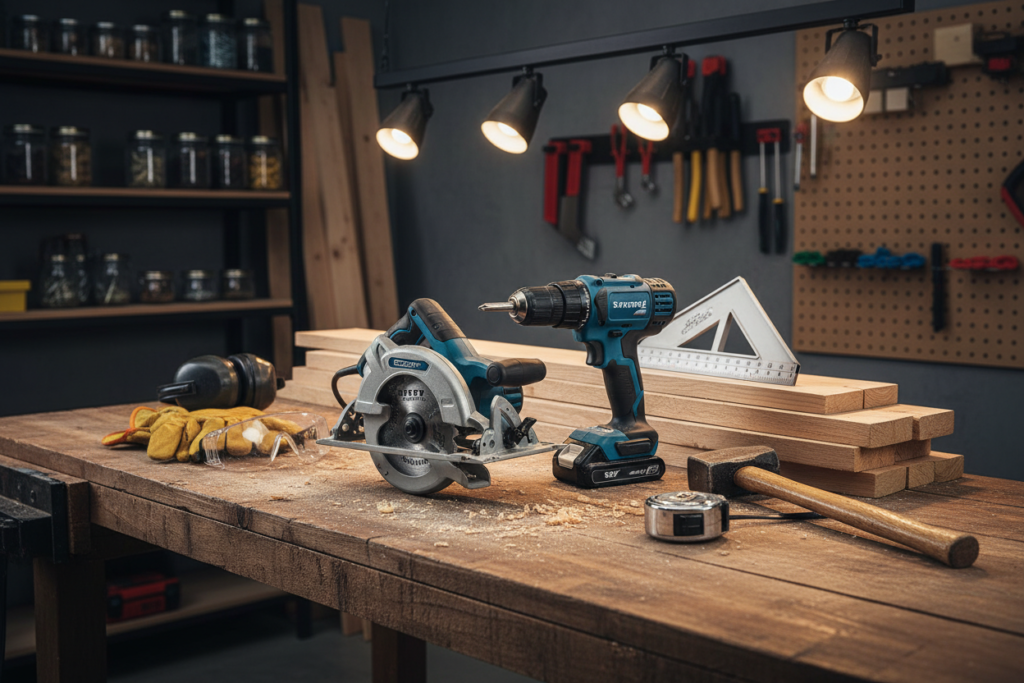
A circular saw is your primary cutting tool. It handles most cuts you’ll encounter in outdoor projects. Pair it with a quality measuring tape and carpenter’s square for accuracy.
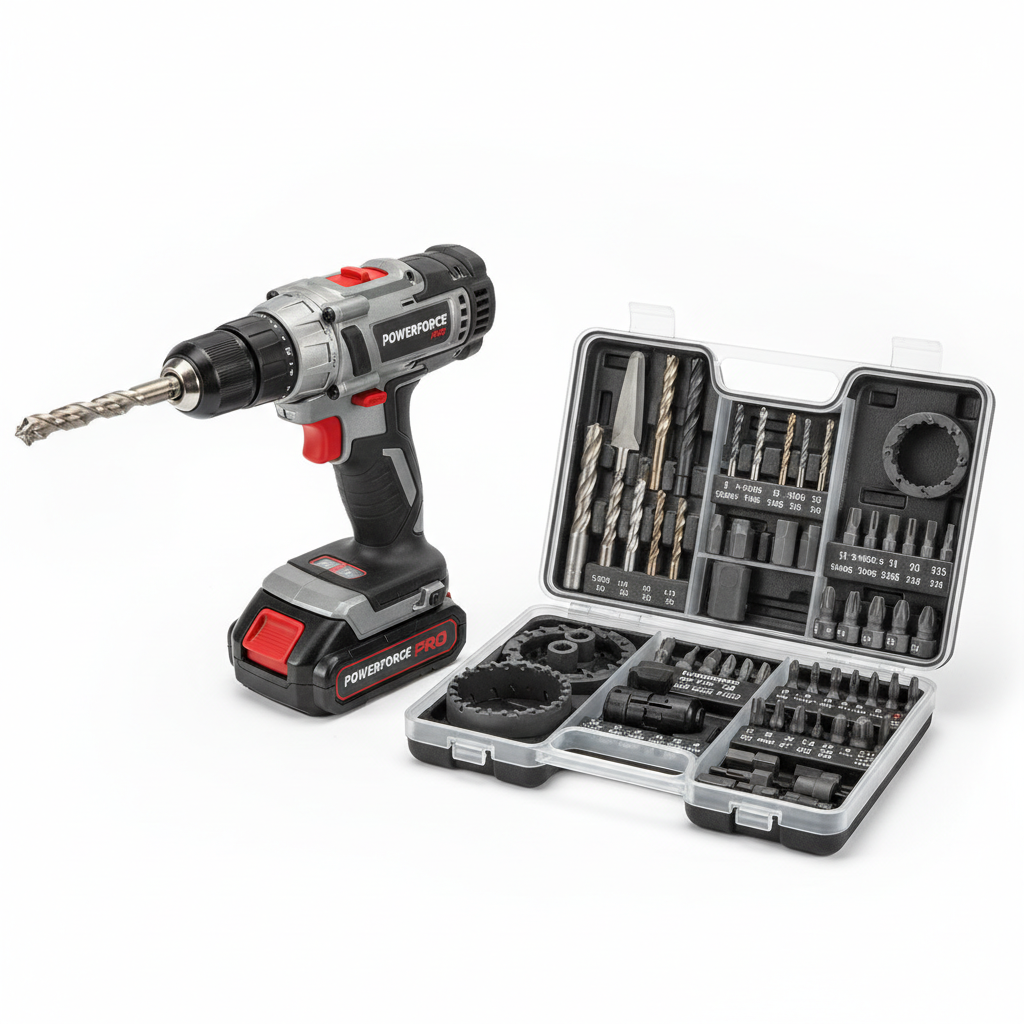
Your drill serves double duty for making holes and driving screws. Invest in a cordless model with enough battery power for extended work sessions. A complete bit set expands your capabilities.
Must-Have Basic Tools
Circular saw or miter saw
Cordless drill with driver bits
Measuring tape (25-foot minimum)
Carpenter’s square
Level (24-inch recommended)
Safety glasses and hearing protection
Work gloves
Clamps (various sizes)
Materials and Hardware Selection
Choosing the right materials determines how long your project will last. Pressure-treated lumber works well for ground-contact applications like raised beds and fence posts.
For furniture and decorative pieces, cedar or redwood offer natural beauty and resistance to decay. These woods age gracefully, developing attractive patina over time.
Pro Tip: Always use exterior-grade screws and hardware. Regular screws rust quickly outdoors, weakening joints and leaving unsightly stains on your wood.
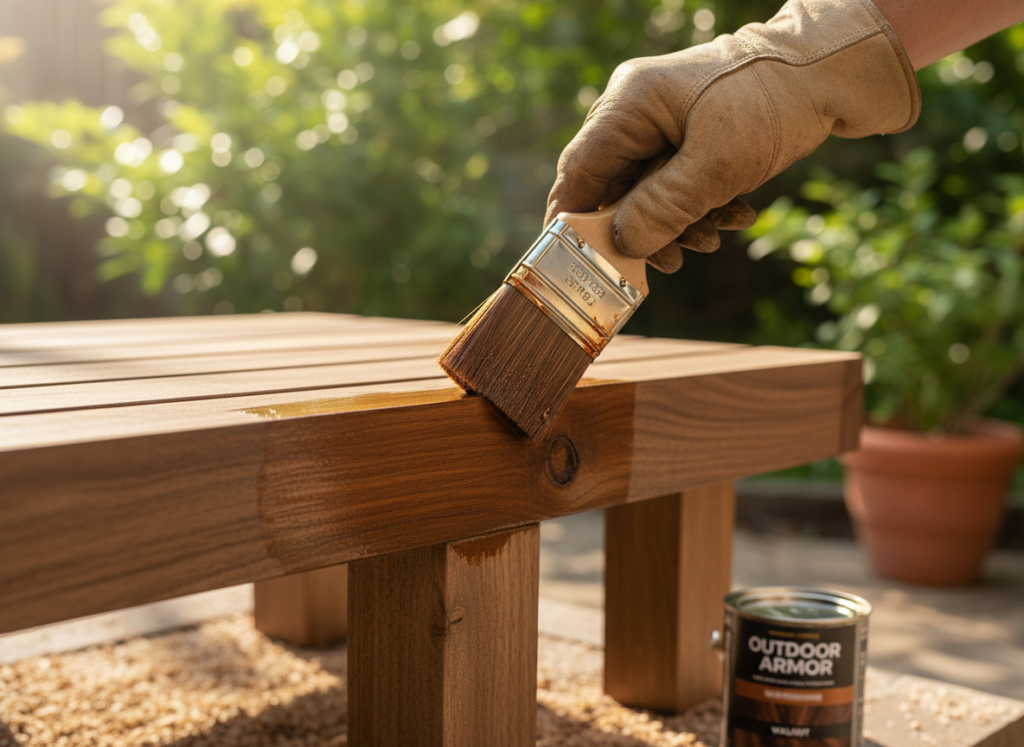
Stains and sealers protect your investment. Water-based products clean up easily and dry quickly. Oil-based finishes penetrate deeper and often last longer.
Ready to Build Like a Pro?
Get access to detailed blueprints, material lists, and step-by-step instructions for all your garden woodworking projects. Professional plans take the guesswork out of DIY building.
Planter boxes bring gardening to comfortable heights while adding architectural interest to your outdoor space. These versatile structures work on patios, decks, or directly in garden beds.
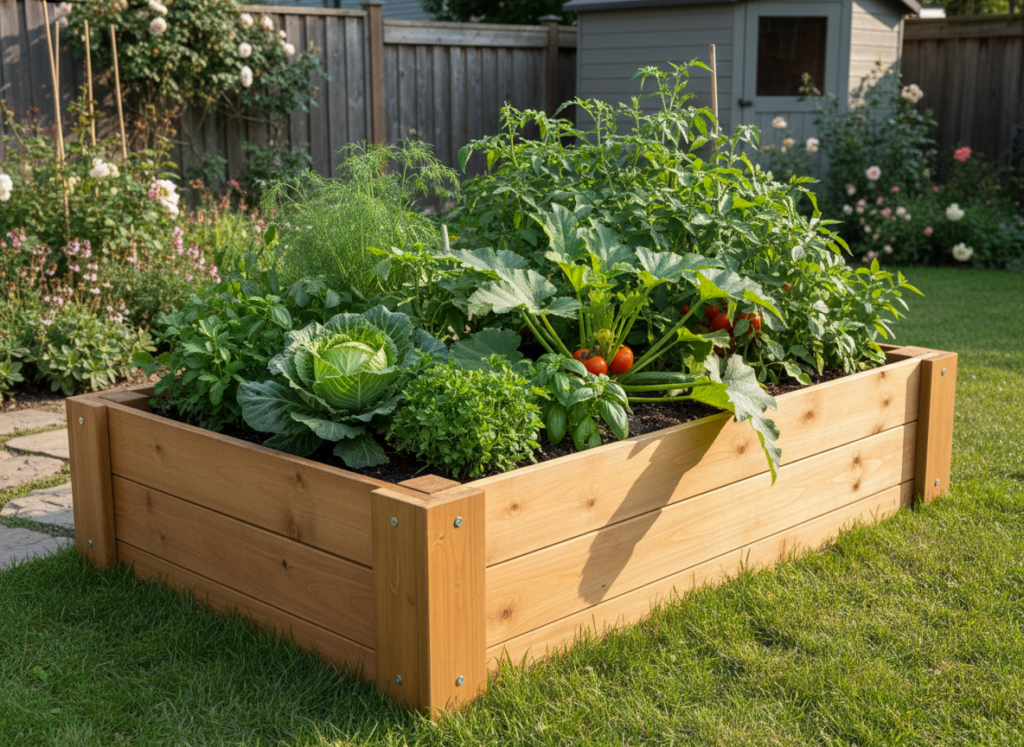
Raised Planter Box for Vegetables and Herbs
A raised planter box solves multiple gardening challenges. It provides better drainage than ground-level beds and makes tending plants easier on your back.
The standard height ranges from eighteen to twenty-four inches. This elevation keeps plants away from ground pests while improving soil warming in spring.
Construction Highlights
Use 2×10 or 2×12 boards for sides
Corner posts provide structural stability
Add landscape fabric to prevent soil loss
Leave gaps in bottom boards for drainage
Cedar or redwood resists rot naturally
Building time typically requires one weekend. The project uses basic tools and straightforward cuts. Most beginners complete their first box successfully.
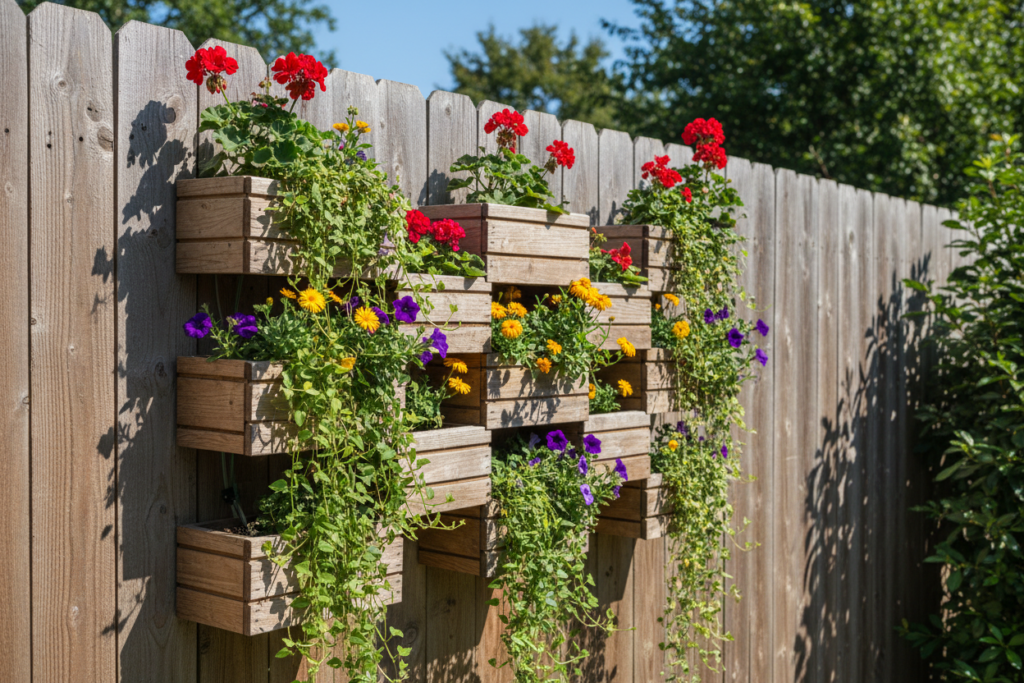
Vertical Planter for Small Spaces
Limited space doesn’t mean limited gardening. Vertical planters maximize growing area by stacking plants upward instead of outward.
These space-saving designs work perfectly on small patios or balconies. They also create living privacy screens when placed strategically along porch railings.
The design typically features three to five levels. Each tier holds shallow planters ideal for herbs, succulents, or annual flowers. Drainage holes prevent water buildup.
Window Box Planter for Curb Appeal
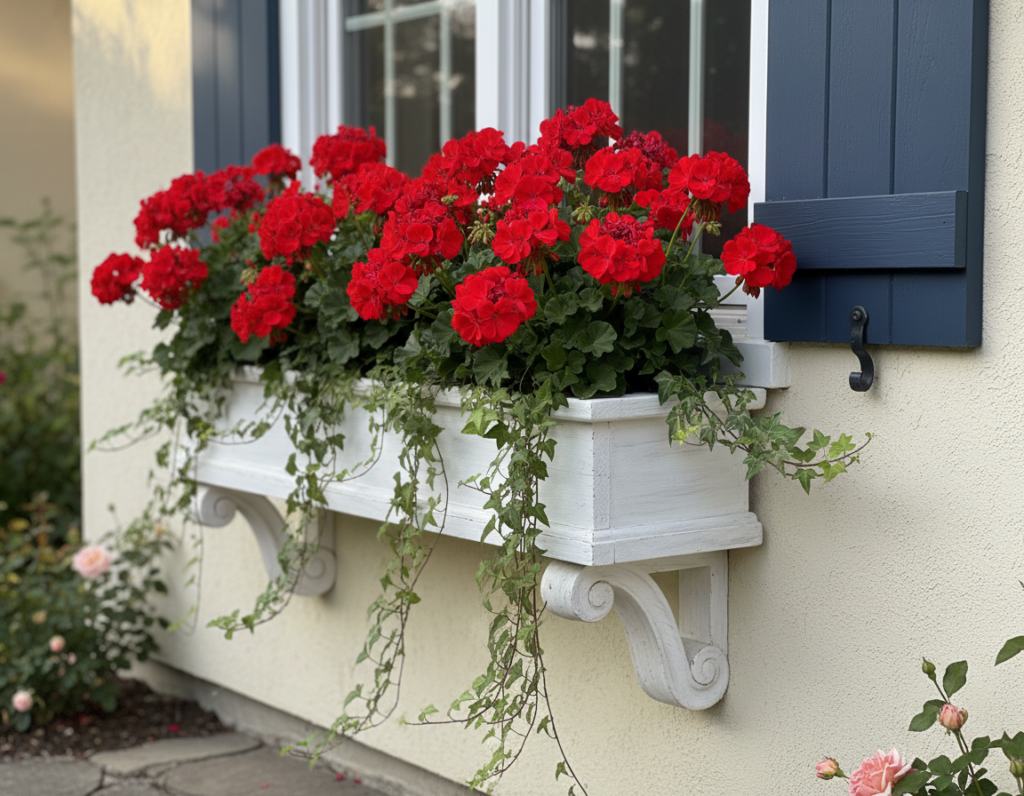
Window boxes add instant charm to any home exterior. These classic planters showcase colorful blooms at eye level, creating welcoming curb appeal.
The box length should match or slightly exceed your window width. Depth of six to eight inches accommodates most flowering plants.
Secure mounting is critical for safety. Use heavy-duty brackets rated for the planter’s weight when filled with wet soil and plants.
Paint or stain the box to complement your home’s exterior colors. White remains the most popular choice for its traditional appeal.
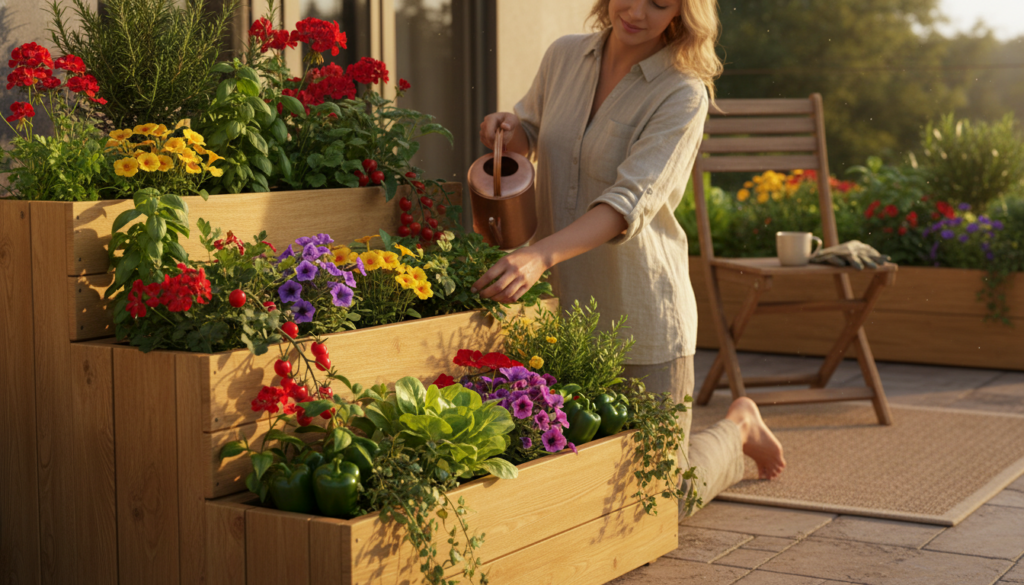
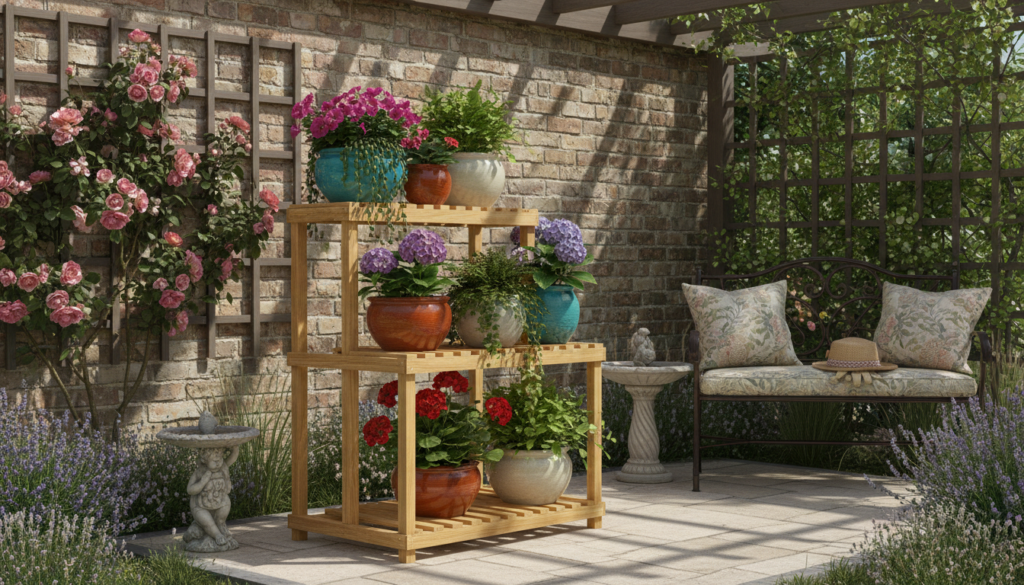
Tiered Planter Stand for Display Gardens
A tiered stand creates a stunning display for container plants. The stepped design ensures each plant receives adequate sunlight while creating visual depth.
Three-tier designs offer the best balance of capacity and stability. Each level holds multiple pots, allowing you to mix plant varieties and colors.
Construction involves building progressively smaller platforms. Connect them with angled supports for stability. The entire structure should feel solid when loaded with plants.
Outdoor Furniture Projects for Comfort and Style
Handcrafted outdoor furniture transforms your patio or garden into an inviting retreat. These pieces combine functionality with personal style at a fraction of retail costs.
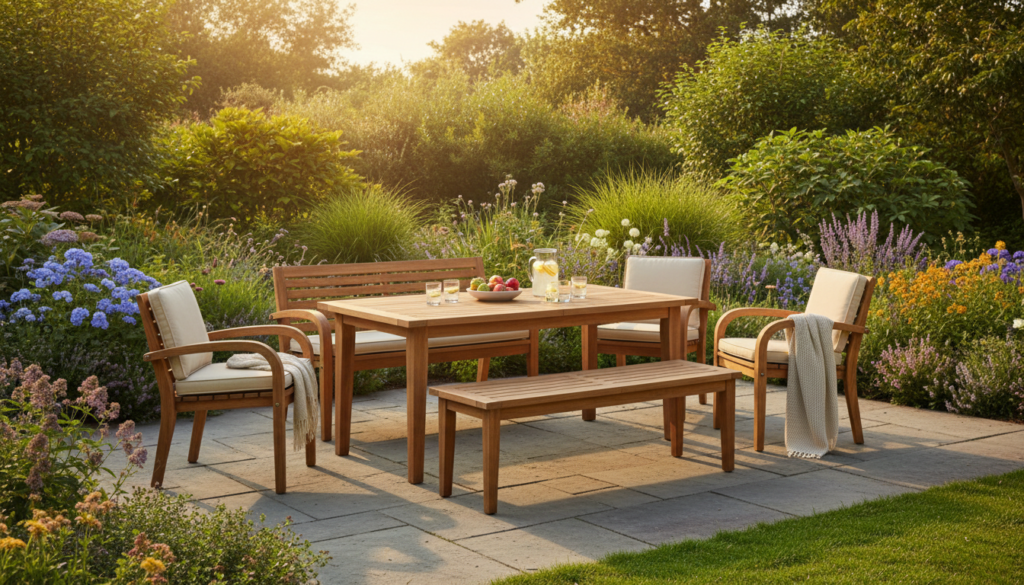
Classic Garden Bench for Relaxation
A garden bench provides the perfect spot for morning coffee or evening relaxation. The timeless design suits any landscape style from cottage gardens to modern spaces.
Standard bench dimensions measure four to five feet long and eighteen inches high. This size accommodates two adults comfortably without overwhelming smaller gardens.
Design Considerations
Seat slats should slope slightly for water drainage
Backrest angle of 10-15 degrees increases comfort
Armrests add elegance and help users stand
Treat all surfaces with exterior sealer
Space slats for air circulation
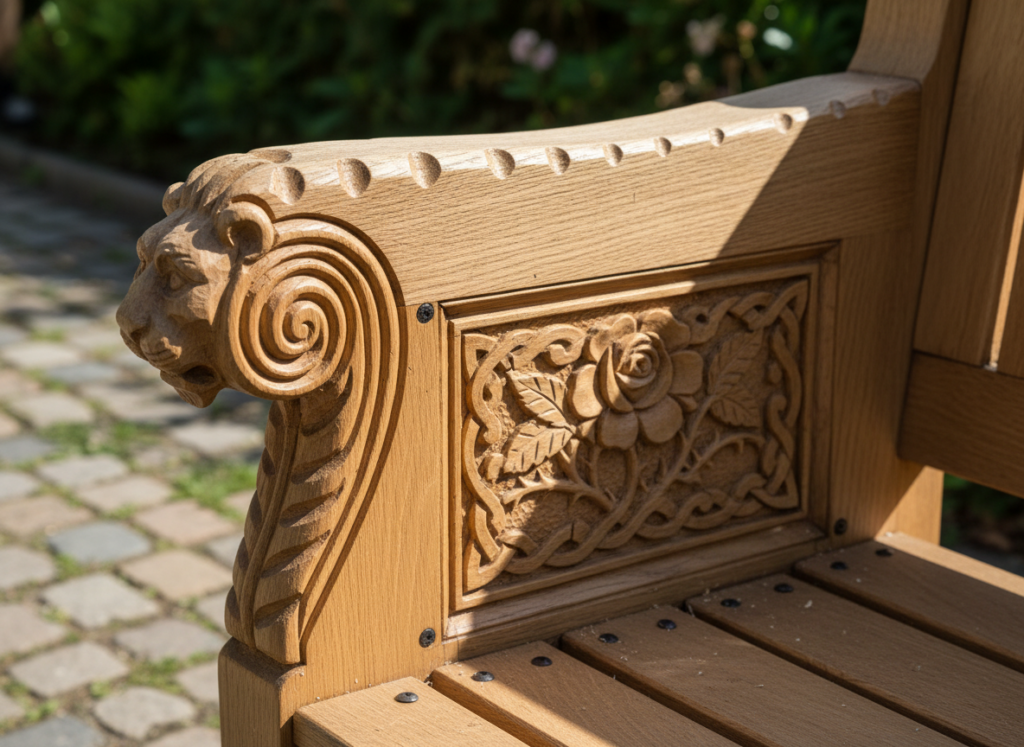
The construction uses simple joinery techniques. Mortise and tenon joints create strength, but pocket screws work well for beginners. Either way add stability to your finished bench.
Adirondack Chair for Ultimate Comfort
Nothing says relaxation like an Adirondack chair. The distinctive reclined design with wide armrests defines outdoor leisure.
Building this iconic chair requires careful attention to angles. The seat slopes backward while the backrest reclines at about thirty degrees from vertical.
Cut patterns ensure consistency if you’re building multiple chairs. Many DIY builders create templates from plywood for repeatable results. This way each chair matches perfectly.
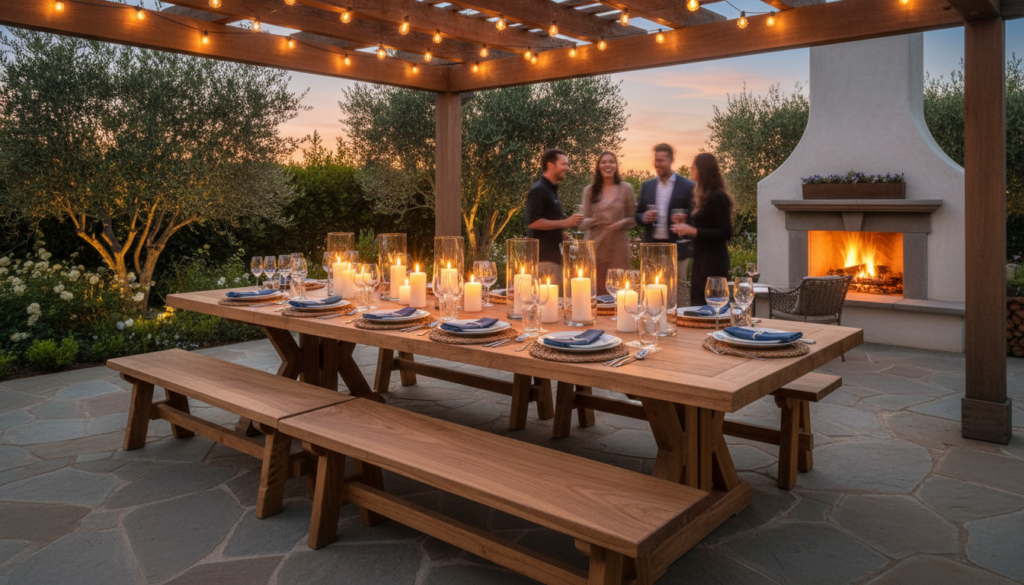
Outdoor Dining Table for Gatherings
A custom outdoor dining table becomes the centerpiece of your patio. It’s where families gather for meals and friends linger over conversation.
Size depends on your space and typical guest count. A six-foot table seats six to eight people comfortably. Add leaves for occasional larger gatherings.
Build Features
Breadboard ends prevent warping
Heavy-duty base supports weight
Sand smooth for splinter-free surface
Apply multiple coats of sealer
Consider umbrella hole placement
The tabletop typically uses 2×6 or 2×8 boards arranged side by side. Secure them to cross supports underneath. The base design ranges from simple trestle style to more elaborate turned legs.
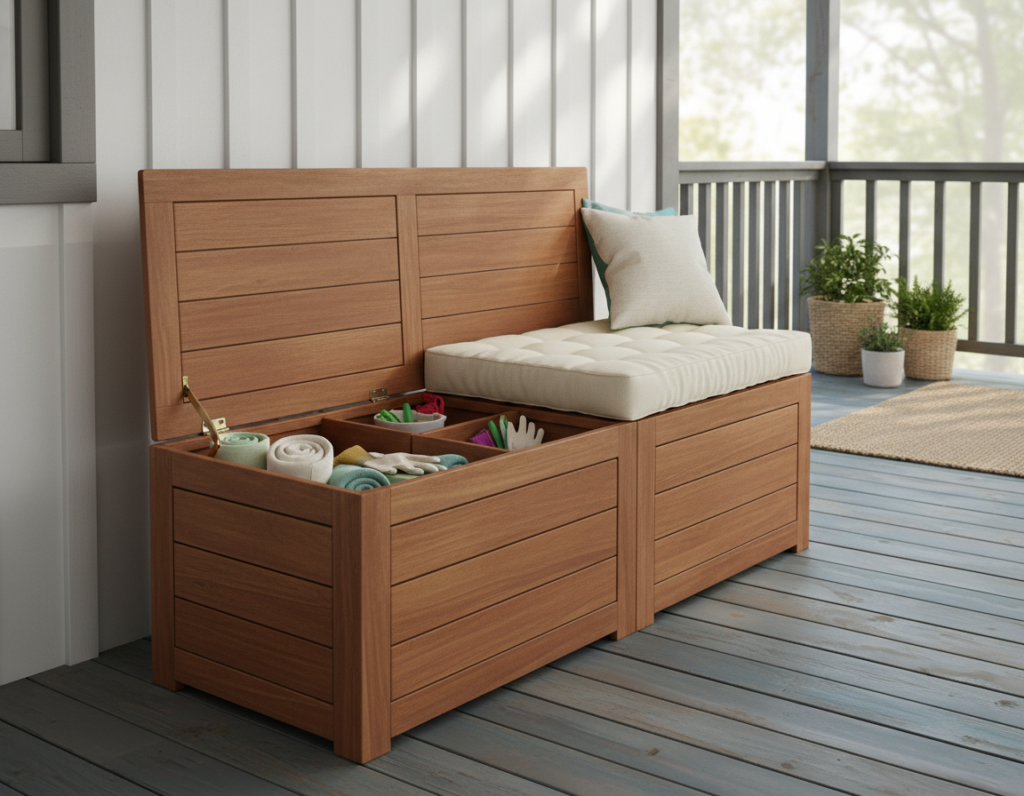
Storage Bench for Dual Purpose
A storage bench solves two needs simultaneously. It provides seating while hiding garden tools, cushions, or toys inside.
The hinged top allows easy access to the storage compartment. Gas struts help lift the lid and hold it open safely during use.
Weather-resistant construction is essential since contents need protection. Use thick boards and ensure the lid overhangs slightly to shed rain. Add weatherstripping around the opening for a better seal.
Build Perfect Furniture Every Time
Stop guessing measurements and struggling with unclear instructions. Professional woodworking plans include detailed diagrams, cutting lists, and assembly steps that guarantee success on your first try.
Decorative Structures That Add Character to Your Garden
Beyond functional furniture, decorative structures create focal points and define spaces within your garden. These projects showcase your creativity while serving practical purposes.
Garden Arbor and Trellis Designs
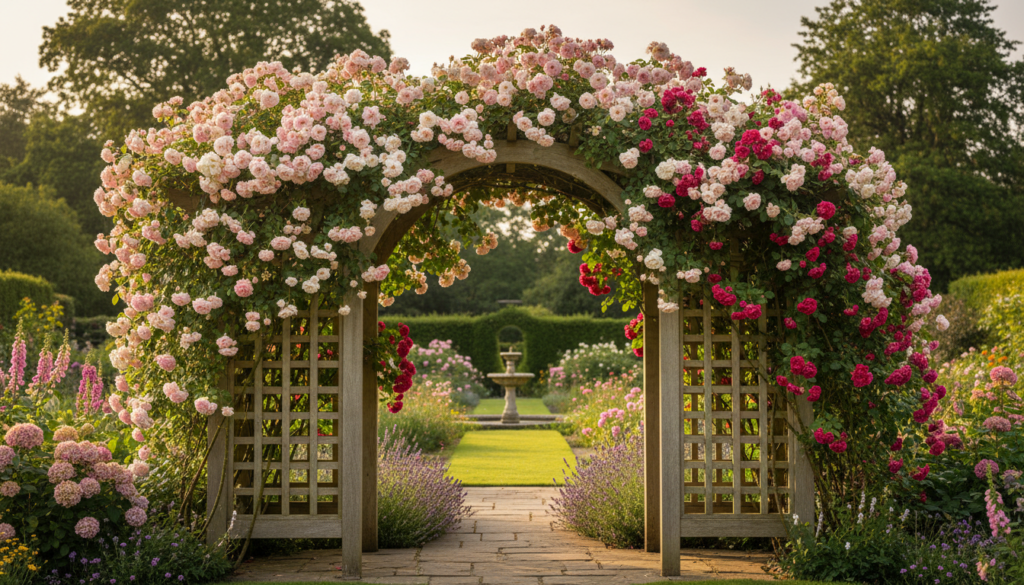
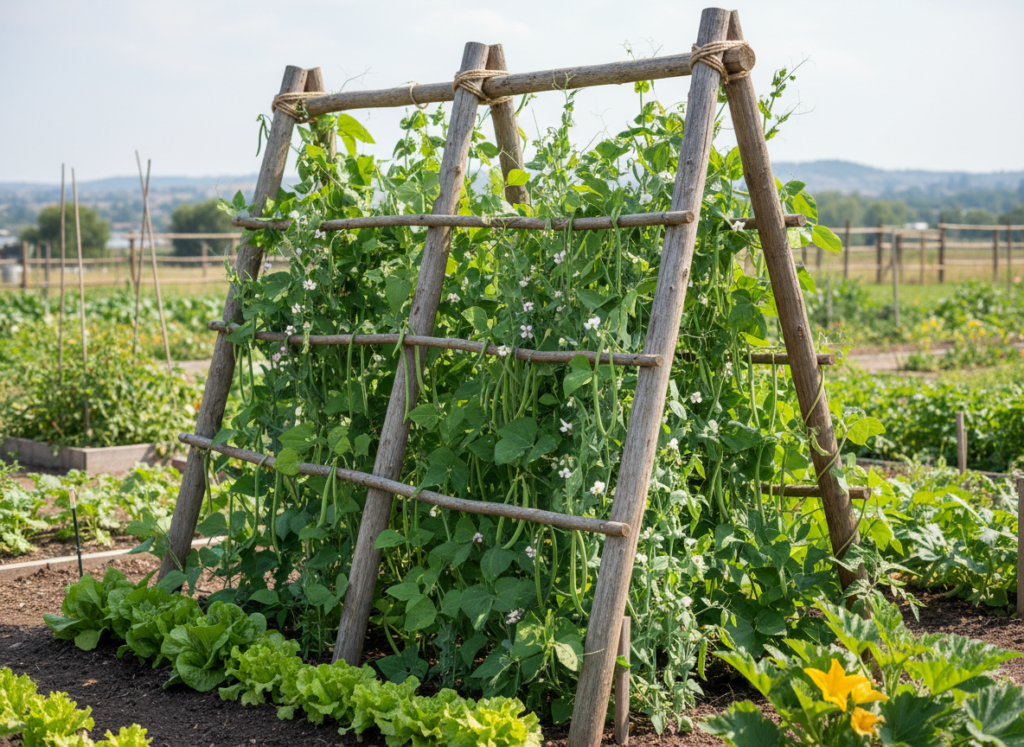
An arbor frames garden entries while supporting climbing plants. The overhead structure creates a sense of passage between garden areas.
Size depends on pathway width and desired plant coverage. A standard garden arbor stands seven to eight feet tall with a five-foot-wide opening.
Construction Tips
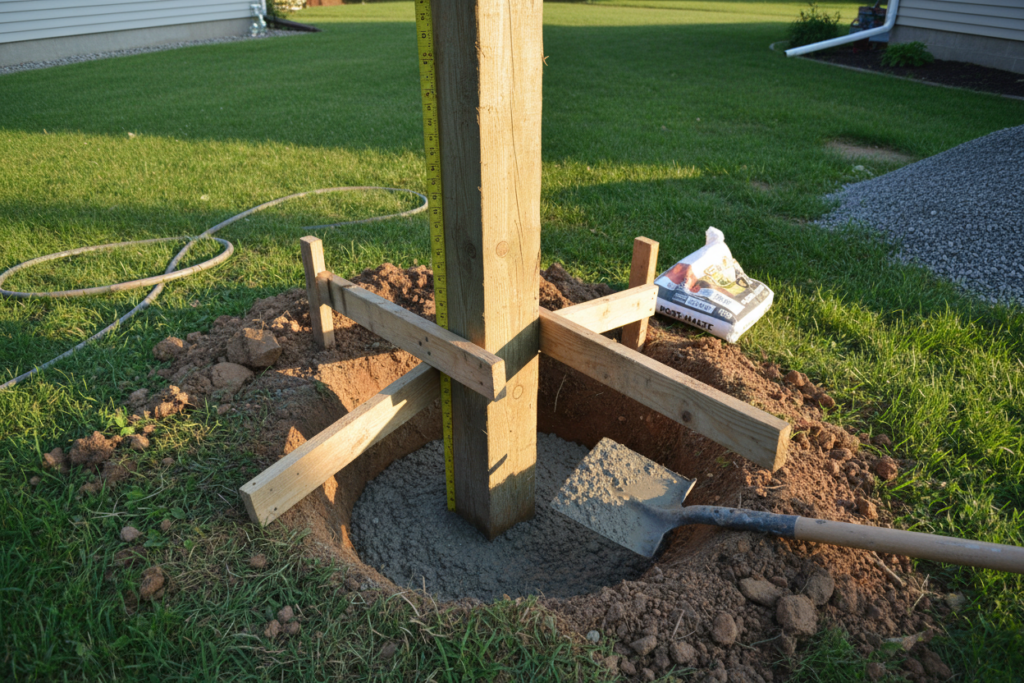
Sink posts two to three feet deep
Use concrete for post stability
Cross-bracing prevents swaying
Lattice panels support vines
Apply finish before assembly
The overhead section can be simple beams or elaborate with decorative cuts. Lattice side panels guide vine growth and create enclosed feeling.
Fence and Privacy Screen Options
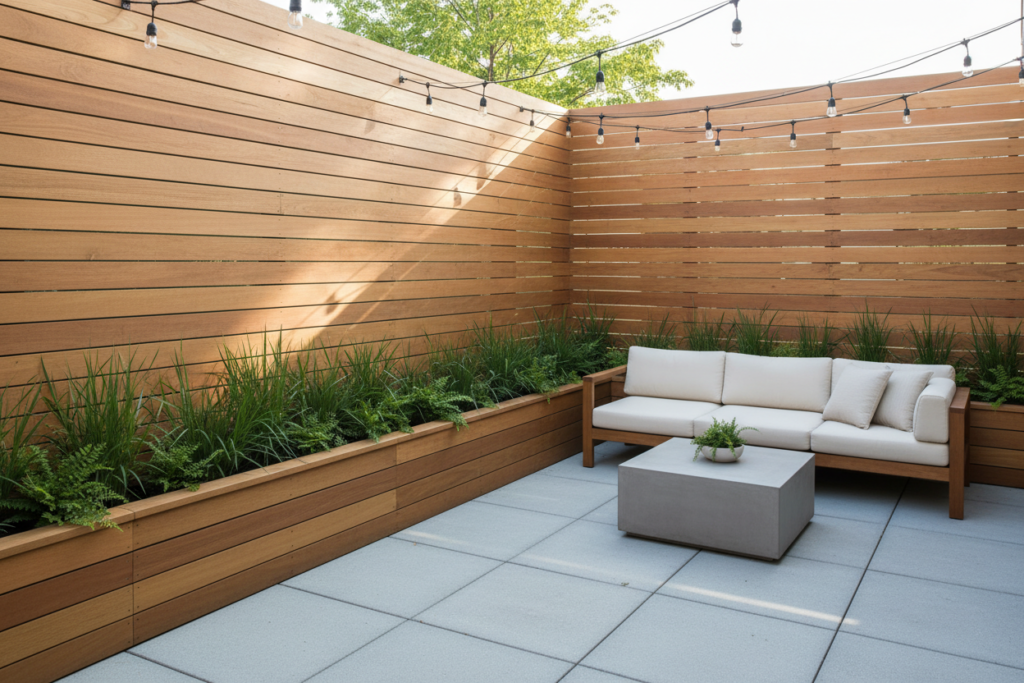
Custom fencing defines property lines while adding style to your yard. Horizontal slat designs create modern appeal, while traditional vertical pickets offer classic charm.
Privacy screens serve multiple functions beyond blocking views. They reduce noise, create wind breaks, and establish garden rooms within larger yards.
Height restrictions vary by location, so check local codes before building. Most residential fences measure four to six feet tall. Posts set in concrete every six to eight feet provide adequate support.
Pergola for Shade and Ambiance
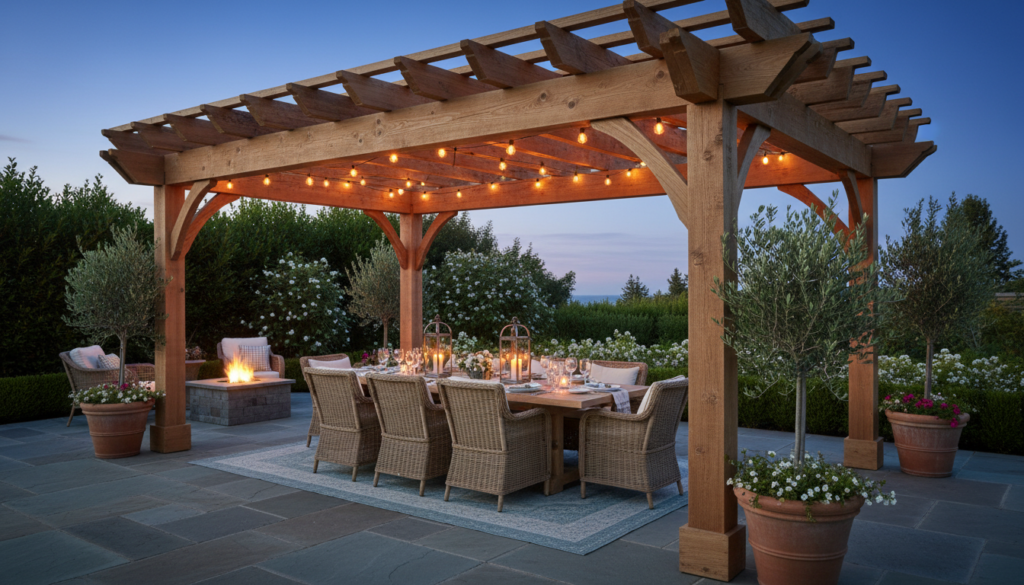
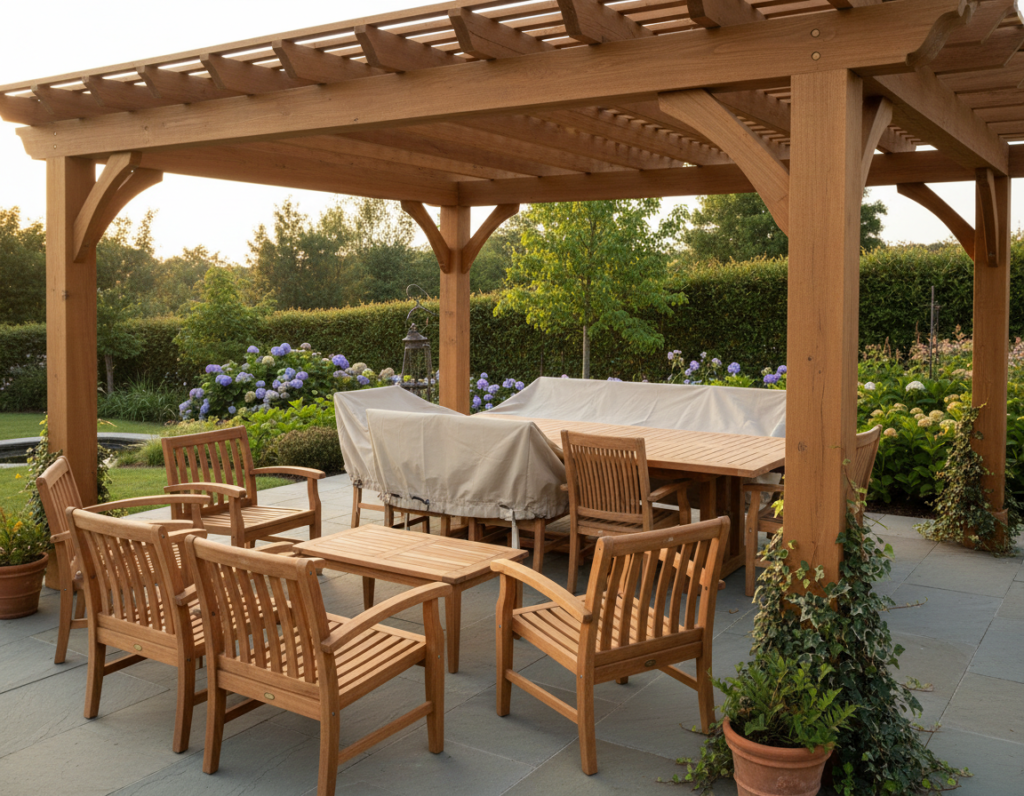
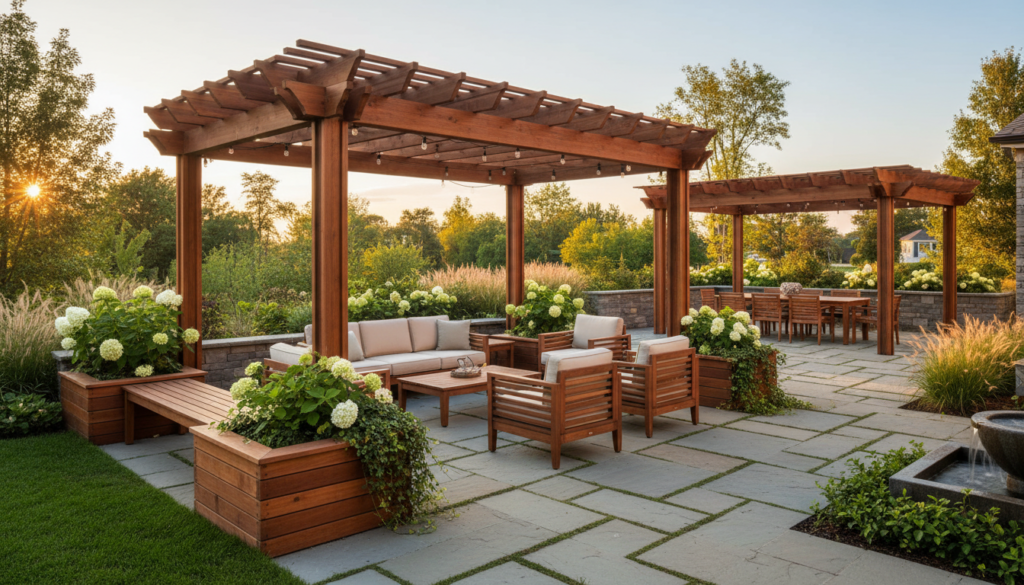
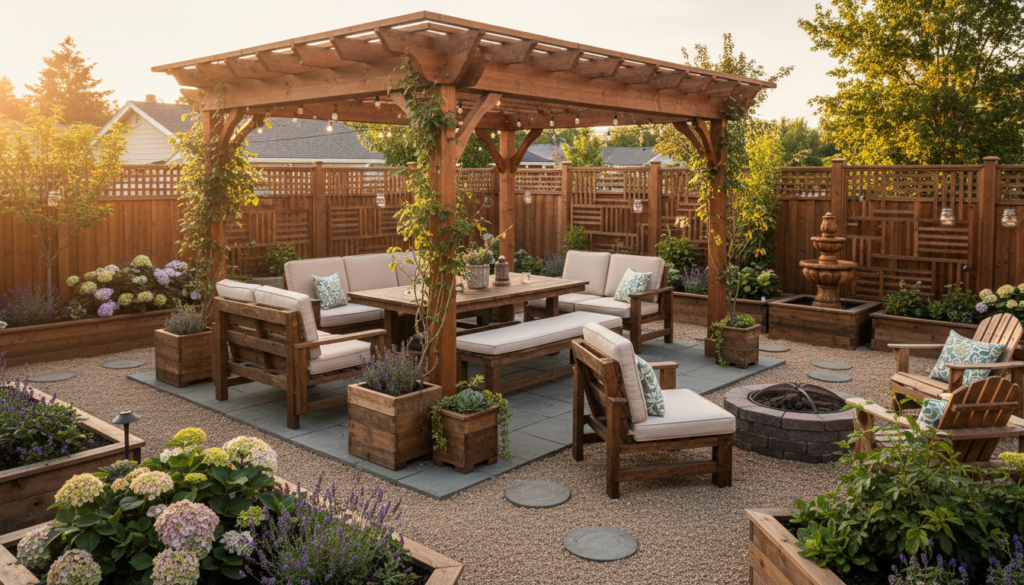
A pergola defines outdoor living spaces while providing filtered shade. The open-roof design allows sunlight through while supporting climbing plants or hanging elements.
Size should relate to the space it covers. A ten-by-ten-foot pergola works well over small patio areas. Larger decks can accommodate twelve-by-sixteen-foot structures.
The construction requires careful planning since it’s a substantial structure. Posts must be plumb and properly anchored. Beams and rafters create the distinctive overhead grid pattern.
Building Tip: A pergola project typically takes two people an entire weekend to complete. Having a helper makes positioning heavy beams much safer and easier.
Functional Accessories for Garden Organization
Small projects often deliver the biggest impact on garden functionality. These accessories keep your outdoor space organized and efficient.
Potting Bench for Gardening Tasks
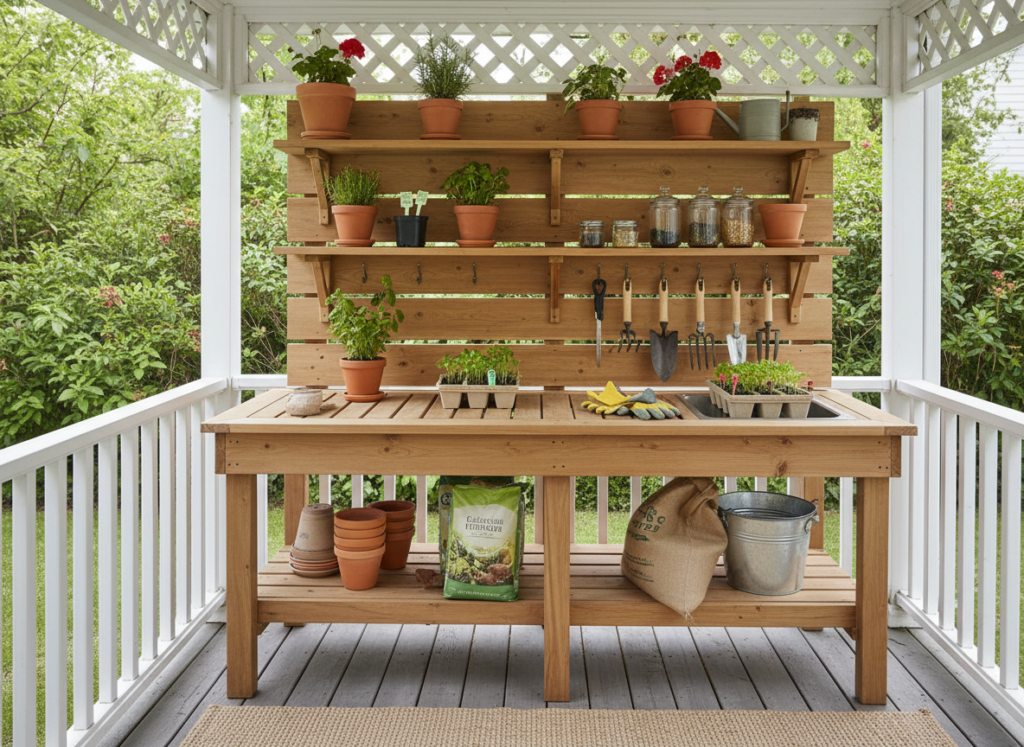
A potting bench centralizes all your gardening tasks. The raised work surface saves your back during planting and transplanting operations.
Include lower shelves for pot storage and an upper shelf for frequently used supplies. Side hooks hold tools within easy reach. A built-in soil bin keeps potting mix contained.
Essential Features
Work surface at comfortable height
Slatted top for soil drainage
Storage shelves above and below
Side hooks for hanging tools
Optional sink connection for water
Weatherproof construction materials
Location matters for convenience. Place the bench near your garden beds under a covered area if possible. Protection from direct rain extends its life and keeps supplies dry.
Tool Rack and Storage Solutions
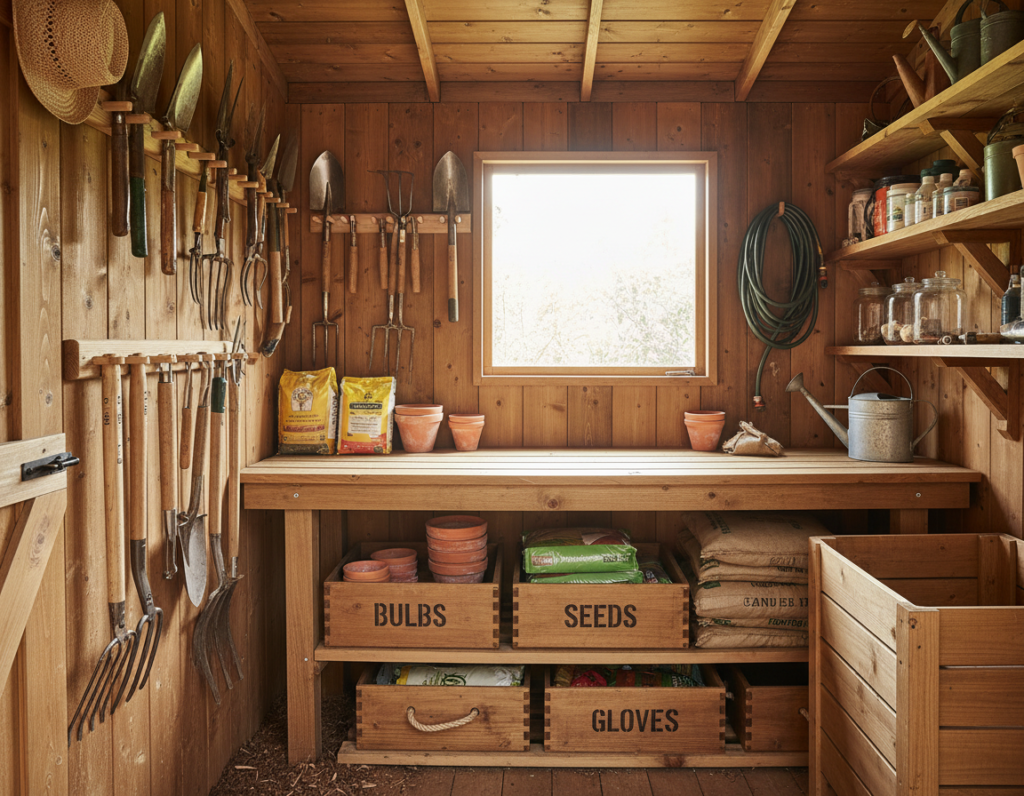
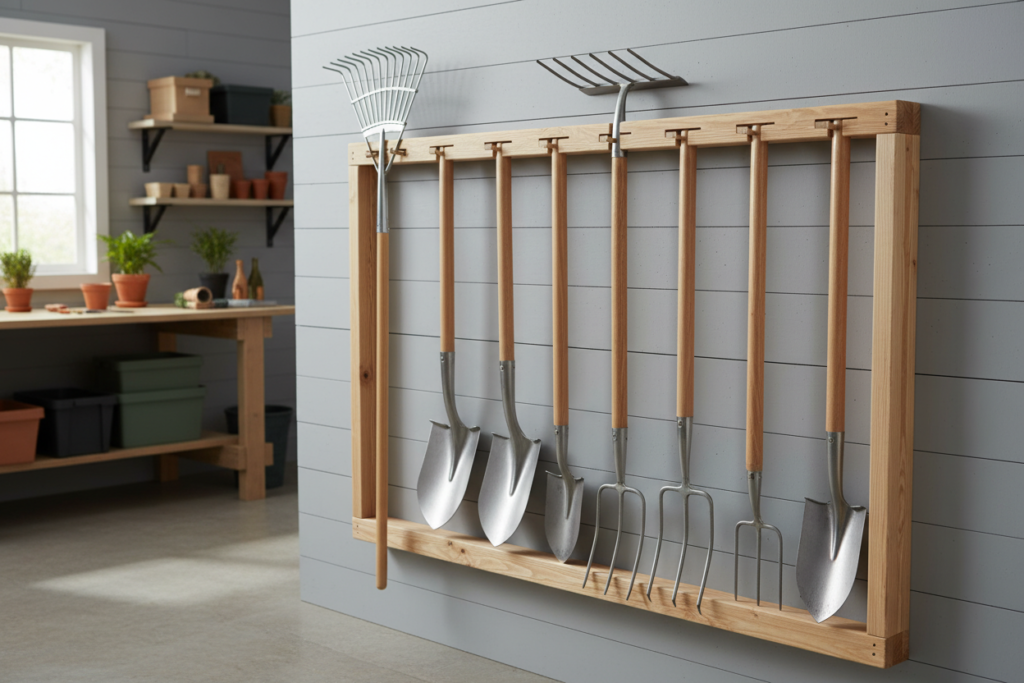
A wall-mounted tool rack keeps equipment organized and off the ground. Tools last longer when properly stored and stay ready for immediate use.
Design the rack with specific tools in mind. Space hooks to prevent handles from crossing. Include wider spaces for bulkier items like pruning shears.
Raised Garden Bed with Built-in Seating
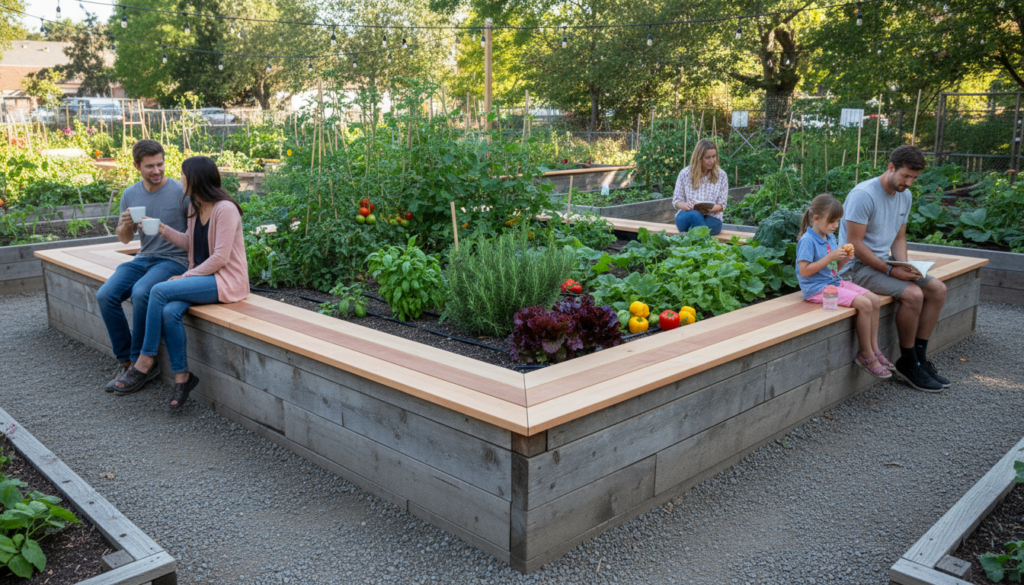
Combining a raised bed with seating edge creates a social garden space. Friends can sit and chat while you tend plants or harvest vegetables.
The bed portion typically measures waist-high for easy access. Wide cap boards on the perimeter provide comfortable seating at a lower height.
This dual-purpose design works especially well in smaller yards. It maximizes space utility while creating an inviting gathering spot around your garden.
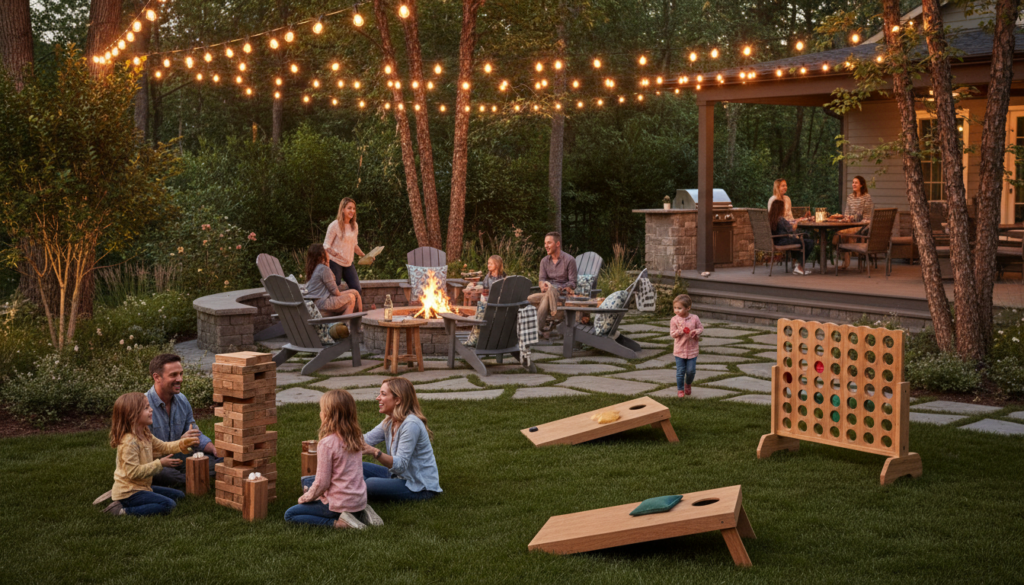
Entertainment and Recreation Projects for Family Fun
Outdoor woodworking isn’t limited to furniture and planters. Recreation projects create lasting memories for families and provide entertainment for guests.
Outdoor Game Station and Cornhole Boards
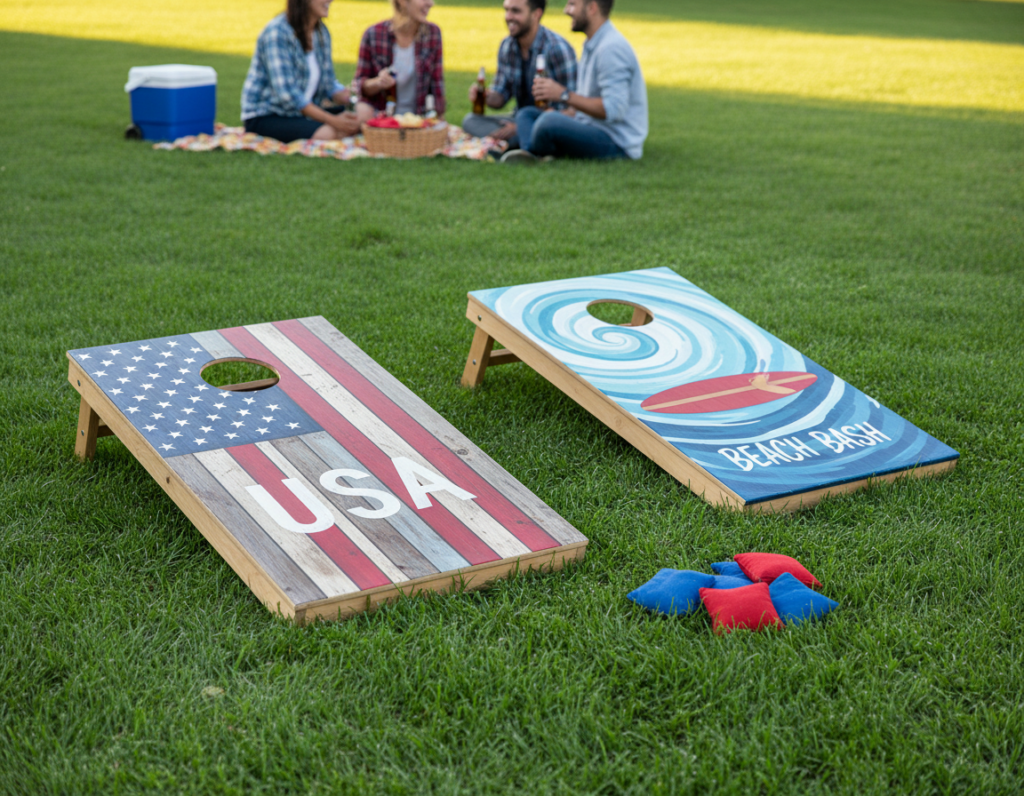
Cornhole remains one of the most popular backyard games. Building your own boards allows customization of size, design, and finish to match your outdoor décor.
Regulation boards measure two feet by four feet with a six-inch hole centered nine inches from the top. The playing surface slopes from twelve inches high at the back to zero at the front.
Building Guidelines
Use plywood for smooth playing surface
Frame with 2×4 lumber for strength
Sand edges thoroughly for safety
Apply multiple coats of exterior paint
Add team logos or custom designs
Folding legs make storage easier
Fire Pit Bench Circle for Gatherings
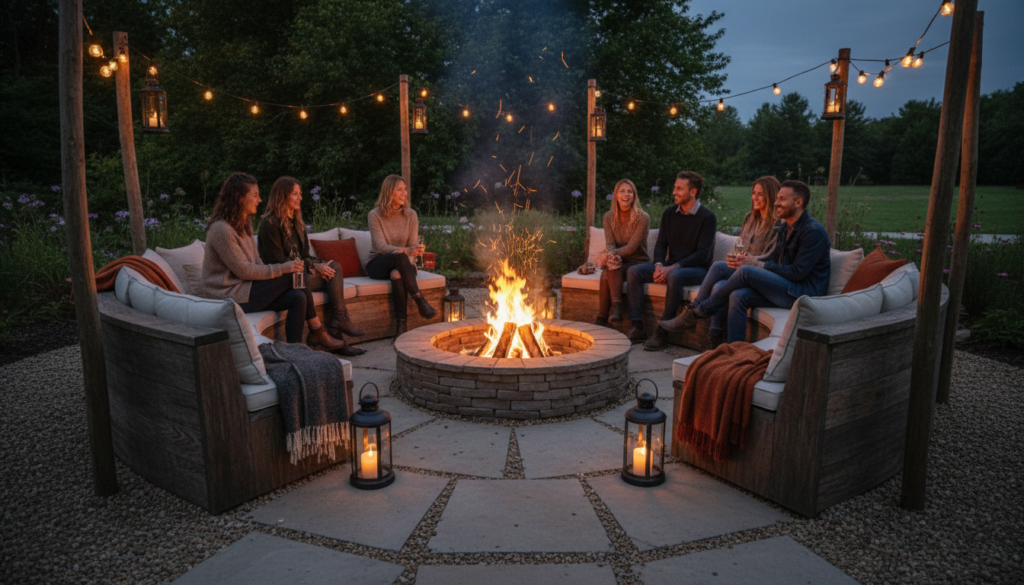
A circular bench arrangement around a fire pit creates the perfect gathering space. The design encourages conversation while everyone enjoys the warmth.
Build individual benches or create connected sections that form a complete circle. Leave gaps for entry and exit points.
The bench height should allow comfortable seating while maintaining a safe distance from the fire pit. Eighteen inches high works well for most adults. Position benches at least three feet from the fire ring.
Picnic Table for Outdoor Dining
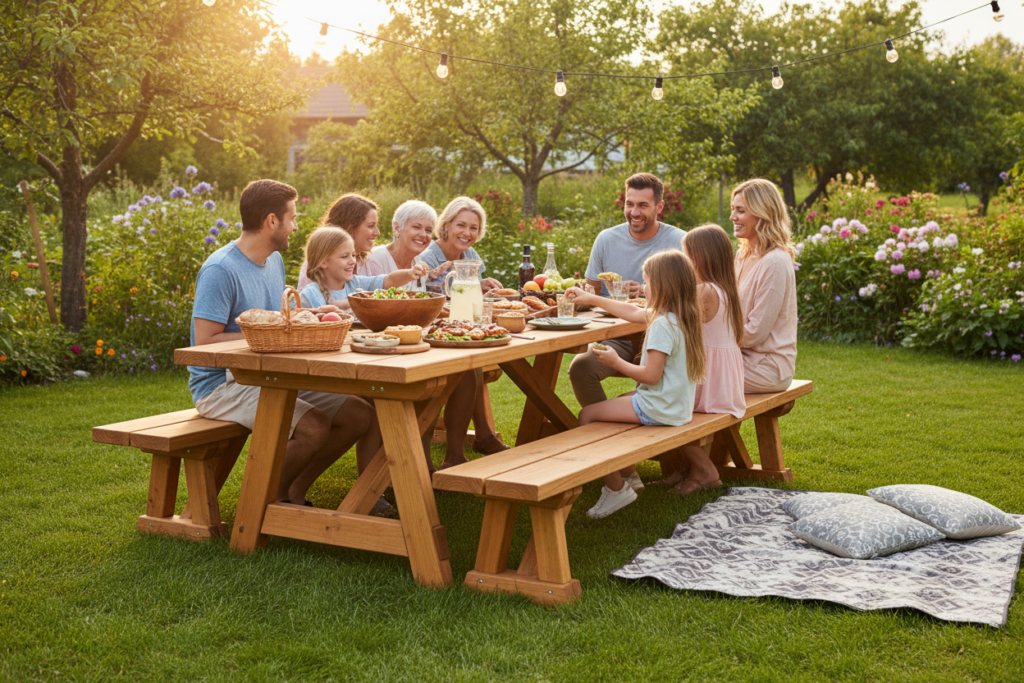
A traditional picnic table never goes out of style. The attached bench design provides ample seating for family meals and neighborhood gatherings.
Standard dimensions include a six-foot-long top, thirty inches wide. This size comfortably seats six to eight people. The attached benches eliminate the need for separate seating.
The A-frame base design provides excellent stability. Cross braces prevent racking and keep the table solid even on uneven ground. Use carriage bolts for strong connections that won’t work loose over time.
Transform Your Ideas Into Reality
Why struggle with incomplete instructions or waste money on mistakes? Get instant access to comprehensive woodworking blueprints with exact measurements, detailed material lists, and professional building techniques. Join thousands of DIY enthusiasts who build with confidence.
Finishing Techniques and Maintenance for Longevity
Proper finishing protects your investment and enhances natural wood beauty. The right products and techniques ensure your projects withstand years of outdoor exposure.
Selecting the Right Finish for Your Project
Your finish choice depends on desired appearance and protection level. Clear sealers showcase natural wood grain while providing moisture barrier.
Stains add color while penetrating wood fibers for lasting protection. Semi-transparent stains show wood texture, while solid stains provide opaque coverage similar to paint.
Solid stain: Maximum protection, hides wood character
Paint: Complete coverage, widest color selection
Oil finish: Deep penetration, easy to renew
Application Best Practices
Sand surfaces smooth before finishing
Apply in dry weather above 50°F
Use quality brushes or sprayers
Follow grain direction when brushing
Allow proper drying time between coats
Seasonal Maintenance Schedule
Regular maintenance extends the life of outdoor woodworking projects significantly. Establish a simple routine to catch problems before they become major issues.
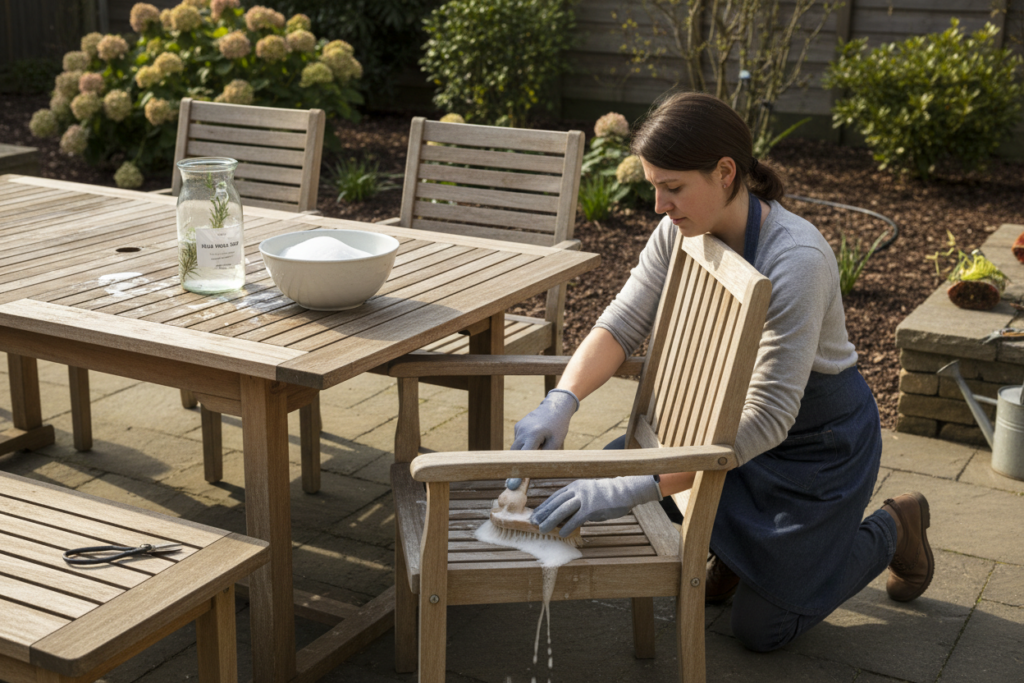
Spring cleaning removes winter accumulation. Check for loose hardware and tighten any screws or bolts. Inspect for signs of rot or insect damage.
Maintenance Checklist: Clean surfaces twice yearly with mild soap. Reapply finish every one to three years depending on exposure. Tighten hardware annually. Replace damaged boards immediately to prevent spread. Store cushions indoors during winter months.
Protecting Against Weather and Pests
Weather poses the biggest threat to outdoor wood. Rain, sun, and temperature fluctuations cause wood to expand, contract, and eventually deteriorate.
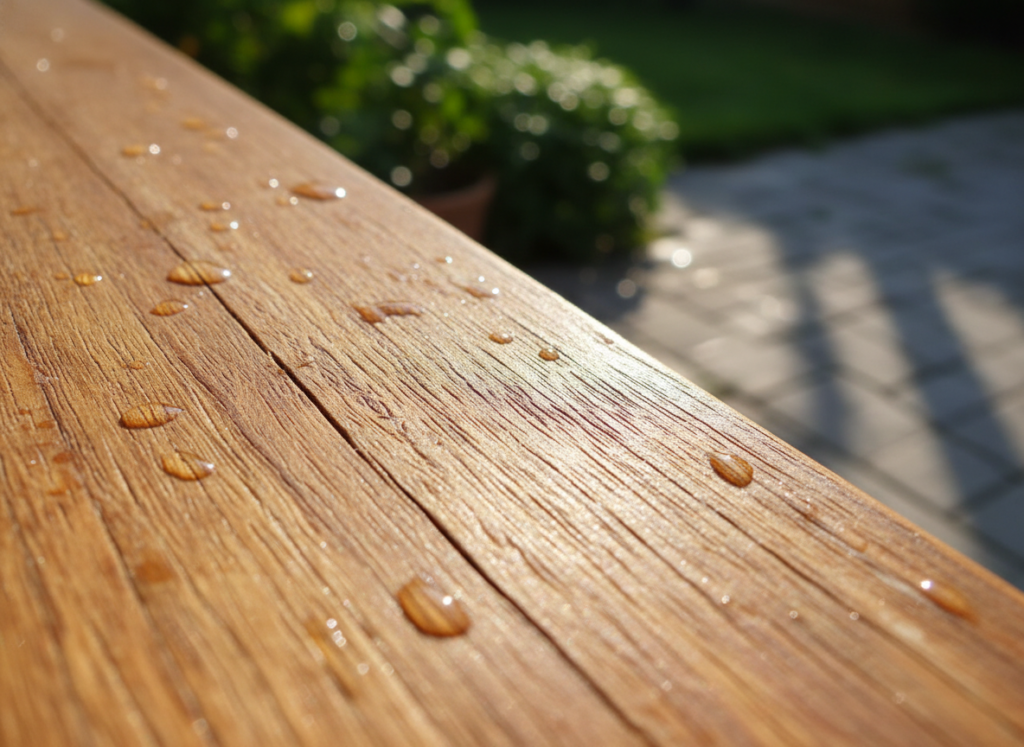
Proper finish application creates a barrier against moisture intrusion. UV inhibitors in quality stains prevent sun damage and graying. Multiple thin coats work better than one thick application.
Insect protection starts with wood selection. Cedar and redwood naturally repel many pests. For other woods, apply borate treatments before finishing. Keep wood from direct ground contact where termites thrive.
Design Tips and Customization Ideas
Personal touches transform basic projects into unique creations. Small design decisions dramatically impact the final appearance and functionality of your work.
Adding Personal Style to Standard Designs
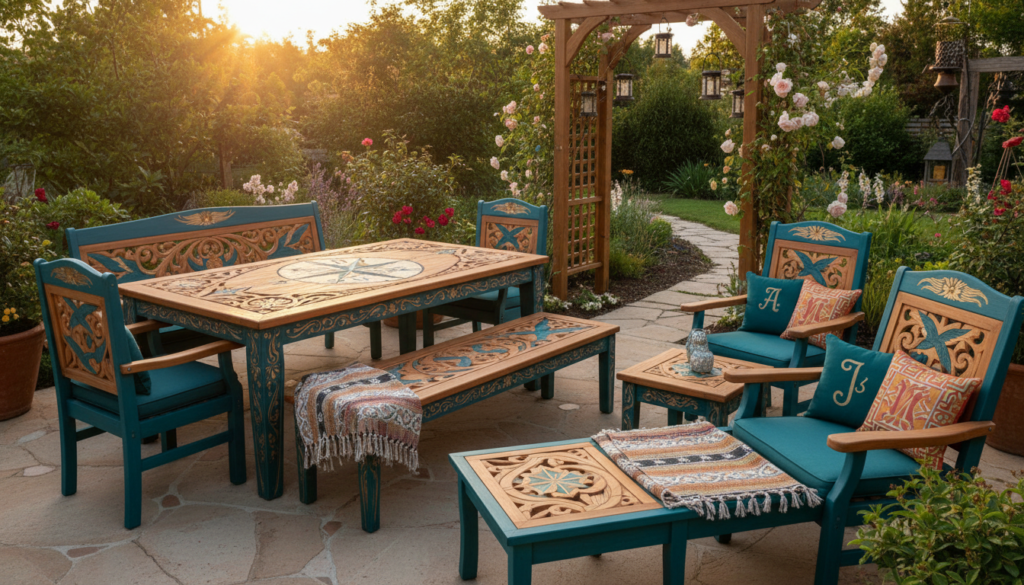
Color choices immediately establish mood and style. Bold colors make statements, while neutral tones blend naturally with surroundings. Consider your home’s exterior palette when selecting finishes.
Decorative elements add character without requiring advanced skills. Routed edges create professional looking profiles. Decorative end cuts on boards transform plain pieces into custom details.
Simple Customizations
Contrasting wood species
Decorative metal hardware
Carved or routed patterns
Inlaid designs or emblems
Mixed finish techniques
Scaling Projects for Different Spaces
Adapting plans to fit your specific space ensures projects look intentional rather than crammed in. Measure carefully before cutting any wood.
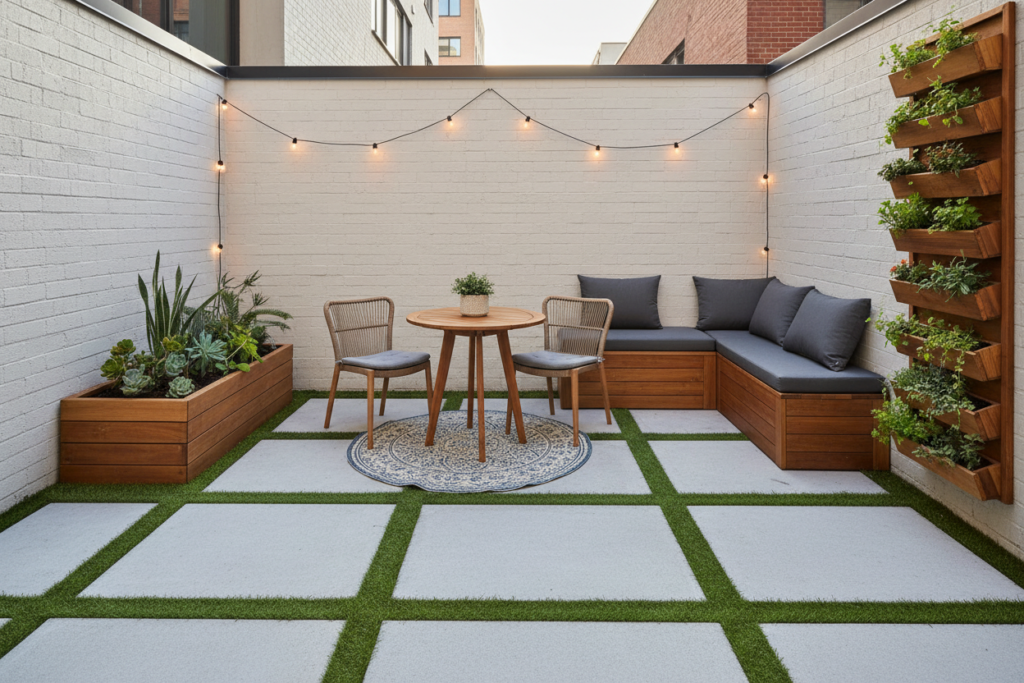
Small patios benefit from compact furniture. Consider folding or stackable designs that store efficiently. Vertical elements like wall planters maximize limited square footage.
Large yards can accommodate bigger statement pieces. Oversized planters anchor corners. Extended dining tables host larger gatherings. Scale everything proportionally to avoid cluttered or empty appearances.
Combining Multiple Projects for Cohesive Look
Related projects create unified outdoor rooms when designed together. Match wood species, finish colors, and hardware across different pieces.
A matching planter box and bench pairing establishes visual connection. Using identical stain on a pergola and fence ties separate structures together seamlessly.
Safety Considerations and Best Practices
Woodworking safety protects both you and your projects. Following established safety protocols prevents accidents while ensuring quality results.
Essential Safety Equipment
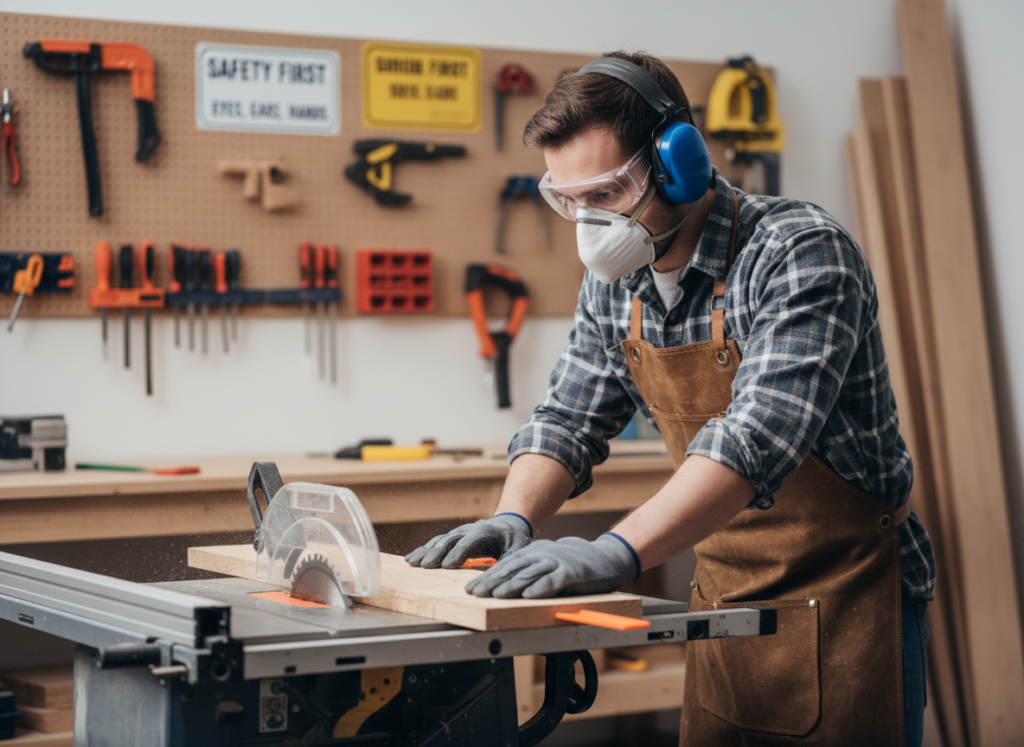
Eye protection tops the safety priority list. Flying wood chips and sawdust pose serious eye injury risks. Wear safety glasses for every cut, no exceptions.
Hearing protection preserves long-term health. Power tools create noise levels that damage hearing with extended exposure. Use earplugs or earmuffs consistently.
Required Safety Gear
Safety glasses or face shield
Hearing protection (plugs or muffs)
Dust mask or respirator
Work gloves for handling lumber
Closed-toe shoes with good traction
No loose clothing or jewelry
Tool Safety Practices
Keep guards in place on power tools
Unplug tools when changing blades
Maintain sharp cutting edges
Secure workpieces before cutting
Keep work area clean and organized
Never remove safety features
Working with Treated Lumber
Pressure-treated wood contains chemicals that require special handling. Always wear gloves when cutting treated lumber. Use a dust mask to avoid inhaling sawdust.
Never burn treated wood scraps. The chemicals release toxic fumes when combusted. Dispose of treated lumber waste according to local regulations.
Important: Wash hands thoroughly after handling treated lumber and before eating. Keep treated wood sawdust away from vegetable gardens and food preparation areas.
Structural Considerations for Outdoor Projects
Outdoor structures must withstand wind, snow loads, and constant weather exposure. Overbuilding slightly ensures long-term stability and safety.
Anchor posts deeply for fences, arbors, and pergolas. A general rule sets posts one-third of their total height below ground. Concrete footings prevent shifting and settling.
Check local building codes before starting major projects. Many municipalities require permits for structures over certain sizes. Code compliance ensures safety and protects property values.
Budget Planning and Smart Material Sourcing
Successful outdoor woodworking projects balance quality and cost. Strategic planning and smart shopping stretch your budget without sacrificing results.
Estimating Material Costs
Accurate material estimates prevent mid-project supply runs. List every component including lumber, hardware, and finish. Add ten percent for waste and mistakes.
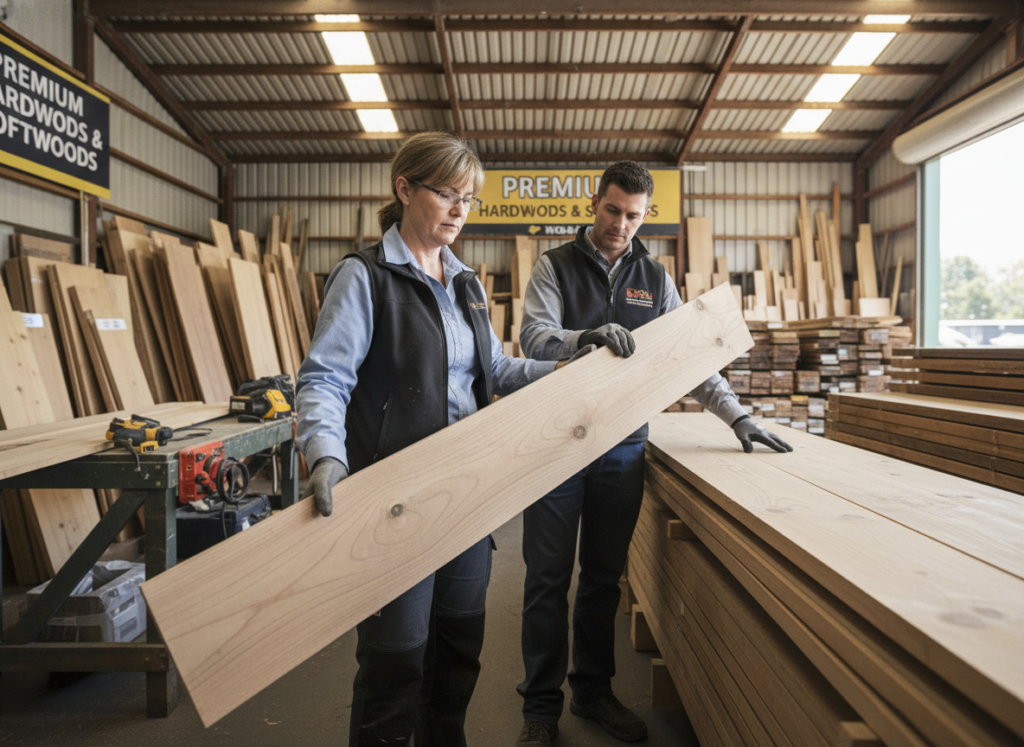
Lumber prices vary significantly by species and grade. Pine costs less than cedar or redwood. Consider where each wood type makes sense based on exposure and visibility.
Cost-Saving Strategies
Buy lumber in bulk for better pricing
Use premium wood only where visible
Shop end-of-season clearance sales
Reclaim wood from other projects
Join loyalty programs at suppliers
Compare prices across multiple stores
When to Splurge vs Save
Invest in quality outdoor screws and hardware
Buy good finish products for lasting protection
Use cheaper wood for hidden structural elements
Splurge on wood for highly visible pieces
Save by doing your own cutting and finishing
Finding Quality Materials at Better Prices
Big box stores offer convenience but not always the best value. Local lumber yards often provide better quality wood at competitive prices.
Timing purchases strategically saves money. Spring sales target eager DIY builders. Fall clearances move inventory before winter. Watch for holiday promotions throughout the year.
Salvaged materials offer character and value. Reclaimed wood brings unique patina impossible to replicate with new lumber. Check demolition sales, online marketplaces, and architectural salvage yards.
Start Your Garden Woodworking Journey Today
Garden woodworking projects offer endless opportunities to enhance your outdoor space. Each completed build adds functionality while reflecting your personal style and effort.
Start with smaller projects to build confidence and skills. A simple planter box or tool rack provides immediate satisfaction and teaches fundamental techniques. Success with beginner projects naturally leads to more ambitious builds.
The skills you develop through outdoor woodworking extend far beyond your backyard. Problem-solving abilities improve. Spatial reasoning sharpens. The satisfaction of creating something useful with your own hands is deeply rewarding.
Your outdoor space deserves the same attention and care you give your home’s interior. Custom wooden pieces create outdoor rooms that become natural extensions of your living area. Family and friends gather around your handmade table. Children play on structures you built with love.
Benefits Beyond Beautiful Projects
Significant cost savings versus buying retail
Perfect fit for your specific space
Customization impossible with store-bought items
Skill development that applies to future projects
Pride of ownership in handcrafted pieces
Increased home value and curb appeal
Getting Started Checklist
Choose your first project based on skill level
Gather necessary basic tools
Source quality materials within budget
Set aside adequate time to work
Review safety procedures thoroughly
Have fun and embrace the learning process
Don’t let inexperience hold you back from starting. Every expert woodworker began exactly where you are now. The difference between dreaming about projects and completing them is simply taking the first step.
Remember that mistakes teach valuable lessons. That slightly crooked cut shows where to improve next time. The board that splits reveals the importance of pre-drilling. Each challenge overcome builds competence and confidence.
Your garden woodworking journey begins with a single project. Whether you build a simple planter box or tackle an ambitious pergola, you’re creating something meaningful. Each nail driven and board placed moves you closer to the outdoor oasis you envision.
The projects featured in this guide provide starting points, not limitations. Adapt dimensions to fit your space. Change colors to match your style. Combine elements from different designs to create something uniquely yours.
Most importantly, enjoy the process. Woodworking offers therapeutic benefits beyond the finished product. The focused attention required provides mental clarity. The physical work delivers healthy exercise. The creative expression feeds your soul.
Your Perfect Project Awaits
Stop dreaming and start building! Get instant access to professional woodworking plans with detailed blueprints, complete material lists, and step-by-step instructions. Thousands of DIY enthusiasts have already discovered how professional plans eliminate guesswork and guarantee beautiful results. Join them today and transform your outdoor space with confidence.
Finding the perfect wedding gift for the bride and groom can be a delightful yet challenging task. You want something meaningful that celebrates their love story while being useful in their new life together. Whether you’re a close family member, friend, or wedding guest, this curated collection of wedding gift ideas will help you discover…
Creating your own furniture opens a world of possibilities for your home. You gain complete control over design, size, and finish. The satisfaction of completing a piece you built yourself surpasses anything you can purchase from a store.This Website contains affiliate links. That means I may earn a small commission if you purchase through my…
Valentine’s Day offers the perfect opportunity to show your special someone just how much they mean to you. Finding that perfect gift that captures your feelings can sometimes feel challenging, but the right romantic Valentine’s gift idea can speak volumes about your love. Whether you’re celebrating your first Valentine’s together or your twentieth, we’ve curated…
Want to give your boyfriend a birthday gift that feels personal and thoughtful without spending hours on complicated crafts? You’re in the right place! These DIY birthday gifts for boyfriend options require minimal effort but deliver maximum impact. The secret is starting with ready-made items that you can easily personalize to create something that looks…
Finding the right snacks can make or break your weight loss journey. Many people struggle with hunger between meals. They reach for convenient options that sabotage their progress. The good news is that healthy snacks for weight losing exist in abundance.This Website contains affiliate links. That means I may earn a small commission if you…
Creating the perfect farm layout on your property transforms dreams into reality. A well-designed homestead maximizes every square foot while making daily tasks easier.This Website contains affiliate links. That means I may earn a small commission if you purchase through my links, at no extra cost to you. Your land holds incredible potential. With proper…